Running out of an experimental polymer before completing a test series is an expensive setback.
When custom batches yield only grams, you cannot afford to waste resin coating oversized barrels or overheat delicate polymer chains during melt blending. Establishing an efficient micro compounding injection molding workflow solves this problem, turning minimal sample quantities into test-ready specimens.
Below, we evaluate whether inline direct injection or strand granulation best protects your laboratory budget and material integrity.
Key Takeaways
- Direct Injection Setup: QualiMIMM-15 connects straight to a micro conical twin-screw extruder, converting 2–15g of feed into ASTM/ISO test bars in a single thermal step.
- Strand Pelletizing Setup: QualiMP-15 uses two servo motors operating at 80-140 r/min to slice polymer and rubber strips into clean 0.8 to 3mm granules for multi-stage evaluations.
- Thermal Preservation: Transferring molten polymer directly from the compounder to the mold cavity protects heat-sensitive formulations from an unnecessary second melt cycle.
- Laboratory Footprint: Both systems feature benchtop footprints; the QualiMIMM-15 fits inside fume hoods using documented 230V/110V lines, while the QualiMP-15 occupies a compact 300 x 350 x 330 mm workspace.
- Tooling Tolerances: Tool steel built to withstand continuous wear delivers ±0.01 mm dimensional precision and HB280–320 cavity hardness, with dedicated cavity geometries available for ASTM D638, ISO 527, and related standards.
Direct Injection: Inline Specimen Molding
If you need physical test specimens ready for mechanical evaluation without delay, direct injection removes intermediate granulation from the schedule. Research on combined compounding and molding equipment demonstrates that transferring molten resin directly from the plasticizing screws to an injection barrel cuts residence time down significantly, keeping sensitive materials away from thermal degradation thresholds.
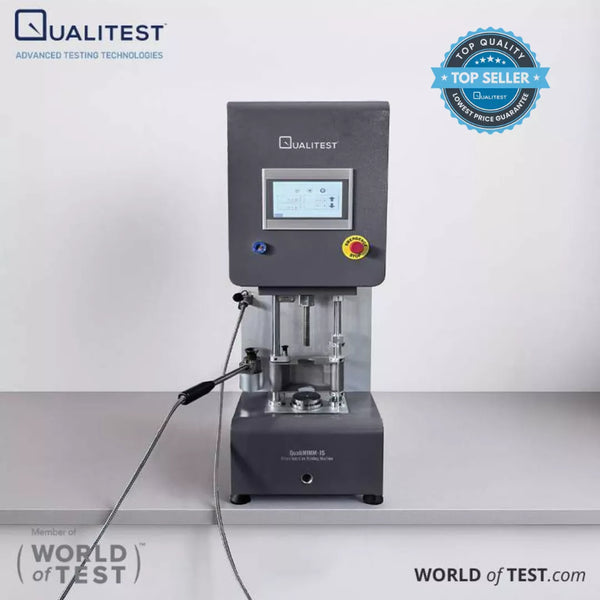
Our QualiMIMM-15 Micro Injection Molding Machine provides a motor-driven plunger setup engineered specifically for this continuous methodology.
Inline Extrusion vs. Standalone Operation
To keep your facility adaptable, the QualiMIMM-15 uses a disassemblable injection barrel that offers dual-mode operational flexibility. For continuous processing, the barrel links straight to a micro conical twin-screw extruder, receiving compounded melt and advancing it into the cavity without intermediate manual handling.
If a project calls for testing pre-blended pellets or masterbatches, the machine functions as an independent station where operators load material directly into the chamber by hand. In our view, having both operational options on a single benchtop provides a clear operational advantage, as research priorities often alternate between continuous compounding and one-off batch screenings.
QualiMIMM-15 Core Specifications
Studies on micro-molding indicate that using a dedicated plunger to meter the shot volume is an effective method for maintaining part mass consistency across small production runs. Built to process experimental formulations without wasteful excess, the QualiMIMM-15 operates within these verified parameters:
- Raw Material Requirement: 2–15g per shot
- Maximum Injection Volume: 12 ml (max)
- Maximum Injection Pressure: 2 T(max)
- Syringe Construction: Φ15 mm diameter fabricated from S136 stainless steel
- Thermal System: 2 temperature control zones with an 850W syringe heating capacity and an 850W die heating capacity, reaching a maximum temperature of 350℃ with a control accuracy of ±0.5℃
- Drive and Automation: Driven by a 2 kW motor and managed via a 7-inch PLC touchscreen to regulate injection pressure, thermal setpoints, and cycle timing, store proven processing recipes, and prevent part shrinkage
- System Footprint: Measures 360 × 500 × 960 mm with a gross weight of 102 kg; operates on 230V±10%, 5A, 50HZ (with 110V also available)
Precision Granulation: QualiMP-15 Micro Pelletizer
When testing protocols require batch archiving, multi-stage blending, or distributing material across several analytical instruments, direct injection steps aside for strand pelletizing.
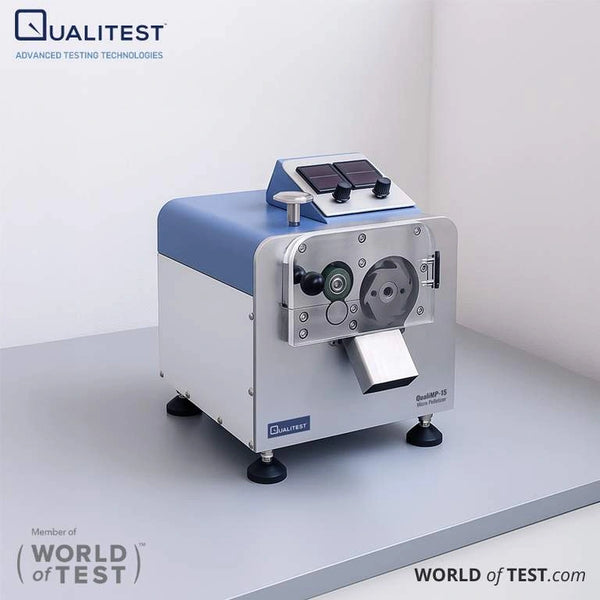
General polymer literature confirms that cutting continuous extrudates into uniform, free-flowing granules creates an intermediate feed that simplifies storage, measurement, and secondary feeding. The QualiMP-15 Micro Pelletizer converts continuous extrudates into consistent, free-flowing granules.
Rather than filling a mold cavity directly, the QualiMP-15 pulls continuous polymer and rubber strips through a rotary cutting head driven by two servo motors with a 400W servo motor rating.
In our assessment, using two dedicated servo drives rather than a single drive motor maintains consistent cutting torque when strand cross-sections fluctuate. Operators can adjust the cutting speed between 80-140 r/min to set pellet length, producing clean granules from 0.8 to 3mm with smooth edges while avoiding strand deformation.
For softer formulations or elastomeric blends that require cooling before blade contact, an optional water bath can be placed inline to cool polymer strips ahead of the intake. The complete assembly occupies a compact benchtop footprint of 300 × 350 × 330 mm with a gross weight of 45kg, featuring a clear, swing-open front panel that allows fast visual checks, thorough cleaning, and routine mechanical care.
Process Dynamics: Thermal History and Material Behavior
Evaluating these options requires examining how each mechanical setup manages polymer melt history and structural characteristics:
Direct Melt Transfer and Shrinkage Control
In the direct injection workflow, compounded melt moves straight from the conical twin screws into the S136 stainless steel barrel of the QualiMIMM-15. Because the plastic never cools down between compounding and cavity packing, it experiences only one heat cycle. Polymer studies highlight that eliminating redundant cooling and reheating steps is a major benefit when handling delicate additives or matrices vulnerable to thermal breakdown.
In our opinion, direct injection offers a clear mechanical advantage for fragile or shear-sensitive materials because it spares them unnecessary thermal stress. If you are developing small quantities of specialized additives, this inline configuration allows you to mold mechanical test bars in one clean step without intermediate granulation. The unit maintains melt conditions across 2 heating zones (operating up to 350℃ within ±0.5℃).
Molding research indicates that maintaining tight control over holding pressure, pack duration, and melt temperature is critical for overcoming flow resistance and eliminating volumetric shrinkage. Using the built-in PLC touchscreen, operators set holding profiles and packing times to pack the cavity completely and avoid sink marks on dumbbell-shaped test splines.
Strand Cutting and Downstream Staging
The pelletizing route guides your polymer or rubber through an intermediate cooling and cutting sequence. Extruded profiles pass through the optional cooling bath before reaching the spinning cutter blades.
The dual-servo drive of the QualiMP-15 applies controlled cutting at 80-140 r/min, preventing strand distortion to yield smooth granules from 0.8 to 3 mm. Consider a typical institutional core facility: staff may compound a masterbatch and divide those 0.8 to 3 mm pellets among several desks for thermal checks, melt-flow indexing, or separate molding trials.
These free-flowing granules can be stored until needed, matching standard development practices described in polymer literature. In standard industry practice, when working with hygroscopic materials like polyamides or polyesters, laboratories must keep stored pellets in sealed containers and dry them before subsequent remolding to prevent moisture-induced voids or degradation during a second heating cycle.
This additional drying requirement is an important workflow factor when comparing pellet storage against the immediate, single-cycle transfer of direct injection.
Workflow Comparison: Micro Pelletizer vs Direct Injection
We view this comparison not as a contest between competing systems, but as an equipment decision driven by your immediate project deliverables. The table below focuses strictly on practical workflow differences rather than repeating internal machine metrics:
| Workflow Factor | Direct Injection Route (QualiMIMM-15) | Micro Pelletizer Route (QualiMP-15) |
|---|---|---|
| Finished Output | Standard molded test bars (ASTM / ISO) | Free-flowing granules (0.8 to 3mm) |
| Material Input | Molten polymer directly from extruder | Solid continuous strips (polymer or rubber) |
| Batch Minimum | 2 to 15g per shot | Continuous strand output |
| Thermal Profile | Single continuous melt cycle | Cooling followed by later reheating |
| Primary Lab Role | Immediate mechanical test qualification | Intermediate batch staging and distribution |
Buyer Selection Framework: Which Route Fits Your Facility?
To simplify your equipment investment, evaluate your primary project deliverables against these operational criteria:
Choose the Direct Injection Route (QualiMIMM-15) If:
- Your sample volume is severely restricted: You are compounding small batches where a 2–15g shot requirement lets you produce test-ready specimens without exhausting expensive synthesized resin.
- Thermal history is a critical risk factor: Your formulation contains heat-sensitive additives, biomaterials, or delicate nanofillers that could degrade if subjected to intermediate cooling and a second melt cycle.
- Your primary deliverable is physical qualification: Your team needs immediate ASTM D638, ISO 527, flexural, or impact test bars to generate mechanical property data directly from the compounding stage.
Choose the Micro Pelletizer Route (QualiMP-15) If:
- You operate a multi-user or core facility: You need to compound a masterbatch and divide stable, free-flowing 0.8 to 3mm granules across several analytical desks for thermal, rheological, or secondary processing checks.
- You process elastomeric formulations: You evaluate flexible polymer or rubber strips alongside rigid engineering plastics and need clean, controlled cutting at 80-140 r/min without strand deformation.
- Your testing schedule requires staged feedstock: Your workflow involves archiving dry pellets for delayed evaluation, customer sampling, or future downstream blending rather than immediate part molding.
Application Scenarios and Facility Integration
Both routes meet defined operational requirements across North American testing labs, universities, research centers, and pilot facilities:
Processing Low-Yield Formulations
Teams evaluating high-cost components routinely face severe sample limits. For example, in regional research centers such as biotechnology clusters in California and Massachusetts developing implantable bio-polymers, or advanced composite programs in the Midwest incorporating carbon nanotubes, total batch yields may be limited to modest trial amounts.
The QualiMIMM-15 resolves these constraints by requiring only 2–15g of feed per shot. In our view, working with low shot weights is an essential capability for chemical development, sparing research groups from compounding oversized batches simply to meet baseline equipment demands.
Benchtop Space and Utility Connections
Laboratories in universities and corporate testing facilities often must position processing machinery on crowded counters or beneath ventilation hoods. The QualiMIMM-15 measures 360 × 500 × 960 mm and the QualiMP-15 occupies 300 × 350 × 330 mm, allowing both units to sit on standard laboratory benchtops, with the injection unit also fitting inside ventilated fume hoods.
Furthermore, while heavy production systems require dedicated high-voltage utility lines, the QualiMIMM-15 runs on a documented 230V±10%, 5A, 50HZ supply, with a 110V option also available, simplifying utility hookups compared to heavy industrial machinery.
For North American facilities operating on standard 60 Hz electrical grids, buyers can select the 110V configuration and verify 60 Hz operational compatibility with our technical team during specification review.
Elastomer and Polymer Strip Cutting
If your facility characterizes flexible compounds alongside rigid engineering plastics, the QualiMP-15 handles both polymer and rubber strips smoothly, converting both material families into uniform, clean-edged granules.
Specimen Standardization and Tooling Precision
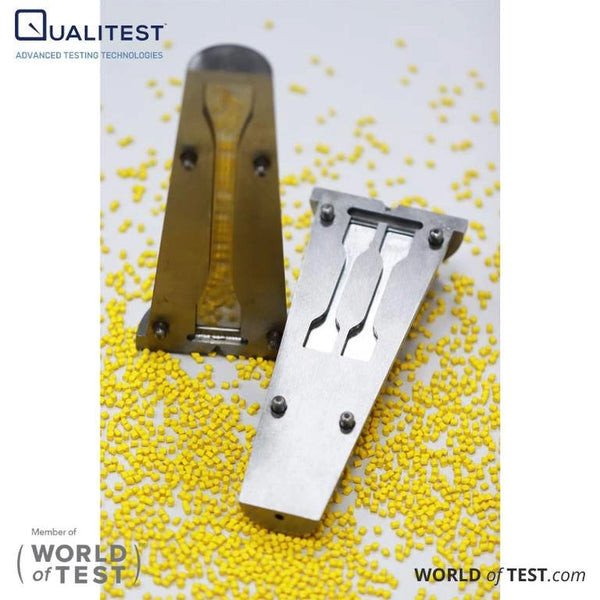
When using direct injection to evaluate tensile, flexural, or impact performance, test specimens must adhere to strict dimensional tolerances. To support the QualiMIMM-15, we supply dedicated, customizable Injection Molds.
ASTM Compliance in US Supply Chains
While international programs often cite ISO standards, domestic manufacturers across automotive, aerospace, and consumer product supply chains mandate ASTM specimen geometries for raw material property validation.
For testing laboratories screening incoming resin lots, molding standardized ASTM bars directly from micro-scale trial batches provides a dependable baseline for comparing material lots, provided specimen geometry and thermal processing conditions remain uniform across test runs.
Tooling Durability and Tolerances
Our molds are machined from wear-resistant, anti-corrosion tool steel featuring mirror-polished cavity surfaces. Vacuum quenching and heat treatment harden the cavity steel to HB280–320, withstanding repeated processing pressures while holding an accuracy of ±0.01 mm.
In our technical opinion, high-precision tooling is the foundation of trustworthy mechanical data, as slight cavity inaccuracies will distort tensile and flexural calculations.
Supported Test Standards
The tooling turns out specimens matching domestic and international test protocols using dedicated, customizable cavities:
- Tensile Properties: ASTM D638 (standard dumbbell-shaped tensile bars) and ISO 527 (tensile test specimens)
- Flexural Properties: ASTM D790 (flexural strength test specimens) and ISO 178 (flexural test bars)
- Impact Resistance: ASTM D256 and ISO 179 (Charpy/Izod impact test specimens)
Configure Your Compounding Line with Qualitest
Choosing between strand granulation and direct injection depends on whether your workflow calls for an inventory of uniform pellets or immediate ASTM and ISO test specimens. With compact footprints, multi-zone thermal management, and low material volume requirements, our cost-effective products provide dependable processing for small-batch polymer development.
Contact our technical sales team to request a quote and select the right compounding configuration for your laboratory.
References (Click to expand)
- Bongiorno, A., Pagano, C., Baldi, F., Bellantone, V., Surace, R., & Fassi, I. (2017). Micro-injection molding of CNT nanocomposites obtained via compounding process. Polymer Composites, 38, 349-362.
- Couling, K., Goodship, V., Charmet, J., & Gibbons, G. (2023). Rapid tooling: investigation of soft-tooled micro-injection moulding process characteristics using in-line measurements and surface metrology. Rapid Prototyping Journal.
- Schäfer, C., Meyer, S. P., & Osswald, T. (2018). A novel extrusion process for the production of polymer micropellets. Polymer Engineering and Science, 58, 2264-2275.
- Trotta, G., Cacace, S., & Semeraro, Q. (2022). Optimizing process parameters in micro injection moulding considering the part weight and probability of flash formation. Journal of Manufacturing Processes.
- Whiteside, B., Martyn, M. T., Coates, P., Greenway, G., Allen, P., & Hornsby, P. (2004). Micromoulding: process measurements, product morphology and properties. Plastics, Rubber and Composites, 33, 11-17.