Selecting the right workshop or laboratory equipment gets confusing when technical spec sheets blur the lines between automated control technology and physical cutting tools. Terms like milling, CNC automation, and subtractive machining often sound identical on paper, but they point to very different operational capabilities.
Making the right choice stops capital waste, saves valuable shop space, and keeps your quality compliance on track. Here is a clear breakdown to help your facility select the ideal equipment with total confidence.
Key Takeaways
- Technology vs. Machine: CNC is the computerized control framework, while a milling machine is the physical metal-cutting equipment.
- Scope & Capability: CNC machines cover various automated tools (lathes, routers, EDMs), whereas milling machines focus specifically on rotary cutter material removal.
- Umbrella Term vs. Specific Method: CNC machining encompasses all subtractive computerized processes (turning, drilling, grinding), while CNC milling specifically uses rotating multi-point tools.
- Quality Compliance: Automated milling ensures consistent tolerances and clean radii required for certified ASTM and ISO specimen preparation.
- Facility Footprint: Compact mini CNC mills run on standard single-phase electrical hookups, eliminating expensive three-phase facility upgrades.
What is the Difference Between CNC vs Milling Machine?
Let's clear up the confusion straight away. When you compare a CNC vs milling machine side by side, you aren't contrasting two separate physical tools sitting on your shop floor. You are putting an automated digital control system up against a physical material-cutting tool.
What is CNC?
CNC stands for Computer Numerical Control. It isn't a standalone box you unpack in the warehouse. It's the digital control center running in the background!
Driven by programmed numerical code, CNC technology takes your digital design files (good old G-code instructions) and tells physical machine slides exactly where to move along linear axes (X, Y, Z) without a technician turning levers manually.
What is a Milling Machine?
A milling machine is the physical mechanical tool equipped with a spinning cutter that shaves away material from a secured workpiece. Both conventional and computerized mills remove stock using rotating tools, but adding CNC automation introduces multi-axis computer-controlled movement.
The Big Takeaway
Comparing a CNC vs milling machine is like comparing an automated pilot system to an actual airplane: one drives the movement commands, while the other performs the physical cutting.
In our view, many facilities jump straight into heavy industrial automated setups without assessing whether their everyday production volume justifies it. If you are modifying one simple bracket a month, manual handwheels work fine.
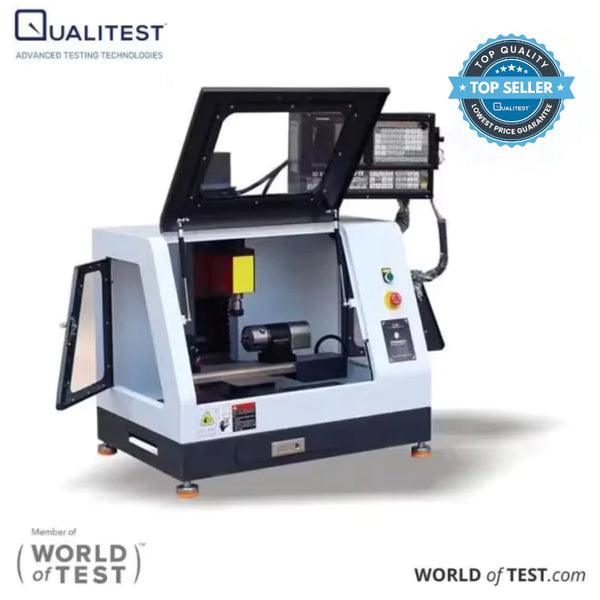
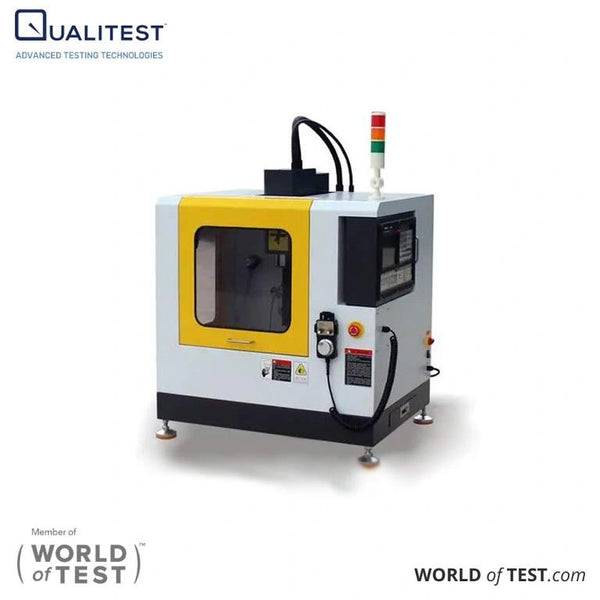
However, when transitioning to batch testing or production, compact automated systems (like our QualiMill M4 micro mill featuring 4-axis control and 0.01 mm repeatability, or the QualiMill 220 mini mill with its 2.2 kW spindle reaching 24,000 RPM) demonstrate how computerized motion eliminates manual operator fatigue and variable part quality!
CNC Machine vs Milling Machine: Scope & Capabilities
Whenever engineering teams debate a CNC machine vs milling machine, they are usually comparing an entire family tree of automated gear against one specific cutting system.
The Broad Scope of a CNC Machine
Using the term "CNC machine" is like talking about "industrial vehicles." It covers a wide category!
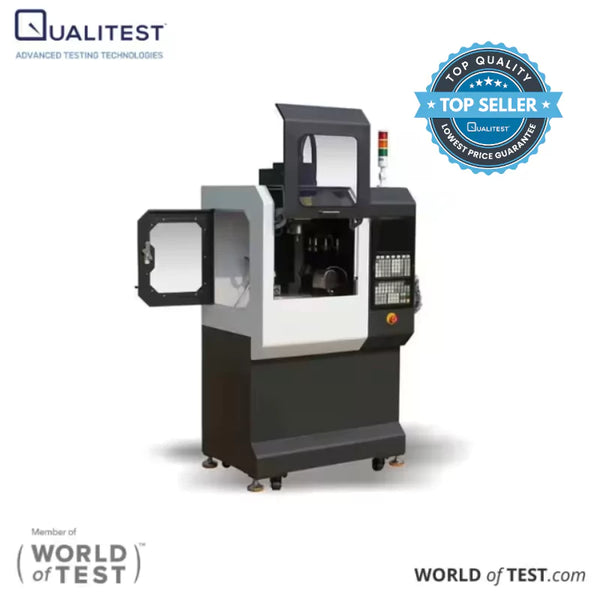
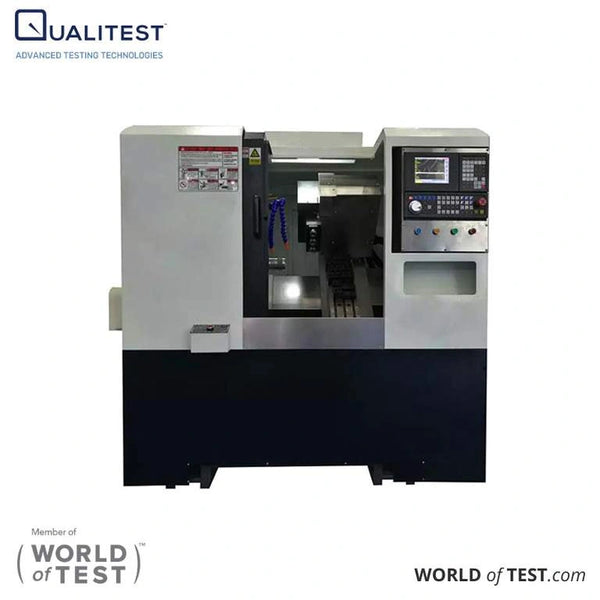
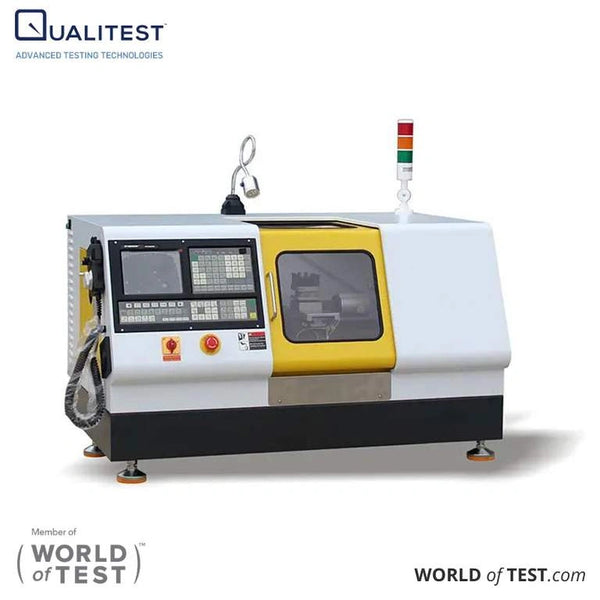
You have computerized turning lathes (such as our QualiLathe 210 specimen lathe), laser cutters, plasma torches, wire EDMs, routers, and multi-axis milling units (like our QualiCNC 300, a 5-axis CNC machine equipped with an ARM CPU, FPGA controller, and 10-tool automatic tool changer).
Related article: CNC Milling vs Lathe: Choosing the Right Facility Tool
The Dedicated Focus of a Milling Machine
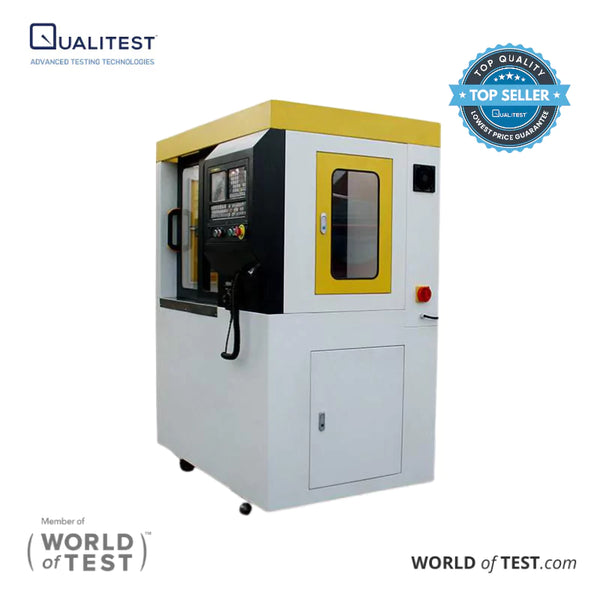
A dedicated milling machine focuses specifically on spinning a multi-blade cutter against a clamped workpiece. Manual mills provide tactile control for quick fixture modifications, but automated milling units (such as our compact 3-axis QualiCNC 200 with 230 x 130 x 220 mm travel) take over when you need high precision and batch repeatability.
Side-by-Side Comparison
| Feature / Criteria | Conventional Milling Machine | Modern CNC Milling Machine (e.g., QualiMill Series) |
|---|---|---|
| Control System | Manual operator adjusts feeds and handwheels | G-code program controls all tool paths |
| Axes Capability | Typically 3 manual handwheels (X, Y, Z) | 3 to 5+ numerically controlled axes |
| Accuracy & Precision | Depends on operator skill; higher variability | High precision (0.02 mm positioning; 0.01 mm repeatability) |
| Geometry Complexity | Simple profiles; complex shapes need custom jigs | Complex 3D shapes via linear/circular interpolation |
| Capital Investment | Lower initial purchase cost | Higher initial hardware investment, offset by batch automation |
When we evaluate a CNC machine vs milling machine, the decision centers on operational peace of mind.
Manual mills rely entirely on a seasoned machinist holding tight tolerances manually. Automated systems lock safety doors tight, trap coolant spray inside the enclosure, and let your team run repetitive cycles safely and reliably!
Breakdown: CNC Machining vs CNC Milling
Here is another terminology trap that trips up lab managers: drawing the line between CNC machining vs CNC milling.
What is CNC Machining?
Think of this as the overarching category. It covers any subtractive manufacturing method where computer programming directs material removal, including lathe turning on systems like our QualiLathe 140 (equipped with the KY980Tc control system), hole drilling, surface grinding, or multi-tasking turn-mill operations on centers like our QualiMill TM500.
What is CNC Milling?
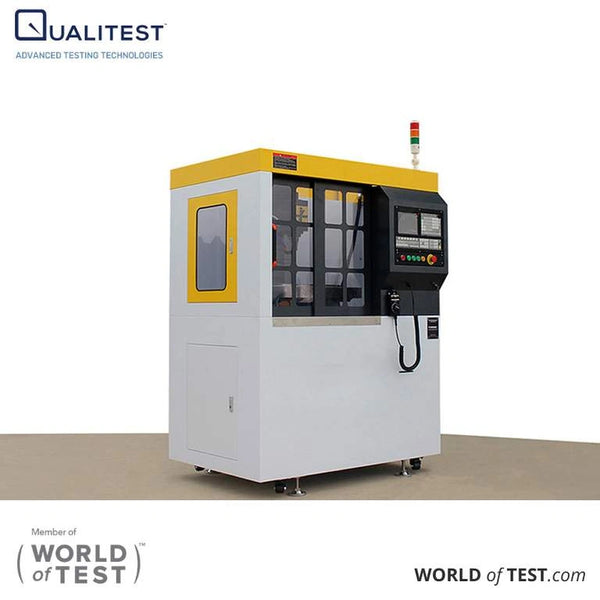
This is one specific operation within that broader category. In rotary milling, your workpiece remains securely clamped in a vice while a spinning cutter shapes it across 3, 4, or 5 axes (such as our 4-axis QualiMill 300A featuring a BT30 spindle taper and 550 x 180 mm table).
Spotting the Operational Split
- CNC Machining (The Whole Umbrella): Includes both spinning raw material on a lathe and spinning the cutter on a mill.
- CNC Milling (The Specific Tool Method): Focuses entirely on rotary tool cutting for flat surfaces, slots, 3D pockets, and smooth test specimens.
Recognizing the boundary of CNC machining vs CNC milling prevents your team from getting talked into purchasing complex multi-tasking turn-mill centers when a straightforward, high-precision 3-axis or 4-axis mill delivers superior results for half the investment!
Related article: 5-Axis vs 3-Axis vs 4-Axis CNC Machining Differences
Meeting ASTM & ISO Specimen Preparation Standards
In laboratory material testing, meeting rigorous quality standards established by ASTM International, NIST, the FAA, and the Department of Defense (DoD) is essential.
For instance, when an aerospace or automotive supplier prepares metallic tensile specimens for certified testing, imperfect sample dimensions compromise the entire dataset (and compliance reports!). This is where understanding the practical side of CNC machining vs CNC milling yields major benefits.
Precise automated milling enables your facility to produce pristine test samples that easily pass international compliance audits:
- ASTM E8 / ASTM E8M: Crisply machined metal tensile dog-bone bars.
- ASTM D638: Smooth plastic dumbbell specimens with zero surface stress marks.
- ASTM E23 / ISO 148-1: Accurately notched Charpy impact test specimens.
- ISO 527 & ISO 6892: Highly repeatable plastic and metallic samples.
Unlike thermal cutting or manual shearing, precision CNC milling removes material without inducing heat-affected zones or cold-worked surface layers. This preserves the bulk material's true mechanical properties, allowing machined samples to pass ASTM and ISO compliance audits far more consistently.
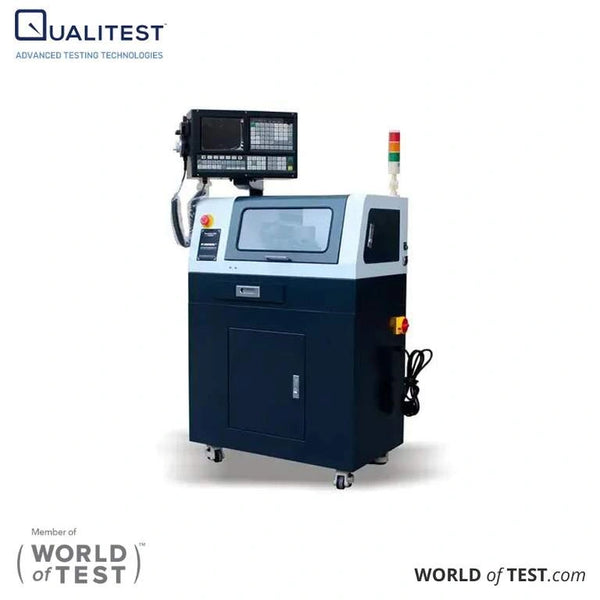
Specialized specimen preparation equipment (like our QualiLathe 210 for round tensile specimens or our QualiMill M4 micro mill for flat dog-bone samples) eliminates these subsurface stress risers, protecting your data integrity cycle after cycle.
Key Hardware Features, Automation & Facility Infrastructure
Whether you require a compact benchtop unit or a full-scale milling center, looking under the hood reveals the digital workflow and hardware features that drive long-term productivity.
Digital CAD/CAM Workflow & In-Process Inspection
Modern CNC milling operates through a seamless digital pipeline:
- CAD/CAM Programming: CAM software transforms 3D CAD geometry into precise numeric G-code commands that dictate cutting-tool magnitude and direction.
- Software Simulation: Simulation programs (such as Mastercam or Swansoft) verify G-code tool paths before actual cutting, cutting down on programming mistakes and rejected parts.
- Multi-Axis Flexibility: Ranging from 3-axis models up to 5-axis configurations (such as the QualiCNC 300), automated mills produce complex geometries that conventional machines cannot easily match.
- On-Machine Inspection: Equipping mills with probing hardware (such as Renishaw OMP40-2 units) enables in-process dimensional inspection directly on the table, eliminating the need for a separate coordinate measuring machine.
Essential Hardware & Safety Features
- High-Speed Spindles (spinning up to 24,000 RPM): Available across models like our QualiMill 220 and QualiMill 300A, these high-torque units deliver smooth, glass-like surface finishes on delicate micro-components.
- Automatic Tool Changers (ATC): Heavy-duty centers (such as the QualiMill 400 drilling & milling center with its 8-tool ATC and ±0.01 mm positioning accuracy) swap tools automatically without pausing production.
- MPG Handwheels: Standard on units like the QualiMill M4, these allow technicians to set up zero points quickly using responsive physical handwheels.
- Full Safety Enclosures: Interlocked protective doors contain coolant spray and metal chips, keeping your laboratory floor clean and safe.
Broad Material Compatibility
Quality automated mills carve cleanly through aluminum, brass, carbon steels, stainless steel, titanium, acrylics, PVC, PEEK, and tough carbon-fiber composites.
Single-Phase Electrical Hookups (No Complex Facility Upgrades!)
Large industrial CNC milling hardware often carries high capital costs and demands heavy 480V 3-phase electrical wiring. Many commercial building parks, tech incubators, and testing labs operate on standard 120V / 240V single-phase electrical outlets, where 3-phase electrical retrofits require expensive utility permits.
Recent developments in low-cost small-footprint CNC machines achieve impressive positioning accuracy (±0.05 to 0.10 mm) at accessible price points.
We are strong advocates for compact benchtop mills (like our QualiCNC 200 desktop center and QualiMill M4) that operate on standard single-phase electrical hookups. Your team can connect them directly into standard facility outlets and begin working immediately!
Industry 4.0 & Educational Smart Factory Integration
Across technical colleges, Career and Technical Education (CTE) centers, and mechanical engineering departments, preparing technicians and engineers for automated manufacturing is a primary focus.
Modern equipment in these settings goes beyond standalone operation. Integrated platforms (such as our QualiFF Series) combine automated mini CNC mills, CNC turning lathes (like the QualiLathe 210B), robotic handling arms, and smart conveyor tracks into a complete Computer Integrated Manufacturing (CIM) and Flexible Manufacturing System (FMS) training environment.
We believe providing students and technicians with hands-on practice on integrated CIM and FMS cells is the most practical way to build real-world competency for Industry 4.0 automated factories.
Find the Ideal CNC and Milling Setup with Qualitest
Choosing the right equipment comes down to matching your production volume, accuracy requirements, and facility footprint. At Qualitest, we provide budget-friendly, high-precision milling and turning solutions engineered for quality control laboratories, machine shops, and educational institutions.
Ready to equip your facility with high-performing machinery that fits your budget? Explore our full collection of CNC Milling & Lathe Machines, or contact our engineering team today to discuss your application and receive a personalized, cost-effective quotation!
References (Click to expand)
- Alghauli, M., Almutairi, S., Aljohani, R., Aljohani, W., & Alqutaibi, A. (2025). Advanced subtractive manufacturing, micromilling, and laser micromachinery in dentistry: Current applications, limitations, and future perspectives. Biomaterials Connect.
- Boral, P. (2019). The design of the CNC milling machine. MATEC Web of Conferences.
- Kerényi, G., & Ráczi, V. G. (2024). Determining the Accuracy of Measurement on a CNC Milling Machine. Acta Materialia Transylvanica.
- Tung, T. T., Quynh, N., & Minh, T. (2021). Development and Implementation of a Mini CNC Milling Machine. Acta Marisiensis. Seria Technologica, 18, 24 - 28.
- Wang, Z. (2024). The milling parameters of mechanical parts are optimized by NC machining technology. Frontiers in Mechanical Engineering.