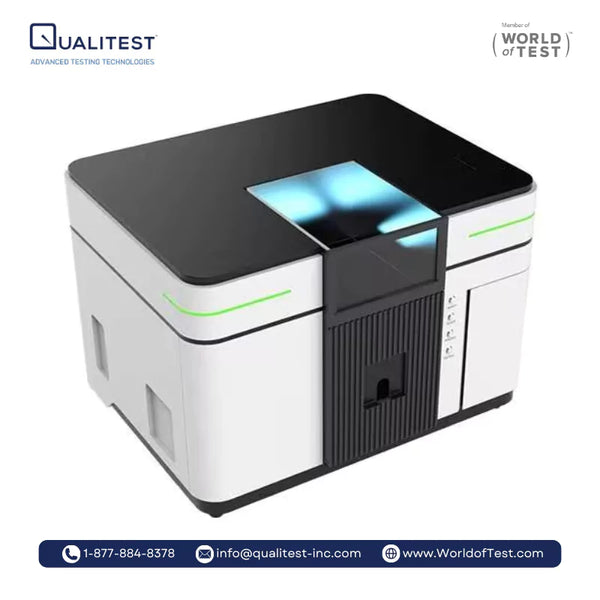
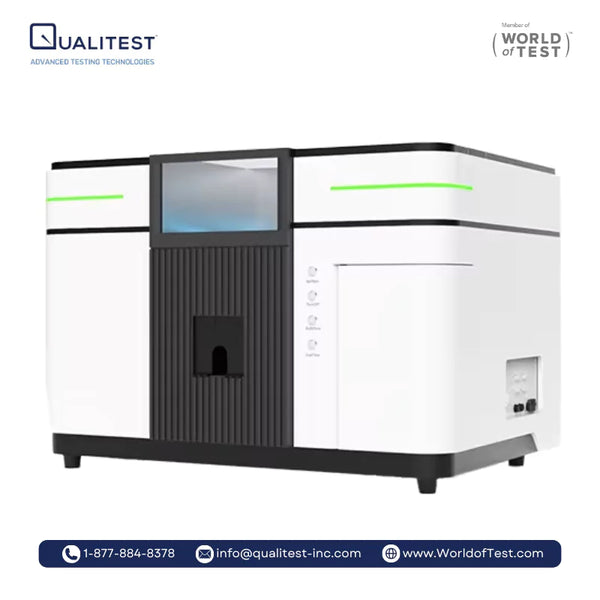
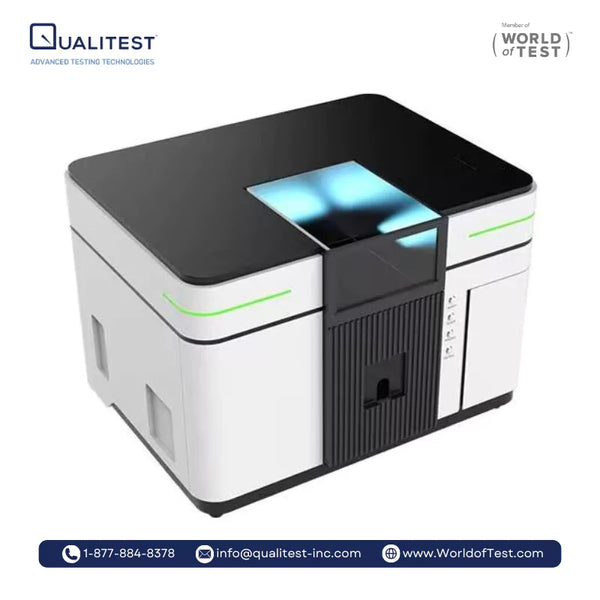
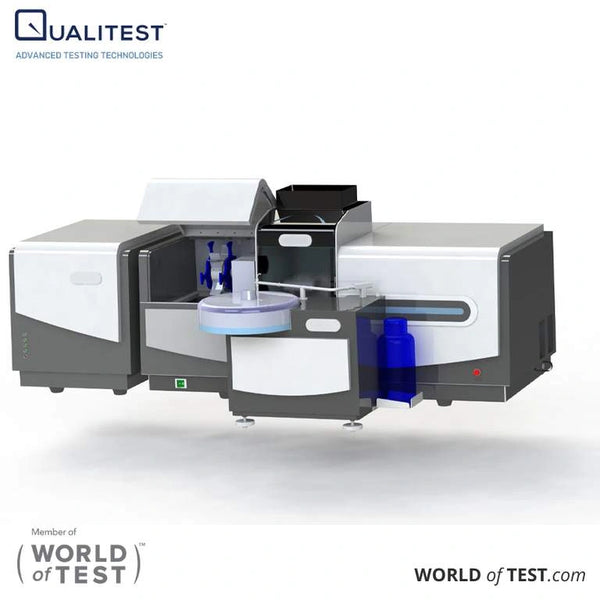
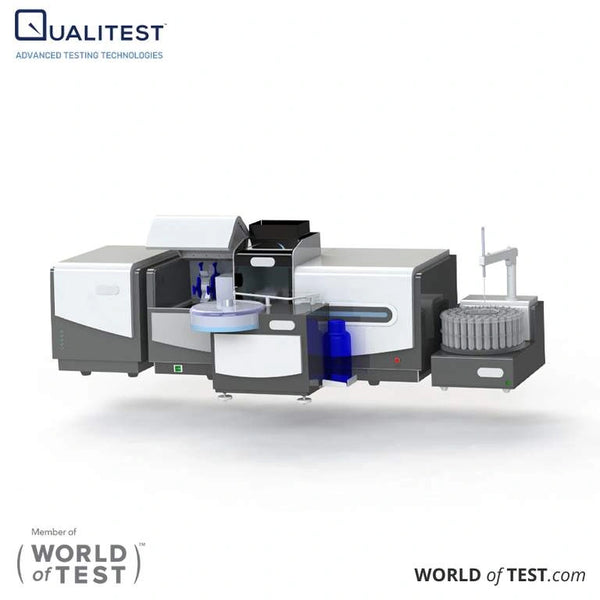
Ready to increase daily sample throughput while securing rock-solid baseline stability? What if your testing facility could routinely hit parts-per-billion precision without added operational friction?
Across American testing laboratories, achieving dependable analytical results starts with getting your sample preparation for AAS completely dialed in. At Qualitest, our cost-effective products translate your prepared liquid digests into compliant data that satisfies strict EPA, USP, and state safety standards.
Explore this guide to match your preparatory wet chemistry with the ideal spectrometer configuration.
Key Takeaways
- Complete Liquid Dissolution: Thorough digestion is mandatory for AAS atomization, which spans detection limits from parts-per-million (ppm) in flame mode down to parts-per-trillion (ppt) in graphite furnace mode across 70+ elements.
- Regulatory-Driven Selection: Compliance mandates, including EPA drinking water standards, USP pharmaceutical specifications, and state cannabis rules, dictate your required atomization platform.
- Atomization Matching: Air-acetylene flame handles routine ppm determinations, electrothermal graphite furnace delivers ultratrace ppb to ppt quantification, and vapor generation systems isolate volatile analytes like arsenic, selenium, and mercury.
- Post-Digestion Automation: Vertical 4 or 8-lamp auto turrets with 360-degree rotation and 70-sample autosamplers clear large digest batches unattended via RGWIN AAS software.
- US Facility Compatibility: Dedicated 110 V configurations connect directly to standard North American laboratory electrical circuits without external transformers.
Fundamentals of Quantitative Absorption
We are going to be direct: your spectrometer is only ever as dependable as the liquid sitting in your sample vial.
Atomic Absorption Spectrophotometry (AAS) is an elemental testing technique based on a straightforward physical principle: free ground-state atoms in a gaseous state absorb very specific wavelengths of light. When a hollow cathode lamp projects radiation at the exact resonance wavelength of your target analyte straight through an atomized sample, those free atoms absorb light in direct proportion to their concentration.
Because standard AAS instruments require liquid introduction, solid materials must be fully converted into soluble forms prior to analysis. That makes AAS sample preparation and thorough AAS sample digestion the decisive steps of the entire workflow. Without turning dense or viscous materials into uniform liquid solutions, you risk clogging nebulizers and destabilizing your analytical baseline.
In our view, getting your sample digestion fully optimized is the single most critical factor in achieving detection limits ranging from parts-per-million (ppm) in flame mode down to the parts-per-trillion (ppt) range in graphite furnace mode.
Once your samples are properly dissolved, our spectrometers evaluate 70+ elements (over 70 metallic and non-metallic elements) across a wide 190-900 nm wavelength range using an 1800 grooves/mm diffraction grating and a total-reflection optical platform with lens-free, all-reflective optics.
Sample Digestion Methodologies and Chemical Principles
Ask anyone supervising an analytical testing bench and they will tell you plainly: extracting metals from raw materials presents continuous technical challenges, and published literature confirms that sample preparation remains the most error-prone stage in the testing workflow.
How clean your final readout appears depends on how your selected acid system interacts with both the target metallic ion and the surrounding matrix material. Independent researchers rely on several established preparatory pathways to prepare samples for flame or furnace atomization.
Wet Digestion and Dry Ashing
Wet acid digestion and high-temperature dry ashing represent the two most common approaches laboratories utilize to decompose plant matter, food products, and biological tissues.
Wet digestion breaks down sample matrices under conductive heating by refluxing materials with concentrated acids such as HNO₃, HClO₄, H₂SO₄, or HCl, combined in specific ratios to dissolve dense organic matter.
For instance, an aqua regia variant combining HNO₃ and HCl in a 1:3 ratio is widely documented for extracting As, Cd, Pb, Ni, Zn, and Fe from herbal products. Similarly, combining HNO₃ and HClO₄ in a 2:1 ratio functions effectively for isolating Cd and Mn from botanical plant tissue.
Dry ashing takes a different route: samples are heated in a muffle furnace at approximately 500 °C until thoroughly incinerated, after which the leftover ash is dissolved in dilute acid. However, high furnace temperatures introduce the risk of losing genuinely volatile elements before analysis, particularly mercury, arsenic, selenium, and cadmium.
Published comparative studies indicate that while dry ashing performs well for zinc recovery in high-carbon plant material, copper recoveries often fall short due to matrix binding and crucible retention. For that reason, wet acid digestion is generally considered far more dependable for determining elements like Pb, Cu, Zn, Ni, and Fe in botanical matrices.
Microwave and Combustion Digestion
For facilities seeking to reduce manual processing time and minimize acid vapor handling, closed-vessel microwave systems provide a faster, cleaner alternative to open beakers on hotplates.
When analyzing dietary supplements, processing samples in a closed microwave vessel provides excellent recoveries between 99.2% and 102% for iron and zinc, outperforming open-vessel digestion. In clinical testing literature, closed-vessel microwave digestion of whole blood using nitric acid and hydrogen peroxide has been documented to produce far more consistent, dependable analytical signals than direct aqueous sample dilution.
For dense, challenging organic matrices, microwave-induced combustion breaks down the sample matrix almost completely, leaving negligible residual carbon. In published trials determining selenium in nutritional supplements, microwave-induced combustion reached low parts-per-billion detection limits while reducing residual carbon content to approximately one-tenth of one percent.
Specialized Preparation Techniques
When complete acid decomposition is unnecessary or impractical, analytical teams utilize specialized preparatory methods:
- Slurry Suspensions: Instead of full dissolution, suspending 5 to 10 mg of finely pulverized solid in dilute HNO₃ using ultrasonic agitation delivers approximately 100 ± 12% accuracy across standard reference materials without requiring extensive digestion.
- Oil Microemulsions: For viscous oils that resist water-based dilution, combining 0.5 g of sample with propan-1-ol and HCl creates a homogeneous microemulsion that feeds directly into the burner, providing 89 to 102% recoveries for Cu, Fe, Ni, and Zn.
- Direct Solid Sampling: Eliminating acid preparation altogether, specialized direct solid sampling techniques introduce solid polymer chips directly into the atomization cell, avoiding hazardous reagents and liquid waste generation during trace cadmium and lead screening.
- Low-Temperature Oven Extraction: For environmental monitoring involving small sample sizes, simple nitric acid extraction in a drying oven recovers 80 to 100% of target metals from milligram-sized sediment and biological samples.
Matrix Calibration Strategies
Even following complete digestion, residual acid and dissolved salts can alter sample aspiration rates and optical backgrounds. Reliable calibration begins with running an acid-matched method blank through the identical digestion procedure, allowing the software to subtract background contamination introduced by preparatory reagents.
In complex sample digests, analytical research confirms that the method of standard additions achieves substantially tighter repeatability than conventional external calibration curves. For dense sample digests, laboratories should determine if matrix matching or standard additions are required to validate quantitative accuracy before queuing automated runs.
Regulatory Alignment and Compliance Standards
Before selecting hardware, laboratory planners must align instrument capabilities with their specific governing standards. In our assessment, letting regulatory mandates guide equipment selection from the start prevents facilities from investing in systems that cannot satisfy mandatory detection limits.
In municipal drinking water testing, environmental laboratories monitoring compliance under EPA standards must quantify trace lead (Pb) and cadmium (Cd) at very low concentrations, requiring furnace-level sensitivity to confirm compliance.
Similarly, domestic pharmaceutical facilities subject to FDA 21 CFR oversight must verify elemental purity across bulk Active Pharmaceutical Ingredient (API) monographs to satisfy USP specifications, requiring dependable data governance within the instrument operating software.
Commercial cannabis and hemp testing facilities in states such as California, Colorado, or Michigan face equally strict oversight. These laboratories test dense botanical flower, concentrated hydrocarbon extracts, and infused finished goods, and are legally required to confirm that toxic heavy metals, specifically arsenic, cadmium, lead, and mercury, remain below defined state safety limits.
The table below illustrates how our instrument configurations correspond with these analytical requirements:
| Standard / Regulation | Applicable Sample Matrix | Method / Analytical Requirement | Compatible Qualitest Configuration |
|---|---|---|---|
| EPA Standards | Drinking water, wastewater | Trace heavy metal screening down to ppb/ppt levels | Graphite Furnace tiers (QualiAAS™ 3000FG/Pro, QT-AAS29/30/60) with Deuterium / Self-Absorption correction |
| ASTM D1976 | Ores, minerals, metals, and alloy samples | Elemental determination in acid-digested samples | Flame atomization tiers with 10 cm Ti burner head; QualiAAS™ 3000F/FG/Pro |
| ISO 15586 | Water quality (water, wastewater, soil extracts) | Trace element quantification via graphite furnace AAS | QualiAAS™ 3000FG/Pro, QT-AAS29/30/60 with longitudinal or transverse furnace heating |
| USP & EP Specifications | Pharmaceutical API raw materials | Quantitative elemental impurity verification | Double-beam furnace models with 1800 grooves/mm grating; QualiAAS™ 3000FG/Pro |
| FDA 21 CFR Requirements | Regulated pharmaceutical & food matrices | Controlled analytical data capture and processing | All instrument tiers PC-controlled via RGWIN AAS software running on MS Windows |
| State & Federal Safety Regulations | Cannabis flower, cannabis extracts, finished products | Heavy metal screening (including As, Se, Hg, Sb) | QualiAAS™ 3000FG-Pro with optional hydride generation; QT-AAS60 with enhanced hydride generation |
Atomization Selection Guide
When structuring sample preparation for AAS analysis, your digested solutions must match the appropriate atomization mode. Using flame atomization for trace elements regulated at sub-ppb concentrations will lead to inconclusive results.
Flame Atomization
Air-acetylene flame atomization serves as the primary option for routine parts-per-million (ppm) determinations and moderate-concentration screening. It is suited for ores, minerals, metals, alloy samples, commercial fertilizers, crop foliage, irrigation water, crude petroleum, refined fuels, lubricants, refinery feedstocks, catalysts, and industrial process fluids.
In daily US laboratory operations, commercial agricultural facilities across the Midwest routinely utilize flame systems to evaluate iron and zinc in digested farm soils and custom fertilizer blends. Along the US Gulf Coast, petrochemical testing benches use flame systems to monitor nickel, vanadium, and equipment wear metals in crude feedstocks and finished lubricants.
Our flame systems feature a durable 10 cm Ti burner head, automatic pneumatic control, continuous flame monitoring, automated ignition and safety shutoff, automatic acetylene shutoff, and active acetylene leak detection.
Graphite Furnace Atomization
When regulatory requirements require ultratrace quantification reaching the parts-per-billion (ppb) to parts-per-trillion (ppt) range, electrothermal graphite furnaces are necessary. This approach is standard for drinking water supplies, treated wastewater discharge, soil extracts, and pharmaceutical API materials where trace contaminants must be confirmed.
In graphite furnace workflows, analysts frequently add chemical modifiers such as palladium and magnesium nitrate to the prepared solution. This chemical addition stabilizes volatile analytes like lead, arsenic, and selenium during high-temperature thermal pretreatments so matrix residues burn away cleanly before atomization.
Our graphite furnace instruments are available in longitudinal or transverse heating platforms, protected by automatic pressure interlocks on argon supply lines to preserve tube life.
Hydride Generation Systems
Certain volatile target elements, specifically arsenic (As), selenium (Se), and antimony (Sb) via hydride formation, along with mercury (Hg) via cold vapor reduction, require specialized vapor separation from the digest matrix to optimize analytical signals.
This technique is critical for environmental testing laboratories monitoring agricultural runoff or industrial settling basins for arsenic and selenium. It is equally important for state-regulated botanical laboratories testing cannabis and hemp extracts for restricted heavy metals.
Hydride generation is available as an optional accessory on the QualiAAS™ 3000FG-Pro and comes fully integrated on the QT-AAS60 Series.
Graphite Furnace Heating Technologies
For facilities analyzing digested samples that require graphite furnace sensitivity (ppb to ppt range), selecting the furnace heating geometry is an essential technical decision.
Longitudinally Heated Systems
End-to-end longitudinal heating provides standard electrothermal atomization for routine trace testing. We consider this a dependable, cost-effective choice for laboratories processing conventional water and clean industrial digests where advanced diagnostic monitoring is not necessary.
Both the QualiAAS™ 3000FG and the QT-AAS29 Series deliver stable trace measurements while maintaining straightforward operating costs.
Transversely Heated Systems
Side-to-side transverse heating creates uniform thermal distribution across the entire tube length, minimizing temperature gradients. Furthermore, it incorporates an integrated graphite tube self-inspection feature.
In our opinion, this configuration provides significant value for laboratories processing complex, high-salt digests such as contaminated soils, heavy petroleum, or botanical concentrates. Confirming tube structural integrity prior to initiating automated testing queues protects sample batches from unexpected interruptions.
These systems come standard on the QualiAAS™ 3000FG-Pro, QT-AAS30 Series, and QT-AAS60 Series.
Optical Architecture and Stability
Maintaining optical baseline stability is critical when running extensive queues of digested solutions.
Beam Configurations
- Optical Platform Engineering: The QualiAAS™ Series is engineered with an all-reflective Czerny-Turner monochromator featuring a 277 mm focal length and an 1800 grooves/mm diffraction grating blazed at 250 nm, maximizing optical throughput across the 190 to 900 nm range without lens attenuation.
- Beam Configuration Options: For the QT-AAS29, QT-AAS30, and QT-AAS60 Series, spectrometers utilize a 350 mm focal length Czerny-Turner monochromator. Facilities can select between single-beam configurations (such as models 2914, 2918, 3014, 3018, and 6018) for direct, economical testing, or double-beam configurations (such as models 2928 and 6028) that split the optical path to continuously reference source intensity and control baseline drift during extended automated sequences.
Background Correction
Residual matrix components can cause non-specific light attenuation. Our instruments eliminate these spectral interferences using two proven methods:
- Deuterium Lamp Background Correction: Provided as standard equipment across all QualiAAS™ and QT-AAS series for broad-band background absorption.
- Self-Absorption Background Correction: Standard across all three QualiAAS™ models (the 3000F, 3000FG, and 3000FG-Pro at 2.0 Abs correction with over 90 times background attenuation), as well as double-beam configurations of the QT-AAS29, QT-AAS30, and QT-AAS60 Series, resolving structured spectral interferences caused by dense matrix residues.
Post-Digestion Workflow and Automation
Following AAS sample digestion, laboratory productivity depends on automated sample management. For commercial contract laboratories and environmental facilities managing high sample volumes across operational shifts, automated execution is vital:
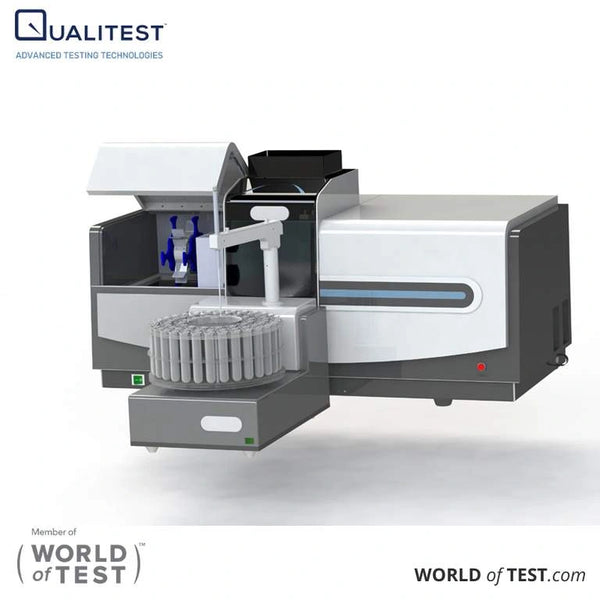
- Automated Lamp Turrets: Systems incorporate a vertical 4 / 8-lamp auto turret with 360° rotation, enabling sequential multi-element analysis without manual lamp re-alignment.
- Autosampler Integration: The QualiAAS™ Series integrates with a 70-sample autosampler. Loading up to 70 prepared sample vials enables laboratories to run calibration standards, blanks, and digested batches unattended overnight.
- Automated Burner Optimization: For flame analysis, the system automatically adjusts burner height and rotational angle to optimize sensitivity for different sample liquid characteristics.
- Software Management: Instrument control, calibration generation, and sequence management are PC-controlled via RGWIN AAS software running on MS Windows, providing straightforward software oversight.
- Electrical Setup: Standard configurations operate on 220 V / 50 Hz, with dedicated 110 V configurations available for North American installations, allowing direct connection to standard US laboratory circuits without external transformers.
Technical Specifications
The table below outlines the core hardware specifications across each instrument tier:
| Model Series | Optical System | Spectral Bandwidth (Auto) | Atomization Modes | Background Correction |
|---|---|---|---|---|
| QualiAAS™ 3000F | Czerny-Turner (277 mm focal length, 1800 lines/mm) | 0.1 / 0.2 / 0.4 / 0.8 / 1.6 nm | Air-C₂H₂ Flame (10 cm Ti burner head; optional hydride) | Deuterium lamp (1.0 Abs) & Self-Absorption (2.0 Abs) |
| QualiAAS™ 3000FG | Czerny-Turner (277 mm focal length, 1800 lines/mm) | 0.1 / 0.2 / 0.4 / 0.8 / 1.6 nm | Flame & Graphite Furnace (70-tray autosampler; optional hydride) | Deuterium lamp (1.0 Abs) & Self-Absorption (2.0 Abs) |
| QualiAAS™ 3000FG-Pro | Czerny-Turner (277 mm focal length, 1800 lines/mm) | 0.1 / 0.2 / 0.4 / 0.8 / 1.6 nm | Flame, Transverse Furnace (self-inspection), & Hydride extension | Deuterium lamp (1.0 Abs) & Self-Absorption (2.0 Abs) |
| QT-AAS29 Series | Czerny-Turner (350 mm focal length; single or double-beam) | 0.1 / 0.2 / 0.4 / 0.7 / 1.4 / 2.0 nm | Air-C₂H₂ Flame (100 mm Ti burner head; optional hydride) | Deuterium lamp (Self-Absorption standard on 2928) |
| QT-AAS30 Series | Czerny-Turner (350 mm focal length; single-beam models) | 0.1 / 0.2 / 0.4 / 0.7 / 1.4 / 2.0 nm | Flame & Transversely Heated Furnace (tube self-inspection) | Deuterium lamp (Self-Absorption option on double-beam) |
| QT-AAS60 Series | Czerny-Turner (350 mm focal length; single or double-beam) | 0.1 / 0.2 / 0.4 / 0.7 / 1.4 / 2.0 nm | Flame, Transversely Heated Furnace (self-inspection), & Hydride | Deuterium lamp & Self-Absorption (standard on 6028) |
Meet Strict Testing Benchmarks with Qualitest AAS
We believe meeting regulatory compliance and securing precise trace results should be simple.
We supply testing facilities across North America with our cost-effective products to deliver dependable daily performance without operational headaches. Our technical specialists stand ready to help you select the right configuration for your testing queue.
Contact Qualitest today to discuss your laboratory requirements or request a quote.
References (Click to expand)
- Bader, N. (2011). Sample Preparation for Flame Atomic Absorption Spectroscopy: An Overview. Rasayan Journal of Chemistry, 4(1), 49–55.
- Bankaji, I., Kouki, R., Dridi, N., Ferreira, R., Hidouri, S., Duarte, B., Sleimi, N., & Caçador, I. (2023). Comparison of Digestion Methods Using Atomic Absorption Spectrometry for the Determination of Metal Levels in Plants. Separations, 10(1), 40.
- Costa, P. G., Zebral, Y. D., & Bianchini, A. (2024). A reliable method to prepare milligram size environmental samples to quantify metal(loid)s by high-resolution graphite furnace atomic absorption spectrometry. MethodsX, 13, 102896.
- Graças, A. K. M. D., Da Boa Morte, E. S., Santos, D. C. M. B. D., Castro, J. T., Barbosa, J., Teixeira, A., Fernandes, A., Welz, B., Santos, N. D. E., & Korn, M. (2008). Sample Preparation for the Determination of Metals in Food Samples Using Spectroanalytical Methods—A Review. Applied Spectroscopy Reviews, 43(1), 67–92.
- Uddin, A. H., Khalid, R. S., Alaama, M., Abdualkader, A. M., Kasmuri, A., & Abbas, S. A. (2016). Comparative study of three digestion methods for elemental analysis in traditional medicine products using atomic absorption spectrometry. Journal of Analytical Science and Technology, 7, 1–7.