What if your quality team could guarantee long-term outdoor durability for your polyolefin products while cutting active bench time in half?
Hitting the recognized 2.0% to 3.0% carbon black target ensures your HDPE pipes and utility cables withstand years of scorching sun without brittle cracking.
Upgrading from temperamental ovens to streamlined automation eliminates operator guesswork and protects your laboratory budget. Here is how to select the right manual vs automatic carbon black content tester for your testing volume and production requirements.
Key Takeaways
- Target Concentration: Maintaining the recognized 2.0% to 3.0% carbon black concentration prevents premature solar degradation and preserves material weldability in utility cables and piping.
- Higher Testing Throughput: Automated testers accommodate four samples simultaneously and cool down in 20 minutes or less, significantly reducing technician bench time compared to single-boat manual ovens.
- Eliminated Operator Error: Automatic two-way gas switching prevents mistimed valve adjustments during the nitrogen cycle, protecting test accuracy without hands-on gas line regulation.
- Streamlined Reporting: Onboard touchscreen calculation and integrated receipt printing eliminate manual math mistakes and spreadsheet transcription risks during audits.
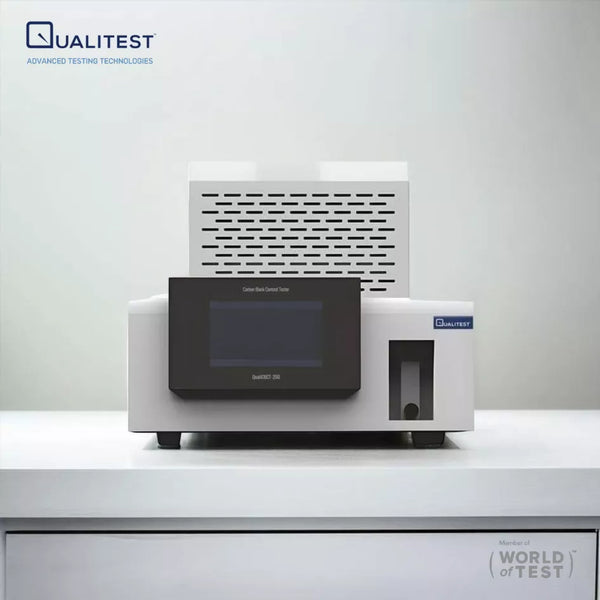
- Cost-Effective Compliance: Dedicated automated units like the QualiCBCT™-200 fulfill standard IEC 60811-4-1 testing requirements at a fraction of the capital and maintenance costs associated with research-grade TGA analyzers.
Thermal Breakdown Principles & Test Standards
Every quality supervisor already knows the underlying chemistry: isolating carbon black content requires thermalizing the polymer base under an oxygen-free nitrogen purge, followed by clean air combustion for filled resins to separate the mineral ash. The real challenge on the bench is operational control.
Recognized methods like IEC 60811-4-1 (for electrical cable insulation), ASTM D1603, and ISO 6964 all depend on two non-negotiable physical variables: maintaining an oxygen-free blanket during the initial bake, and stabilizing high-temperature dwell stages without thermal drift.
In North American polyethylene testing, ASTM D4218 often serves as a rapid muffle-furnace method for routine quality screening, while ASTM D1603 stands as the recognized referee method whenever dispute resolution or baseline precision is required. For our specific instrument, the Qualitest QualiCBCT™-200 Carbon Black Content Tester meets IEC 60811-4-1 standards, whose carbon black procedures are carried forward in IEC 60811-605:2012.
With operating temperatures reaching 1150 °C and integrated two-way gas switching, the instrument provides the physical heating and atmospheric control required across recognized tube-furnace methods, without the manual errors that plague legacy hardware.
High-Stakes US Applications & Regulatory Context
In our assessment, the operational friction of manual vs automated carbon black content testing becomes especially visible when looking at demanding US industrial applications:
1. Municipal Water and Natural Gas Piping
In broader US infrastructure, initiatives supported by the federal Bipartisan Infrastructure Law (IIJA) emphasize long-term service life for municipal utilities, where certified PE4710 high-density polyethylene pipe is standard. Similarly, state transportation departments (such as TxDOT, Caltrans, and FDOT) and the Plastics Pipe Institute (PPI TR-4) reference strict cell classifications.
Under standard US pipe specifications like ASTM D3350, Code C black polyethylene compounds mandate a minimum 2.0% carbon black concentration, measured per ASTM D1603 or ASTM D4218.
In continuous pipe extrusion, if an automated gravimetric feeder drifts and laboratory checks take hours to verify the batch, a plant risks producing significant scrap before detecting the error. Having fast, repeatable test cycles is an essential safeguard for continuous production.
2. Renewable Energy Cable Jacketing
Under electrical standards like ICEA, UL 44, and IEC 60811-4-1, outer jacketing on distribution lines requires uniform carbon dispersion.
In large utility-scale solar installations across the Southwest and Midwest, specialized DC collector cables (often governed by UL 4703) lie in open desert trays and unshaded gravel beds. Because these cables face intense ultraviolet radiation and wide temperature swings, testing programs rely on consistent thermal cycles to confirm that protective jacketing meets quality criteria.
3. Environmental Containment Geomembranes
Heavy polyolefin sheets used in civil and environmental containment, such as landfill cells governed by EPA Subtitle D (40 CFR Part 258) or retention ponds in the Permian Basin, commonly follow Geosynthetic Research Institute guidelines like GRI-GM13.
In these high-consequence containment installations, quality verification serves as a documented release gate where manual record-keeping errors can create contractual disputes.
Daily Benchtop Workflow: Manual vs Automated Testing
Looking at a technician's typical shift clarifies why older testing methods create severe laboratory bottlenecks during manual vs automated carbon black content testing:
Atmosphere Switching
In a traditional manual furnace, the operator monitors mechanical flowmeters and adjusts needle valves by hand to maintain the nitrogen purge. When transitioning to combustion, the technician must manually turn valves to switch gases.
If a technician turns a valve incorrectly or mistimes the step, atmospheric oxygen can enter the tube prematurely, burning off carbon before the intermediate weighing and ruining the run.
A side-by-side manual vs automatic carbon black content tester evaluation shows how automated systems resolve this issue. On the QualiCBCT™-200, the system features two-way air circuit control with automatic program switching, ensuring the transition between nitrogen and air occurs reliably according to the programmed settings without manual valve adjustments.
Temperature Profiling & Soak Control
Basic tube furnaces use single-setpoint dials or simple digital controllers. If a test protocol requires segmented heating steps, the technician must monitor the timer manually and adjust setpoints by hand.
Automated systems replace that hands-on requirement with programmable control. The QualiCBCT™-200 features intelligent programmable control with segmented program settings, operating from room temperature up to 1150 °C with 0.1 °C sensor sensitivity, allowing the instrument to carry out programmed heating stages on its own.
Cooling Turnaround & Batch Capacity
Basic tube furnaces rely on passive cooling. Following a 900 °C cycle, an unassisted furnace typically takes an hour and a half to two hours to cool down before an operator can safely reload it, and most legacy units accommodate only one combustion boat per cycle.
In independent academic literature evaluating polymer testing methods, researchers noted that manual calcination procedures involve direct operator exposure to high-temperature equipment and higher measurement uncertainty.
Modern automated units address this downtime through active cooling mechanisms. The QualiCBCT™-200 features a rapid cooling system that lowers the chamber from 900 °C to room temperature in 20 minutes or less, and includes a customized guide rail sample holder that tests 4 samples at a time.
Data Capture & Calculations
With manual testing, the technician jots sample weights onto paper, carries them over to a desktop terminal, punches numbers into a spreadsheet, and handwrites a tag. In our opinion, manual data entry remains a leading cause of non-conformances during formal quality audits.
Modern automatic testers allow operators to enter balance readings directly into a color touchscreen interface. The unit features built-in software with a one-click calculation function, displays the result, and outputs an immediate physical record using an integrated printer.
Verifying the Numbers You Print
Automatic calculation and direct receipt printing eliminate arithmetic and transcription mistakes, but external quality auditors always evaluate how your facility verifies baseline measurement accuracy. In standard laboratory quality assurance, facilities back up automated calculations with three routine operational practices:
First, operators verify the external 0.1 mg analytical balance with certified calibration weights before each weighing session. Because a test specimen weighs roughly 1.0 gram, an unverified balance drift of just 0.1 mg alters the third decimal place of your final percentage.
Second, facilities run a reference control sample with a certified carbon concentration (such as a pre-tested 2.5% masterbatch lot) at scheduled intervals to verify thermal consistency. Third, when a production lot faces customer dispute, technicians run duplicate specimens across consecutive boats, relying on ASTM D1603 as the recognized referee method to settle contested numbers.
Direct Comparison: Manual vs Automatic Testers
Comparing a manual vs automatic carbon black content tester side by side highlights the operational differences:
| Hardware & Workflow Attribute | Typical Manual Tube Furnace (Industry Standard) | Qualitest QualiCBCT™-200 (Verified Specifications) |
|---|---|---|
| Technician Active Time | 45 to 60 minutes per run (Industry observation) | 5 to 10 minutes of initial setup |
| Sample Capacity | Typically 1 boat per run | 4 samples tested at a time |
| Cooling Duration (900 °C to Room Temp) | 90 to 120+ minutes (Passive ambient cooling) | ≤ 20 minutes (Rapid cooling system) |
| Atmosphere Gas Switching | Manual needle valves and mechanical rotameters | Two-way air circuit control with automatic program switching |
| Thermal Range & Sensitivity | Basic single-setpoint dials; wider thermal drift | Room temperature to 1150 °C; 0.1 °C sensor sensitivity |
| Exhaust & Fume Management | Open tube ends; relies entirely on external fume hood | Equipped with exhaust gas filtration device |
| Data Calculation & Logging | Manual paper logs and external spreadsheets | Onboard software with one-click calculation and printing function |
| Stated Standard Compliance | Varies by manufacturer | Meets IEC 60811-4-1 (procedures aligned with IEC 60811-605) |
| Compatible Materials | Polyolefins | Polyethylene, polypropylene, polybutylene, rubber, cable insulation |
When to Upgrade: Volume & ROI Framework
Deciding when to transition from manual vs automated carbon black content testing depends on weekly sample volume, turnaround requirements, and staffing costs:
Low Volume (< 3 Tests Weekly): Legacy Utility
If your facility runs occasional verification checks on consistent, pre-certified resin lots, a basic manual tube furnace may remain commercially practical, provided your staff can accommodate slow cooldown cycles and maintains careful manual record-keeping.
Moderate Volume (3 to 10 Tests Weekly): The Tipping Point
This is where technician time accumulates. Based on general US manufacturing labor benchmarks, fully burdened technician rates typically range from $32 to $48 per hour. Spending several hours each week adjusting valves, waiting for cooldowns, and hand-calculating results represents an ongoing labor cost that begins to exceed the cost of modernizing equipment.
High Volume (> 10 Tests Weekly): The Automation Imperative
For high-output extrusion facilities, compounding operations, and commercial testing laboratories, automated throughput becomes essential. In peer-reviewed academic research comparing manual calcination to automated thermal analysis in polymeric resins, researchers recorded up to a 175% productivity increase along with reduced exposure to high-temperature ovens.
While that study evaluated TGA methods, it illustrates the documented efficiency gains of automated thermal cycles over manual furnaces. In high-volume facilities, the reduction in daily technician bench time can significantly shorten equipment payback periods compared to labor-intensive manual ovens, with financial returns scaling directly alongside weekly testing volume.
Dedicated Carbon Black Testers vs. TGA Systems
When exploring automation, quality teams often evaluate whether to purchase a dedicated automatic tester or utilize a multi-purpose Thermogravimetric Analyzer (TGA).
Because Qualitest supplies both instrument categories, this is an application fit evaluation rather than a simple verdict: a research-grade TGA justifies its investment when material science teams need complete thermal decomposition profiles and complex resin development curves, whereas a dedicated automated tester is the clear choice when the daily objective is routine pass-or-fail verification on production extrusion lots.
While TGA systems provide detailed decomposition curves, clear operational differences separate analytical research equipment from routine factory floor testing tools:
| Decision Metric | Typical Research TGA (Industry Estimates) | Qualitest QualiCBCT™-200 (Verified Specifications) |
|---|---|---|
| Estimated Capital Cost | $60,000 to $120,000+ (General market estimate) | Purpose-built, cost-effective equipment |
| Estimated Annual Service Plans | $8,000 to $15,000 yearly (General market estimate) | Standard laboratory maintenance |
| Specimen Mass | 10 to 20 milligrams (Typical instrument requirement) | Accommodates standard method test masses (typically 1.0 g per boat) |
| Operator Skill Level | Advanced analytical chemist or specialized technician | Standard QC shift technician |
| Testing Output | 1 sample per run | 4 samples tested at a time |
Capital Outlay & Service Upkeep
Research-grade TGAs represent a substantial capital investment, alongside recurring annual calibration and service contracts that are typical for sensitive analytical microbalances. A dedicated automated tester fulfills standard quality control testing at a much lower capital and maintenance cost.
Sample Representation & Specimen Mass
A typical TGA evaluates a tiny 10 to 20 milligram crumb. In industrial quality control, if carbon black masterbatch dispersion varies slightly across a thick pipe wall or cable sheath, a 15 mg specimen can yield localized readings that fail to reflect the bulk material.
Recognized test methods like IEC 60811 and ASTM D1603 specify a sample mass of roughly 1.0 gram, which is fifty to one hundred times larger than a TGA crumb. The combustion boats used in the QualiCBCT™-200 easily hold these standard 1.0-gram test portions, providing a much more representative cross-section of your manufactured product.
Operational Practicality on Shift
TGAs require specialized operators to handle delicate microbalance pans and interpret derivative thermograms. Dedicated testers are built for production testing environments, allowing standard shift technicians to carry out routine checks reliably.
Instrument Spotlight: Qualitest QualiCBCT™-200
The QualiCBCT™-200 Carbon Black Content Tester provides verified, automated capabilities for industrial testing:
Multi-Sample High-Temperature Chamber
The furnace chamber features a customized guide rail sample holder that accommodates 4 samples tested at a time. Built with a high-temperature alloy wire heating element and intelligent programmable control with segmented program settings, the unit operates reliably from room temperature up to 1150 °C with 0.1 °C sensor sensitivity.
The system meets IEC 60811-4-1 regulatory standards for testing polyethylene, polypropylene, polybutylene, rubber, and cable insulation materials (with test procedures aligned with IEC 60811-605), while providing the thermal capabilities used in recognized tube-furnace methods.
Automated Gas Switching & Active Cooling
The instrument integrates two-way air circuit control with automatic program switching, managing atmosphere transitions according to programmed parameters. After testing completes, the rapid cooling system brings the chamber from 900 °C down to room temperature in 20 minutes or less, keeping equipment downtime minimal between shifts.
Exhaust Filtration & Touchscreen Interface
Heating polyolefins produces heavy hydrocarbon vapors. The QualiCBCT™-200 is equipped with an exhaust gas filtration device to collect exhaust residues. Operators control tests through a 7-inch capacitive touch screen, while the onboard software provides a one-click calculation function and an integrated printer for physical test records.
Facility Requirements & Utility Checklist
Setting up the QualiCBCT™-200 involves standard laboratory utilities:
- Chamber Dimensions & Clearance (Product Spec): The QualiCBCT™-200 features a 45 x 300 mm (±5 mm) process tube with a 250 mm heated zone. Plan adequate horizontal bench clearance at both ends of the tube to slide the customized guide-rail sample holder in and out smoothly and to connect the exhaust filtration line.
- Purge Gas Supply (Nitrogen - N2): Dry, oxygen-free laboratory nitrogen cylinder equipped with a dedicated pressure regulator and in-line moisture and oil filtration per standard test method practices, preventing premature carbon oxidation during the pyrolysis cycle.
- Combustion Gas Supply (Oxygen or Clean Dry Air): Clean, dry compressed air or cylinder oxygen equipped with a pressure regulator matched to test requirements for the combustion cycle.
- Exhaust & Ventilation: The QualiCBCT™-200 includes an integrated exhaust gas filtration device to trap process residues. Under standard laboratory safety practice, the exhaust outlet should be routed into a local snorkel, canopy hood, or facility exhaust duct.
- Electrical Connection: Standard AC 220V (50/60 Hz) electrical feed, with 110V configuration available upon request. Connecting to a stable electrical circuit prevents line noise from disturbing digital controls.
- Bench Space & Balance: A stable, vibration-free workbench with sufficient clearance for the unit alongside an analytical balance (typically with 0.1 mg readability per standard gravimetric test methods).
Reliable Carbon Black Testing with Qualitest
Choosing the right manual vs automatic carbon black content tester helps your facility protect product quality, satisfy audit requirements, and maintain testing velocity. At Qualitest, we deliver cost-effective products supported by North American technical support, helping your team maintain compliance without overspending on capital equipment.
Ready to streamline your carbon black testing workflow? Contact our engineering team today for technical guidance or to request a competitive price quotation.
References (Click to expand)
- De Souza, A., & Santos, J. H. Z. D. (2025). Comparative Study Between Calcination and TGA Techniques in the Quantification of Carbon Black Content in Polymeric Resins. Brazilian Journal of Analytical Chemistry.