Is your material data strong enough to back up your brand's biggest promises? We think that having the right numbers is the real secret to total peace of mind in every single batch you ship.
This guide sweeps away the guesswork between tensile testing vs compression testing so you can hit your quality targets every single time. Let’s look at the tools that ensure your results are nothing short of perfection.
Before we start picking apart the heavy details, here is a quick cheat sheet showing exactly how these two methods stack up against each other:
| Feature | Tensile Testing | Compression Testing |
|---|---|---|
| Force Direction | Pulling apart (stretching) | Pushing together (crushing) |
| What It Measures | Ultimate strength, yield strength, elongation | Compressive strength, crush resistance |
| Typical Materials | Metals, plastics, rubber, textiles | Concrete, stone, ceramics, cardboard |
| Real-World Example | Elevator cables, seatbelt webbing | Building pillars, shipping boxes |
| Ideal Qualitest Gear | Benchtop Tensile Tester QTens-I | 3000 kN Universal Testing Machine QTM-3000 |
Core Principles of Mechanical Testing
To see the difference, we first have to look at which way the pressure is heading when you put a little chunk of material (which pros call a "coupon" or "specimen") through its paces.
Tensile Testing Overview
A tensile test is a basic but incredibly vital check where you stretch a sample until it finally snaps. To put it in plain English, the machine grabs the material from both ends and applies a significant pulling force.
This check watches how the material reacts to being stretched and spits out some really vital numbers:
- Ultimate Tensile Strength (UTS): The absolute max amount of yanking a bit of material can take before it gives up.
- Yield Strength: The exact moment a material starts to get bent out of shape for good.
- Elongation: How much the stuff actually stretches out like a piece of taffy before it goes "pop."
Related article: Yield Strength vs. Tensile Strength: What’s the Difference?
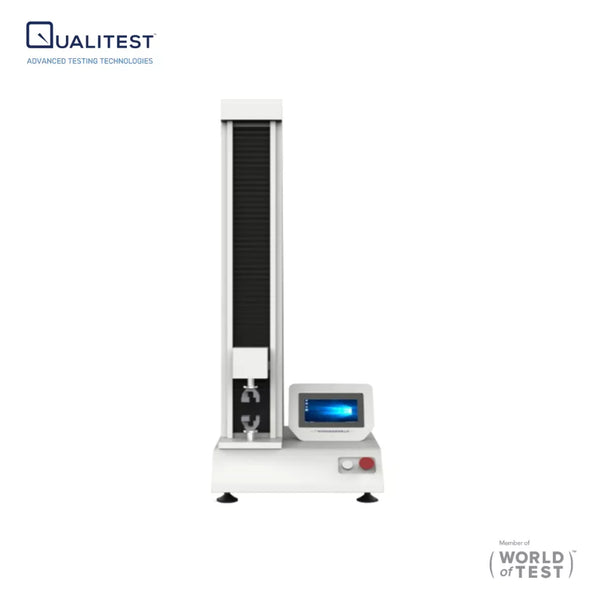
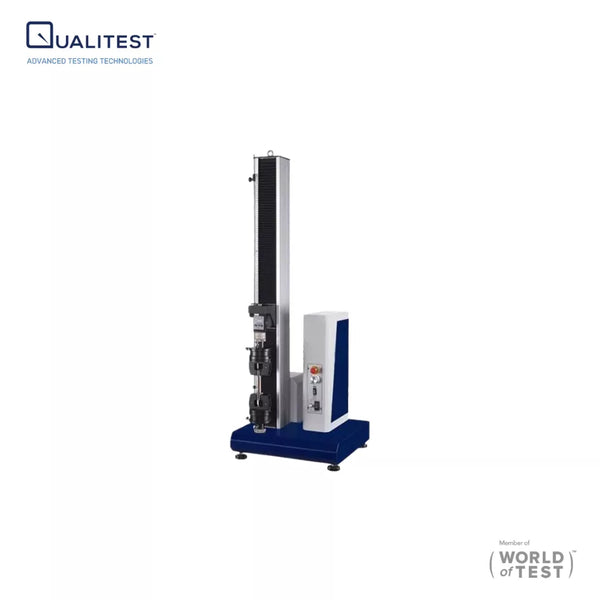
Think about stretching a heavy-duty bungee cord until it finally gives out, or pulling a tough piece of seatbelt webbing to the absolute limit. For smaller, everyday pulling tasks, we frequently point labs to dedicated units like our Benchtop Tensile Testing Machine - QTens-I or the slightly more advanced Tensile Testing Machine - QTens-II.
As noted in foundational material studies, tensile testing is overwhelmingly recognized as the primary method for evaluating metals, polymers, and fabrics. In our view, it remains the go-to method for checking materials because it tells you so much about how "stretchy" a material is, which is a total necessity for anything moving around in the real world.
Related article: Electromechanical vs Hydraulic UTM: Choosing Your System
Compression Testing Overview
On the flip side, a compression test checks how stuff handles being shoved together or squashed flat. During this process, you put the material between two heavy metal plates and pile on the force, giving the specimen a serious squeeze.
This check helps the smart folks in the lab figure out:
- Compressive Strength: The biggest, heaviest load a material can carry before it turns into a pile of rubble.
- Crush Resistance: This is a massive deal for shipping boxes or plastic jugs that need to survive being stacked in a warehouse.
- Modulus of Elasticity: How much the material wants to spring back to its original shape when you stop squishing it.
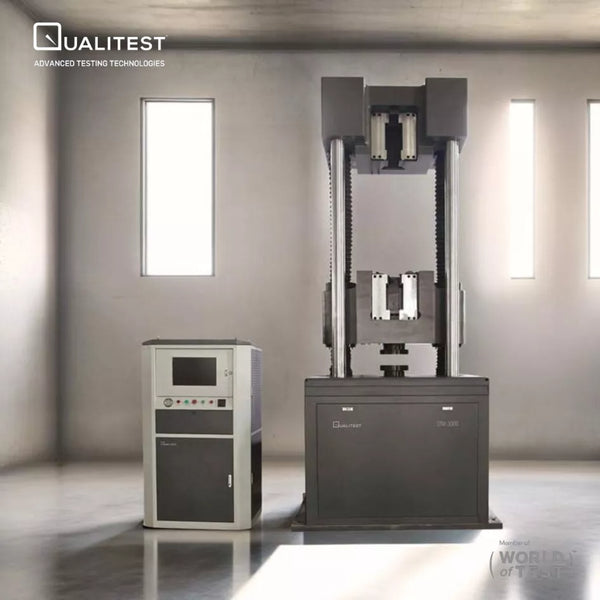
Picture a massive hydraulic press slowly squashing a concrete brick, or seeing how much downward weight an empty aluminum can takes before it totally crumples. When you need to crush something genuinely massive like heavy construction materials, you pull out the big guns such as our 3000 kN Universal Testing Machine - QTM-3000.
We see compression testing get treated like an afterthought in some places, but studies confirm it is the absolute standard for brittle, stiff materials meant to bear heavy loads. We honestly think it is the solid foundation of safety for anything meant for buildings or logistics gear.
Comparative Analysis: Tension vs. Compression
When you’re weighing up a tensile test vs compression test, the big thing is really about what’s going to happen to your product out in the wild.
If you are making a cable for an elevator, you have got to know how much pulling weight it can handle before it snaps. That makes the tensile test your best friend.
But if you are pouring the big concrete legs that hold up a bridge, the "pulling" strength does not matter nearly as much as whether the material can handle the crushing weight of the whole structure sitting on its head. That is where the compression test is the star of the show.
Managing Yield Asymmetry and Bi-Modulus Results
We always remind clients that materials often show different elastic moduli or yield curves depending on whether they are pulled or pushed. This is known as bi-modulus behavior.
For example, testing rocks with direct tension and compression gives the most reliable, distinct results compared to simpler bending methods.
Even in highly advanced biomedical alloys, you will sometimes see unique yield points between the two testing modes. We also see this divergence in materials like asphalt, where uniaxial compression provides much more stable strain readings at extreme temperatures than indirect pulling methods.
For a truly complete quality setup, you cannot rely on just one test. The most reliable products are always born from a healthy mix of both.
Related article: Guide: How to Calculate Strain Rate in Tensile Test
Specimen Preparation and Compliance Standards
To get numbers you can actually trust in a tensile test vs compression test, how you prep your little chunk of material is tied to some very strict rules. Sample prep is usually the quiet disaster that ruins good data. Even a top-tier machine cannot save a sloppy, poorly made specimen.
- For Tensile Testing: Samples are usually carved into a "dog-bone" shape. This specific look makes sure the material snaps right in the skinny middle instead of slipping out of the grips.
- For Compression Testing: Samples are usually made into perfect little cylinders or blocks. Getting the top and bottom perfectly flat is the hardest but most vital part, because a tiny crooked angle throws your whole strength score off.
The Emergence of Indirect Testing Methods
Sometimes, gripping a sample for a direct tensile pull is just too difficult, especially for stiff soils or soft rocks. In these situations, labs actually use compressive loading to figure out the tensile strength.
Methods like the Horizontal Compression Test apply a horizontal squeeze to force a tensile failure, completely avoiding traditional gripping problems while delivering highly reproducible data. There are even newer fixtures available today that successfully convert a compressive machine load into direct tensile stress for tricky materials like granite.
Related article: Tensile Test Grips Guide: Selection & Practices
Key Industry Applications
Just about every company that builds physical products relies on these checks. Here is how different groups put this gear to work:
Planes & Cars
These folks lean hard on tensile testing to make sure their high-performance light metals and carbon bits can handle being pulled on while they’re zooming around. Think about checking the exact breaking point of a passenger seatbelt or the aluminum struts in an airplane wing.
Construction
Compression testing is the undisputed heavy hitter here.
We are convinced it is the most important thing for making sure buildings don’t develop cracks or fail ten years from now. This means verifying that a fresh batch of concrete can actually hold up the massive weight of a ten-story parking garage.
Shipping & Boxes
Cardboard boxes and pallets get squashed in compression testing. In our experience, this is usually the difference between a product showing up in one piece and a total disaster for your customer.
Confirming that a standard corrugated delivery box will not instantly collapse under a stack of dog food bags saves enormous amounts of money.
Medical Gear
They use both. For things like new hip joints, the way tension and compression play together is what makes sure the patient stays comfortable and safe.
A titanium joint replacement needs to survive the crushing downward force of a person walking, while the surgical sutures need to hold tight against pulling.
Choosing the Right Method for Your Facility
At the end of the day, picking between tensile testing vs compression testing comes down to what the official rulebooks say and what your product is actually doing for its user.
But how do you make the final call for your daily operations? We usually ask our clients to look at how their product physically lives its life.
When Tensile is the Clear Winner:
If your component spends its life stretching, hanging, or pulling, tensile data is exactly what you need. We frequently see manufacturers save serious money here.
By finding the exact point where a flexible plastic or metal alloy stretches out of shape, they stop over-engineering their parts and stop paying for extra raw materials they don't actually need.
When Compression is the Only Option:
If your product has to hold up a heavy load or absorb a direct impact, compression is your primary tool. We see plenty of companies ignore this step, only to end up with product packaging that completely crumbles under the weight of warehouse stacking.
Getting your crush resistance numbers right ensures your product survives sitting at the absolute bottom of a heavy pile.
Why the Best Labs Do Both:
We feel like some labs are only seeing half the story by relying on just one metric.
A full picture of your material usually needs both. Think about an airplane's landing gear, which gets pulled tight during flight and then aggressively smashed into the runway on landing.
Having this complete set of data makes it incredibly easy to see exactly how long your gear will last, prevents expensive field disasters, and keeps the safety inspectors completely happy.
Selecting Equipment: Tensile vs. Compression Testers
A lot of folks buying gear get a bit mixed up when they start looking at a tensile tester vs compression tester. In the old days, labs had to buy two separate, bulky machines. One had special "hands" to grab the stuff, while the other had big, flat plates for crushing.
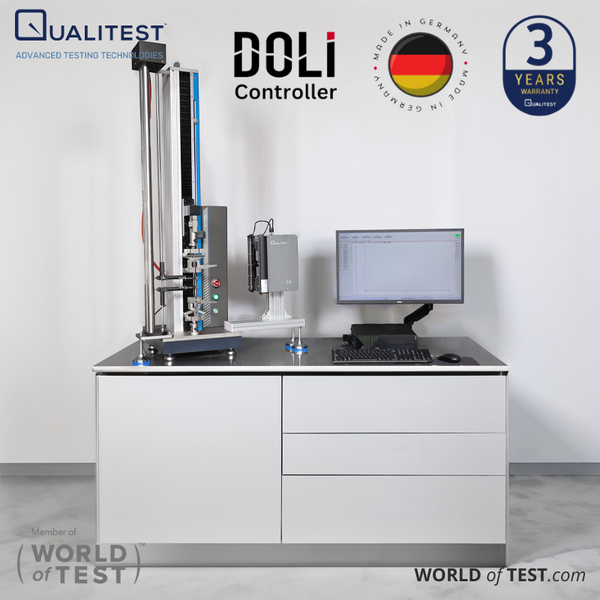
Today, the debate between buying separate machines is entirely resolved by smarter engineering. We are huge advocates for Universal Testing Machines (UTMs). A UTM applies uniaxial tension or compression using the exact same load cell, control system, and frame; you simply swap out the fixtures.
When matching a UTM to your facility's daily tasks, here is how we break down the options:
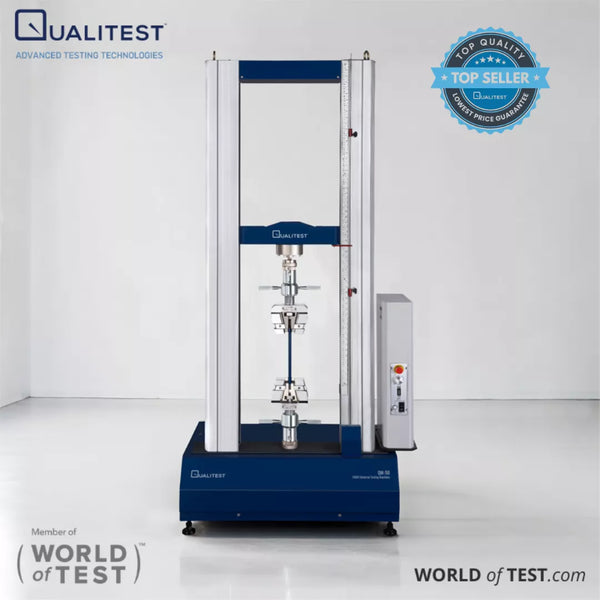
- For Everyday Versatility: If your lab handles a variety of medium-strength materials, a unit like our 50kN Universal Testing Machine - QM-50 Series or the QM 100-600kN covers almost all the bases.
- For Tight Spaces: Short on floor space? A Single Column UTM Series - QM-5 or the Universal Testing Machines QE-Series Single-Column gets the job done without eating up your whole room.
- For Maximizing Budgets: Research consistently highlights that multi-mode testers are highly cost-effective, particularly for teaching and R&D facilities trying to stretch their dollars.
- For Highly Specialized Checks: Modern setups easily adapt to complex testing, like adding high-temperature thermal chambers or executing tests where zones experience tension and compression simultaneously.
Boost Your Testing Accuracy with Qualitest
At Qualitest, we know that filling your lab with accurate, dependable gear is the only way to keep your name clean and your products safe. We also believe that outfitting a facility shouldn't have to break your budget.
That is why we offer a variety of cost-effective Universal Testing Machines built to handle pulling and crushing tasks with total precision. We are here to help you get your data faster and keep your overhead low while reaching for perfection.
Reach out to our team today to find a smart, affordable fit for your specific operations.
References (Click to expand)
- Affolter, C., Thorwarth, G., Arabi-Hashemi, A., Müller, U., & Weisse, B. (2019). Ductile Compressive Behavior of Biomedical Alloys. Metals, 10, 60.
- Agirre, J., Abedul, D., De Argandoña, E., Otegi, N., Galdos, L., & Erice, B. (2023). An Automatic Thermo-Mechanical Testing Apparatus for Metal Forming Applications. International Journal of Impact Engineering.
- Bensing, T., & Moneke, M. (2024). Development of a novel testing concept for combined characterisation of tensile and compressive properties. International Journal of Mechanics and Materials in Design, 20, 895 - 907.
- Bolton, W. (1987). Properties of materials. 8-28.
- Chang, Y., Wang, B., Li, X., Wang, C., & Dong, H. (2020). A new continuous tensile-compressive testing device with friction-counteracting and anti-buckling supporting mechanism for large strain. Journal of Materials Processing Technology, 278, 116540.
- Chen, H., Alamnie, M., Barbieri, D., Zhang, X., Liu, G., & Hoff, I. (2023). Comparative study of indirect tensile test and uniaxial compression test on asphalt mixtures: Dynamic modulus and stress-strain state. Construction and Building Materials.
- Guan, F., Li, Y., Gao, G., Zachert, H., Eichhoff, G., & Beroya-Eitner, M. (2022). Horizontal Compression Test: A Proposed Method for Indirect Determination of Tensile Strength of Stiff Soils and Soft Rocks. Frontiers in Earth Science, 10.
- Haeri, H., Sarfarazi, V., Marji, M., Yavari, M., & Zahedi-Khameneh, A. (2021). Direct tensile strength measurement of granite by the universal tensile testing machine. Smart Structures and Systems, 27, 559.
- Kumar, S., Surya, B., & Arjun, V. (2024). Micro universal testing machine system for material property measurement of micro structure. ICAMCS-2022.
- Saeed, M., Mairaj, F., Ezzy, A., & Sufiyan, M. (2019). Fabrication of Automated Desktop Universal Tensile Testing Machine. 3, 184-187.
- Sharma, R., & Rai, J. (2021). Design & Development of a Computer Controlled Tensile Strength Testing Machine for Testing of Strings & Fabrics. International Journal of Advanced Engineering Research and Science.
- Srivastava, A., Prajapati, M., Patel, J., & Srivastava, R. (2012). An Estimation of Compression and Tensile of some Practical Material.
- Swallowe, G. (1999). Tensile and Compressive Testing. 242-247.
- Tiernan, P., & O'Connor, G. (2018). Design, manufacture and test of a high temperature tensile and compression testing device. Procedia Manufacturing, 17, 672-679.
- Wang, R., Li, Y., Lv, D., Zhao, W., Zhang, C., Zachert, H., Eichhoff, G., & Beroya-Eitner, M. (2022). Comparison of Test Methods for Determining the Tensile Strength of Soil and Weak Rocks. Frontiers in Earth Science, 10.
- Wu, Y., Liu, J., Wu, Z., Liu, J., Zhao, Y., Xu, H., Wei, J., & Zhong, W. (2024). A universal direct tensile testing method for measuring the tensile strength of rocks. International Journal of Mining Science and Technology.
- Zhang, Y., Zheng, H., He, H., Sha, P., Wang, L., Qi, S., Huang, X., & Ye, J. (2024). Measurement of Elastic Bi-modulus of Rock-type Materials: Insight from comparative and parallel tests. Bulletin of Engineering Geology and the Environment, 83.
- 김래겸 & 최남선. (2012). Tensile and compression tester.