Could your brand reputation survive a sudden surge in product failure claims?
Durability isn't a dry spec-sheet detail; it is the heartbeat of your company’s profit margins. To skip the supply chain nightmares, you need a way to prove your gear can handle years of punishment in just a few lab hours.
This guide pulls back the curtain on the heavy-duty machinery and methods needed to fix lab bottlenecks and hit peak compliance.
Key Takeaways
- The Ultimate Defense: Wear testing gives you the cold, hard facts you need to stop massive product failures before they ever reach the loading dock.
- The Right Tool for the Grind: Matching the perfect testing standard (like Taber, Martindale, or DIN) to your specific material is an absolute necessity for surviving strict industry audits.
- Smart Buying Habits: Picking the right testing machine means looking way past the initial price tag to focus heavily on total ownership costs and time-saving automation.
What is an Abrasion Test?
At the very center of checking durability is the big question of friction. If you’re just setting up a new lab facility, you’re probably wondering: what is abrasion test?
To put it in plain English, it is your ultimate line of defense against massive product recalls and angry warranty claims. Research studies define this process as subjecting a material to controlled mechanical action (like sliding, rolling, impact, or particle flow) to exactly measure material loss or surface damage.
From where we’re sitting, this test is the most financially honest way to see if a product is actually built to last. By faking years of rough handling in just a few short hours, these checks give manufacturers the cold, hard data needed to speed up time-to-market and avoid massive supply chain disasters.
Key Industrial Applications
Checking for scratches and scrapes isn't just for one tiny corner of the factory. We’ve noticed that as customers get pickier about quality, all sorts of companies are leaning on these checks to protect their bottom line:
Automotive Components
We see this as a high-stakes area. Those car seats and dashboard plastics have to stay looking sharp and fresh after a whole decade of people sliding in and out (we’ve all seen those worn-out car interiors, and it is a total deal-breaker for resale value and a fast track to OEM rejections).
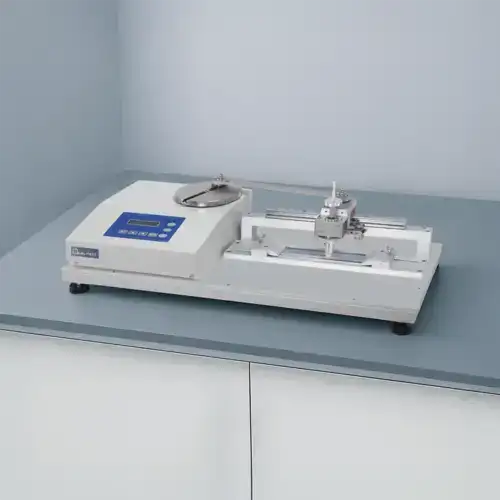
Think about testing the heavy-duty leather wrapping a steering wheel on a massive commercial trucking rig, or evaluating the rigorous abrasion resistance of automobile seat upholstery. You might also be making sure the center console infotainment display won't get ruined by fingernails using specific gear like the Touchscreen Coating Testing Equipment - QT-TCART-8380.
Textiles and Apparel
More than just looking good on a hanger, we’re convinced that the way your couch or gym gear keeps its shape is what actually keeps people coming back to buy from you again.
For instance, putting the reinforced knee panels of professional construction workwear through the wringer to see exactly when they finally blow out. In fact, textile tests traditionally run until threads literally break or a hole visually appears, saving you from disastrous online reviews.
Packaging and Labeling
Checking how well ink stays on a cardboard box ensures that your branding and those all-important barcodes don’t get smudged into a blurry mess during a bumpy truck ride, ensuring absolute compliance with strict retail vendor requirements.
Construction and Pavements
Testing how floor tiles, concrete, and coatings handle shoes shuffling over them is, in our eyes, the only real way to prove your product meets stringent commercial building codes.
This could mean dragging heavily weighted sliders across premium vinyl plank flooring using specialized units like the BCA Floor Abrasion Resistance Tester - QualiBCA™ to simulate thousands of dirty, muddy boots. It also means dragging paraffin blocks over pavement to quantify aggressiveness or grinding concrete to rate durability.
Types of Abrasion Testing
Since different materials react in their own way when they are stressed, there is no single "magic fix" for checking wear. In our experience, the types of abrasion testing you go with should be based entirely on the specific environments your product will face.
Here are the heavy-hitting categories:
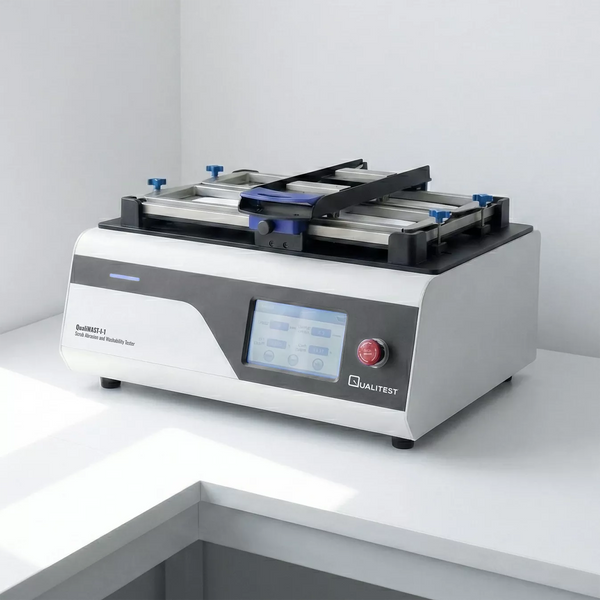
- Flat-Surface Rubbing (Two-Body Abrasion): This involves direct sliding between your specimen and an abrasive counterbody. Mostly for cloth and thin coatings, we’ve found that using something like the QualiWAST-I Scrub Abrasion and Washability Tester is the most spot-on way to fake the way things slide against each other.
- Spinning Abrasion: This involves twirling a sample against a rough-textured wheel. We consider this the sheer perfection of tests for hard stuff like plastics or metal.
- Falling Abrasive Tests (Three-Body Abrasion): Dropping loose gritty particles onto a surface. We suggest this specifically to see if your paint jobs can handle the elements without chipping.
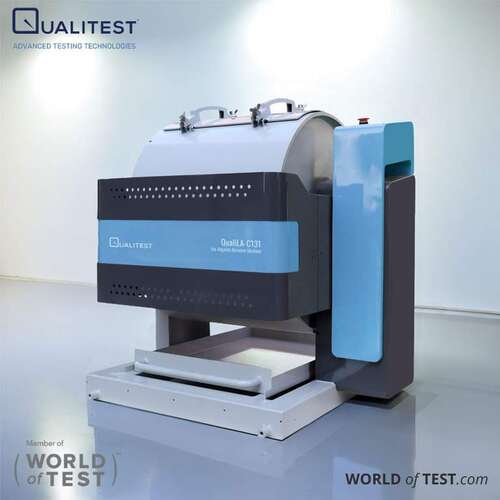
- Cylindrical Drum & Impact Abrasion: Usually for rubber, boot soles, or evaluating heavy aggregates with rock-tumbling machines like the Los Angeles Abrasion Machine - QualiLA™ C131 or the Micro Deval Abrasion Machine - QualiMD™ T327. For intense mining and grinding components, high-stress jaw crusher rigs are an absolute necessity for figuring out how materials handle constant grinding.
Abrasion Testing Methods
To keep your supply chain legally protected, engineers use a handful of classic, heavily regulated ways to measure surface failure. While there are a bunch out there, we’re betting these three are the most vital for passing a modern lab audit:
The Taber Abrasion Method (ASTM D4060 / ISO 7784)
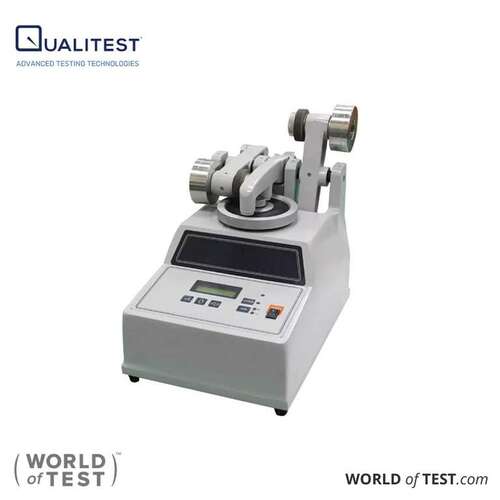
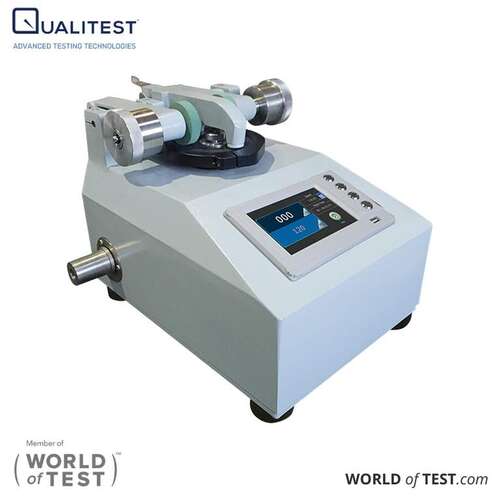
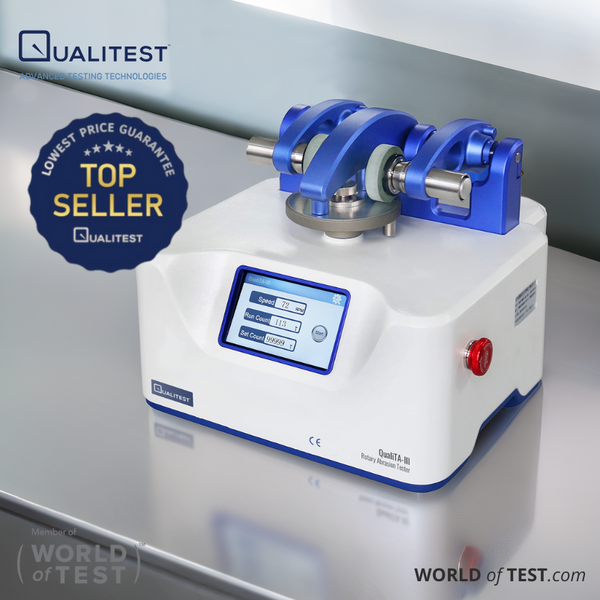
This is the big one everyone talks about. You put your sample on a spinning plate while two rough wheels push down on it. For strict compliance, industry pros rely heavily on units like the Taber-type Rotary Abrader - Abrasion Tester QualiTA-III or the highly precise QualiTA™ I and QualiTA™ II models.
Pro tip: keeping those grinding wheels perfectly fresh with an Abrasive Wheel Refinisher - QualiTab™ Trim 100 is completely non-negotiable for passing an inspection. In our opinion, the "X" shaped scratch it leaves behind tells the most complete story about how a surface holds its own.
The Martindale Abrasion Method (ISO 12947 / ASTM D4966)
Usually for the fabric crowd. This one rubs cloth in a weird, curvy Lissajous pattern. We see this as the most lifelike way to mimic how humans actually sit on or touch a fabric over a long stretch of time.
It is the absolute go-to choice for proving that the plush velvet upholstery going into a fleet of airline seats won't develop those nasty, nubbly bald spots after a few hundred long-haul flights.
The DIN Abrasion Method (ISO 4649 / ASTM D5963)
The gold standard for rubber. A little plug of material gets shoved against a big rotating drum using dedicated setups like the DIN Abrader - QualiDIN™ 1000 Series. We find this gives you the most reliable, "get-it-right-every-time" results for tough industrial parts.
Think about checking the thick rubber treads on heavy machinery tires or testing the rugged outsoles of expensive hiking boots before they ever hit a sharp, rocky trail.
Interpreting Wear Results
Running the machine is just the start; making sense of the results quickly is how you fix lab bottlenecks. We’re firm believers that picking the right way to measure the damage is just as big a deal as the test itself:
- Mass Loss: You weigh the piece before and after it gets scuffed up. We see this as the most clear-cut, "no-lies" way to see how much skin your product lost.
- Volume or Depth Loss: Usually for the rubber folks and concrete testers. We think checking the actual amount of space the material took up gives a much more honest answer than just looking at weight alone.
- Visual Evaluation: Super important for clothes and labels. We often see QA teams use a visual grade or image-based endpoints as the final "yes or no" for stuff where looks dictate the retail price.
Industrial Case Studies
If you are wondering how all these concepts actually play out on the factory floor, let’s look at a few concrete situations. It is one thing to talk about friction, but it is another entirely to measure the damage when massive manufacturing contracts are on the line:
- The Smartphone Screen Scrape: Before a highly anticipated flagship phone hits the market, makers have to know if loose change and car keys are going to wreck that beautifully glassy finish. They use precise micro-abrasion and ball cratering rigs to mimic that exact pocket-jostling friction to avoid millions in returns.
- The Hydraulic Concrete Challenge: When engineers build massive dams or hydraulic structures, the concrete must survive intense flowing water packed with abrasive sediment. Custom rigs are deployed to study exactly how that concrete breaks down under flowing slurry conditions.
- The Solar Glass Test: Building panels meant to bake in the sun for twenty years? That glass has to block out highly corrosive salt spray and deal with constant, heavy scratching from blowing sand. Testing crews use highly targeted gear like the QualiSPAbrade™ 1096 for Solar Glass Coating Testing to ensure the panels won’t get cloudy and lose efficiency the second a dust storm rolls through.
What is Abrasion Tester? (And How to Pick the Right One)
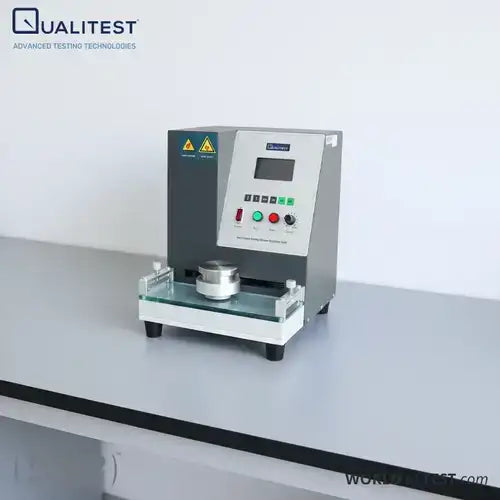
To get these answers without any guesswork, you need a serious piece of equipment. So, exactly what is abrasion tester?
Think of it as a heavy-duty compliance machine built to rub your samples exactly the same way, every single time, totally wiping human error off the map. Academic reviews emphasize that many basic lab testers do not perfectly replicate real field conditions, and the correlations between standard rigs and real-world performance can sometimes be weak.
Because this machine acts as a literal legal shield for your supply chain, figuring out how to choose abrasion tester setups is a massive operational call. Instead of just staring at the initial price tag, we highly suggest picking a tester whose contact type and stress level actively mirror your exact working environment:
- Strict Compliance: Double-check that the machine plays perfectly nice with the specific industry standards (ASTM, DIN, ISO) your buyers strictly demand.
- Material Selection: We’re huge on making sure the machine matches the material. A tool meant for soft shirts will spit out totally unreliable data if you try to test ultra-high-molecular-weight polyethylene. For heavy-duty plastics, you need a heavy hitter specifically built for the job, like the Abrasion Resistance Tester - QualiAbrade™ UHMW.
- Fixing Daily Bottlenecks: If you’ve got a heavy backlog of samples every day, your QA team can’t afford to babysit a spinning wheel. We suggest snagging something with an auto-stop feature and automated cycle counting so your team can tackle other high-value tasks.
- Total Ownership Cost: We see a rock-solid, low-maintenance build and easy-to-swap parts as the two biggest secrets to dodging expensive repair downtime and keeping your lab humming along ten years from now.
Why Industry Leaders Choose Qualitest Equipment
As North American suppliers, we know you need elite gear without the luxury price tag. Quality shouldn't cost an arm and a leg. At Qualitest, we provide reliable, cost-effective tools built for absolute accuracy and the best ROI in the business.
Ready to stop guessing? Take a look at our full pile of cost-effective abrasion testers here and let’s get to work on building something that lasts.
References (Click to expand)
- Alber, M., Yaralı, O., Dahl, F., Bruland, A., Käsling, H., Michalakopoulos, T., Cardu, M., Hagan, P., Aydin, H., & Özarslan, A. (2013). ISRM Suggested Method for Determining the Abrasivity of Rock by the CERCHAR Abrasivity Test. Rock Mechanics and Rock Engineering, 47, 261-266.
- Bayes, A., & Dean, F. (1946). RECENT ADVANCES IN ABRASION TESTING OF TEXTILES. 37.
- Gant, A., & Gee, M. (2011). A review of micro-scale abrasion testing. Journal of Physics D: Applied Physics, 44, 073001.
- Hawk, J., Wilson, R., Tylczak, J., & Dogan, O. (1999). Laboratory abrasive wear tests : investigation of test methods and alloy correlation. Wear, 225, 1031-1042.
- Jasińska, I. (2025). Textile fabrics abrasion resistance – The instrumental method for end point assessment. AUTEX Research Journal, 25.
- Jerkovic, I., Pallarés, J., & Capdevila, X. (2010). STUDY OF THE ABRASION RESISTANCE IN THE UPHOLSTERY OF AUTOMOBILE SEATS. AUTEX Research Journal, 10, 14 - 20.
- Kalácska, Á., Nagarajan, R., Tóth, L., De Baets, P., Subramanian, K., Siengchin, S., & Kalácska, G. (2022). Surface Damage Analysis on the Application of Abrasion and Slurry Erosion in Targeted Steels Using an Erosion Test Rig. Lubricants.
- Kim, D., Kang, H., Song, C., Oh, J., Cho, J., & Rostami, J. (2021). Design of Pin-on-Disk Type Abrasion Testing Machine for Durability Assessment of Rock Cutting Tools. International Journal of Precision Engineering and Manufacturing, 22, 1249 - 1270.
- Liu, Q., Li, L., Andersen, L., & Wu, M. (2022). Studying the abrasion damage of concrete for hydraulic structures under various flow conditions. Cement and Concrete Composites.
- Llopis-Castelló, D., Alonso-Troyano, C., Álvarez-Troncoso, P., Marzá-Beltrán, A., & García, A. (2025). A Novel Pavement Abrasion Test for Assessing Injury risk to Vulnerable Road Users. Sensors (Basel, Switzerland), 25.
- Pondicherry, K., Sukumaran, J., Baets, P., & Keresztes, R. (2015). Abrasion test facilities: a review. 12, 19-29.
- Pourasiabi, H., & Gates, J. (2022). Ball mill abrasion test (BMAT): Method development and statistical evaluations. MethodsX, 9.
- Resendiz-Calderon, C., Cázares-Ramírez, I., Samperio-Galicia, D., & Farfán-Cabrera, L. (2022). Method for conducting micro-abrasion wear testing of materials in oscillating sliding. MethodsX, 9.
- Slater, K. (1987). The Progressive Deterioration of Textile Materials. Part II: A Comparison of Abrasion Testers. Journal of The Textile Institute, 78, 13-25.
- Slota, J., Kubit, A., Gajdoš, I., Trzepieciński, T., & Kaščák, Ľ. (2022). A Comparative Study of Hardfacing Deposits Using a Modified Tribological Testing Strategy. Lubricants.
- Strzałkowski, P., Kaźmierczak, U., & Wolny, M. (2020). Assessment of the method for abrasion resistance determination of sandstones on Böhme abrasion test apparatus. Bulletin of Engineering Geology and the Environment, 1-10.
- Subedi, A., Kim, H., Lee, S., & Lee, M. (2025). Assessing Abrasion Resistance in Concrete Pavements: A Review. Applied Sciences.
- Vencl, A., Manić, N., Popovic, V., & Mrdak, M. (2010). Possibility of the Abrasive Wear Resistance Determination with Scratch Tester. Tribology Letters, 37, 591-604.