Keeping your commercial food inventory exceptionally stable on retail store shelves without transforming the perishable items into dry, flavorless basic commodities is the ultimate financial prize everyone is desperately chasing. When modifying your facility's preservation methods, you will eventually hit a major technical crossroad: deciding between a freeze dryer vs food dehydrator.
But is a food dehydrator the same as a freeze dryer? Absolutely not. While warm-air blowing machines produce heavy, jaw-tiring textures, vacuum-based ice sublimation successfully locks in a spectacular, lightweight crispness that easily commands top-tier retail pricing.
Read through our straightforward side-by-side comparison below to easily spot the massive operational differences in how a food dehydrator vs freeze dryer actually processes raw ingredients.
Quick Comparison: Freeze Dryer vs Food Dehydrator
| Parameter | Standard Food Dehydrator | Food Freeze Dryer |
|---|---|---|
| Moisture Reduction | 90% to 95% | Up to 99% (highly stable!) |
| Process Temperature | Hot air convection (120°F to 160°F) | Sub-zero vacuum sublimation (-40°F to -50°F) |
| Average Cycle Time | 6 to 12 hours (fast but applies heat) | 24 to 48 hours (longer but gentler) |
| Commercial Shelf Life | 1 to 5 years (with proper packaging) | Up to 25 years stable |
| Nutritional Retention | ~50% to 60% (thermal degradation) | Up to 97% (maximum preservation) |
| Market Value Tier | Standard commodity pricing | Premium-tier retail pricing |
Is a Food Dehydrator the Same as a Freeze Dryer?
As clearly demonstrated in the table above, the quick answer to is a food dehydrator the same as a freeze dryer is a resounding "absolutely not" (though all you closet dried-meat lovers out there know exactly how incredibly tasty a heavily marinated piece of beef jerky can be).
In our professional view, lumping these two highly distinct machines together as just standard "drying equipment" totally ignores the fascinating scientific research regarding what actually happens to the biological cellular structure during the moisture removal process.
While both physical systems pull wetness out to successfully prevent bacterial spoilage, they utilize completely opposite thermodynamic physics. Academic literature consistently shows that standard dehydrators rely on continuously heated atmospheric air to slowly drag liquid water out, which frequently leaves you with shriveled, incredibly dense, and structurally compromised results.
Freeze dryers, completely conversely, freeze the fresh product completely solid and utilize a highly specialized vacuum pressure to snatch the frozen water away as a clean, invisible vapor.
We firmly believe treating these two physical processes like they are identically functioning concepts is a surefire way to dump your precious capital budget into a physical asset that simply cannot produce the premium, high-margin results your retail customers are loudly demanding.
To see exactly how fast this true vacuum sublimation process can realistically happen, we engineered our Small Food Freeze Dryer – QualiFFD™ 4S (New Generation) with a highly optimized integrated chamber and cold trap, featuring a significantly shortened vapor path and one-button operation that dramatically speeds up your daily batch turnaround times.
Comparing the Core Technologies: Operating Principles
Let us look closely at the fundamental physics quietly governing each popular method.
The Standard Dehydrator:
A basic food dehydration unit constantly relies on endless warm drafts and continuously blowing hot air to gently coax liquid water out. It typically runs at warm-bath temperatures, usually hovering around 120°F to 160°F (49°C to 71°C).
While this everyday drying method has successfully been used for generations and the physical machines will definitely not cost you an arm and a leg, blowing extremely hot air on sensitive food for hours and hours causes significant thermal degradation and severely alters the delicate cellular frameworks.
The Food Freeze Dryer:
A proper freeze drying machine uses a highly intelligent, multi-stage process scientifically called lyophilization. First, it completely drops the internal temperature until the raw food is solidly frozen. Then, it vigorously pulls a deep, high-pressure vacuum inside the stainless steel chamber.
Under this extremely low atmospheric pressure environment, the solid ice turns straight into a gaseous vapor without ever melting into liquid water first, effectively avoiding the damaging liquid phase entirely and thoroughly suppressing bacterial spoilage reactions.
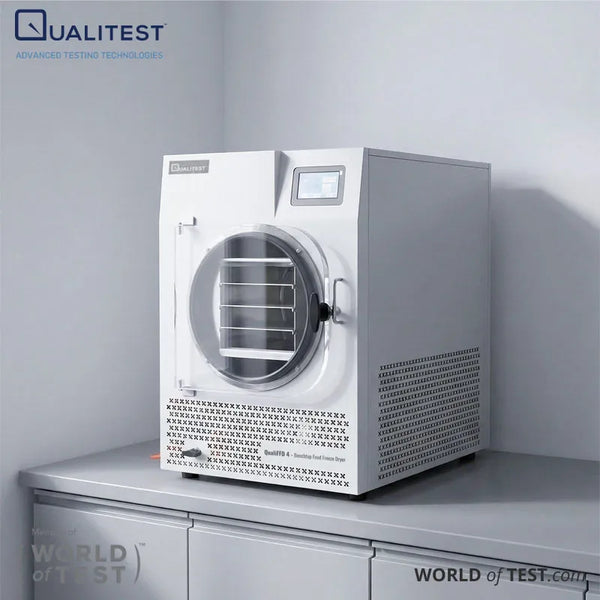
For instance, our Benchtop Food Freeze Dryer – QualiFFD™ 4 achieves a deeply chilling -60°C cold trap temperature and pulls a remarkable 5 Pascal ultimate vacuum level to ensure this vapor transition happens flawlessly, even with a full 4-kilogram maximum feed capacity and a 0.4 square meter drying area.
Finally, a remarkably gentle warming cycle carefully sweeps away any lingering bound moisture. This freezing, exceptionally gentle method successfully keeps the item's original plump shape, gorgeous natural color, highly appetizing aromas, and fragile nutritional elements completely intact.
Related article: Best Practices for Your Food Freeze Drying Cycle
Food Dehydrator vs Freeze Dryer: A Breakdown
For commercial test kitchens, specialized pet food manufacturers, and boutique ingredient developers, sorting out the freeze dryer vs food dehydrator debate comes down to long-term financial return, final retail quality, daily batch speeds, and specific target demographics.
1. Nutrition and Total Quality
Processing raw food in a standard dehydrator practically cooks away a large chunk of the healthy organic compounds because of that long, unyielding warm air blast. Vacuum sublimation, conversely, is repeatedly described by scientists as the undisputed gold standard for maximizing final consumable quality, especially for highly delicate, heat-sensitive natural ingredients.
For instance, specific scientific testing on tropical guava successfully showed that vacuum freezing kept an impressive 63% of its original Vitamin C, compared to a measly, disappointing 25% for standard heat-pump drying.
If your laboratory is actively pitching to health-conscious young parents by testing small initial batches of premium organic baby formulas, a highly compact testing unit like our Mini Food Freeze Dryer – QualiFFD™ 1—which features a 1-kilogram maximum feed capacity and a 0.1 square meter drying area—is absolutely perfect for proving that keeping delicate nutrition completely intact justifies a significantly higher retail price tag.
2. Storage Life and Structural Integrity
Traditional dehydrators frequently cause significant physical tissue deterioration and usually leave a sneaky 5% to 10% of hidden moisture behind, meaning your packaged snacks only stay deliciously fresh for a couple of short months.
Sublimation drying establishes a completely different standard, as it successfully strips out up to 99% of the problematic wet stuff. Toss those completely dry, highly crunchy bites into a thoroughly sealed commercial Mylar bag with a quality oxygen scavenger, and they can comfortably sit on a retail shelf for up to 25 long years without ever tasting remotely stale.
3. Taste, Texture, and Soaking Water Back Up
Conventionally dehydrated products usually end up frustratingly chewy, unpleasantly leathery, or downright tough, closely mimicking the classic, incredibly dense beef jerky sold in virtually all US convenience gas stations.
Sublimation-dried treats, however, spectacularly keep their airy, highly porous internal structure with virtually zero visual shrinkage. Because of this brilliant cellular preservation, there are loads of those spectacularly crispy, incredibly delicate bits that dissolve beautifully on your waiting tongue, perfectly mimicking the premium organic snack bags that have recently filled the front shelves of major US grocery retailers like Whole Foods and Trader Joe's.
When your recipe developers are fully ready to scale up those highly crispy commercial recipes, our Medium Food Freeze Dryer – QualiFFD™ 6 comfortably provides a generous 6-kilogram maximum feed capacity and a spacious 0.6 square meter drying area to efficiently increase your daily factory output. Plus, these highly porous items eagerly soak up hot water exactly like a thirsty dry sponge in just a few short minutes, turning right back into deliciously fresh-tasting food.
Furthermore, published studies on fermented leafy foods like traditional napa cabbage conclusively prove that vacuum freezing keeps highly helpful probiotics and valuable antioxidants alive significantly better than hot atmospheric air ever realistically could.
4. Upfront Capital Cost vs. Long-term Profit Margins
Sure, basic dehydrators boast a noticeably lower initial setup cost and slightly higher daily product throughput. But we frequently notice that obsessively focusing solely on that lower upfront purchasing price is a surprisingly common, incredibly dangerous financial trap.
The significantly higher retail price tag you can easily attach to visually beautiful, hyper-premium vacuum-dried goods means your business will likely make its initial investment money back much faster and subsequently enjoy far healthier, highly sustainable profit margins over time.
5. Run Times, Throughput, and Utility Demands
If your company is actively running a busy commercial facility, you absolutely have to carefully watch your monthly industrial utility bills. The primary operational tradeoff here heavily involves electrical energy and liquid cash. Standard dehydrators are electronically simpler to run and can usually finish a standard batch in 6 to 12 moderately quick hours.
Vacuum sublimation is undeniably one of the slowest and most electrically intensive preservation methods currently out there, frequently requiring 18 to 48 continuous hours and heavily drawing significantly more electricity to constantly run the deep freeze compressors and powerful vacuum systems.
However, in our professional view, happily paying a little bit more on your monthly utility bill is an incredibly reasonable strategic trade-off when your final packaged product is universally considered a high-value luxury item that consistently sells for three or frankly four times the retail price of dry, unpleasantly leathery basic commodities.
Industrial Applications of the Freeze Dryer in the Food Industry
The physical presence of a freeze dryer in food industry manufacturing facilities has gone absolutely through the structural roof lately. From what we consistently observe across the broad commercial market, vacuum sublimation is definitely no longer just a fun, quirky novelty for specialized military rations or niche outdoor specialty products. Right now, highly successful food enterprises are strategically using commercial-scale vacuum machines for:
- Berries and Veggies: Profitably making incredibly light, highly crunchy organic snacks and beautifully colorful ingredient powders that absolutely do not shrink into tiny, visually unappealing dark pieces.
- Quick Meals: Successfully turning heavy pasta, thick meats, and hearty stews into exceptionally lightweight portable meals that can be easily prepared in mere minutes with simple hot water. This particular application is incredibly popular in the massive US outdoor recreation market, where highly lightweight, incredibly long-lasting trail meals are an absolute necessity for avid hikers shopping at major premium outfitters like REI.
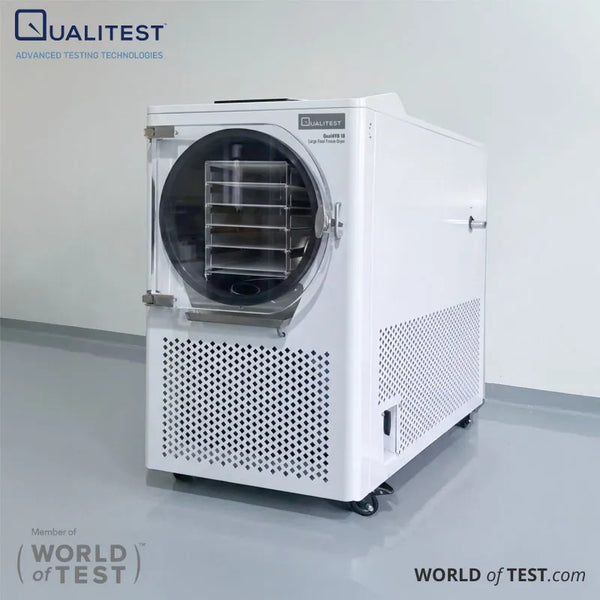
- Premium Pet Treats and Raw Diets: Carefully crafting raw, exceptionally high-protein dog and cat kibble toppers that strongly smell highly appetizing to picky household pets. We strongly suspect the lucrative pet treat sector is definitively going to keep financially growing at an incredibly rapid pace, especially as devoted US pet parents consistently continue to transition their domestic animals toward premium, highly nutritious raw diets. To properly handle these heavier, moisture-dense meat batches, our Large Food Freeze Dryer – QualiFFD™ 10 confidently delivers a substantial 10-kilogram maximum feed capacity, a massive 1 square meter drying area, and highly intuitive touchscreen controls to guarantee perfectly consistent raw diet output.
- Dairy, Coffee, and Active Cultures: Carefully drying highly delicate liquid yogurt starters, sensitive probiotics, and premium liquid instant coffee with incredibly precise thermal controls so every single packaged batch tastes absolutely identical.
Related article: Guide on How to Choose Food Freeze Dryer Equipment
Optimizing Your Production Line with Qualitest
Transitioning to freeze-drying is a highly strategic move to secure premium, high-margin market positioning. At Qualitest, we offer a cost-effective, FDA-compliant, and USDA-aligned lineup of Food Freeze Dryers built to scale with your North American facility.
Are you ready to completely change how you preserve goods and squeeze way more profit out of every batch with our cost-effective machines? Check out our full range of Food Freeze Dryers today and let our technical specialists help you pick out the absolute best system to secure your operational success!
References (Click to expand)
- Bhatta, S., Janežić, T. S., & Ratti, C. (2020). Freeze-Drying of Plant-Based Foods. Foods, 9.
- Duan, X., Yang, X., Ren, G.-Y., Pang, Y., Liu, L., & Liu, Y. (2016). Technical aspects in freeze-drying of foods. Drying Technology, 34, 1271 - 1285.
- Duan, X., Zhang, M., Mujumdar, A. S., & Wang, R. (2010). Trends in Microwave-Assisted Freeze Drying of Foods. Drying Technology, 28, 444 - 453.
- Kilic, M., Şahin, M., Hassan, A., & Ullah, A. (2024). Preservation of fruits through drying: A comprehensive review of experiments and modeling approaches. Journal of Food Process Engineering.
- Li, X., Yi, J., He, J., Dong, J., & Duan, X. (2024). Comparative evaluation of quality characteristics of fermented napa cabbage subjected to hot air drying, vacuum freeze drying, and microwave freeze drying. LWT.
- Nwankwo, C., Okpomor, E. O., Dibagar, N., Wodecki, M., Zwierz, W., & Figiel, A. (2023). Recent Developments in the Hybridization of the Freeze-Drying Technique in Food Dehydration: A Review on Chemical and Sensory Qualities. Foods, 12.
- Ratti, C. (2001). Hot air and freeze-drying of high-value foods: a review. Journal of Food Engineering, 49, 311-319.
- Uwineza, A., & Zhang, X. (2026). Application of Freeze-Drying Technology in the Food Industry: A Review. Foods, 15(4).
- Waghmare, R. B., Perumal, A., Moses, J., & Anandharamakrishnan, C. (2020). Recent Developments in Freeze Drying of Foods. 82-99.
- Waghmare, R. B., Choudhary, P., Moses, J., Anandharamakrishnan, C., & Stapley, A. (2021). Trends in Approaches to Assist Freeze-Drying of Food: A Cohort Study on Innovations. Food Reviews International, 38, 552 - 573.
- Yao, J., Chen, W., & Fan, K. (2023). Novel Efficient Physical Technologies for Enhancing Freeze Drying of Fruits and Vegetables: A Review. Foods, 12.