Picking your measurement gear is a huge win for your shop's bottom line.
You need tools that hit the bullseye without draining your entire bank account. For most facilities, a rugged profile projector is a total champion that delivers high value without the stress-inducing price tag of a camera rig.
Deciding between an optical comparator vs vision measuring machine is a major choice for any quality manager. Let’s break down exactly where these machines belong on your floor.
Key Takeaways
- Heavy-duty, physically tough profile projectors deliver an absolutely unbeatable financial bargain for verifying flat, two-dimensional shapes directly on the loud, messy shop floor.
- Highly automated digital camera rigs completely dominate massive, non-stop production runs that demand tricky three-dimensional mapping and incredibly microscopic exactness.
- Pinpointing your exact hardware match in the optical comparator vs vision system debate depends entirely on your specific, unique part geometries, your total daily factory output, and how much hard cash you actually want to spend.
Core Metrology Technologies
The Optical Comparator (Profile Projector)
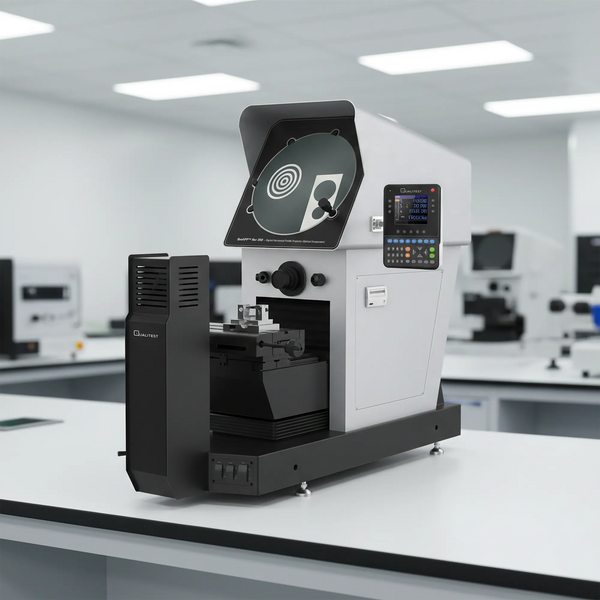
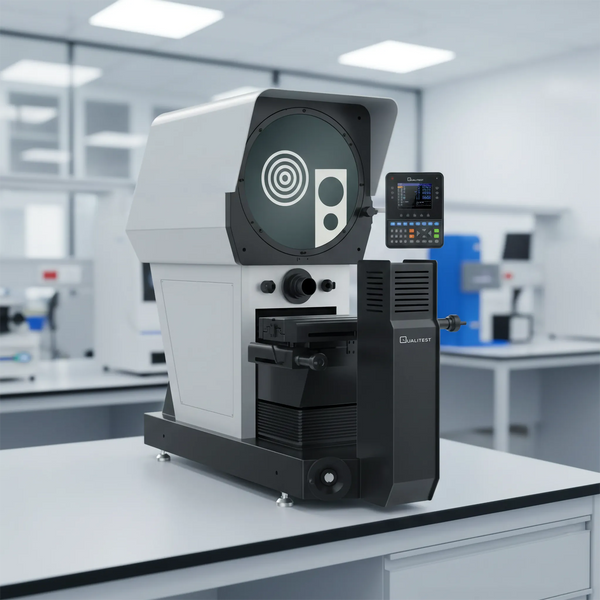
Most folks call this an optical comparator. This piece of physical machinery is a well-known titan in quality control spots right across the map. It uses a clever mix of thick glass lenses and intensely bright lights to throw a giant, dark silhouette of your part right onto a big glass screen.
Read more: Optical Comparator Guide: What is it & How to Use it?
Your team can then verify the specific dimensions of that part against a clear plastic overlay sheet or use integrated digital number-crunching boxes to get the job done fast.
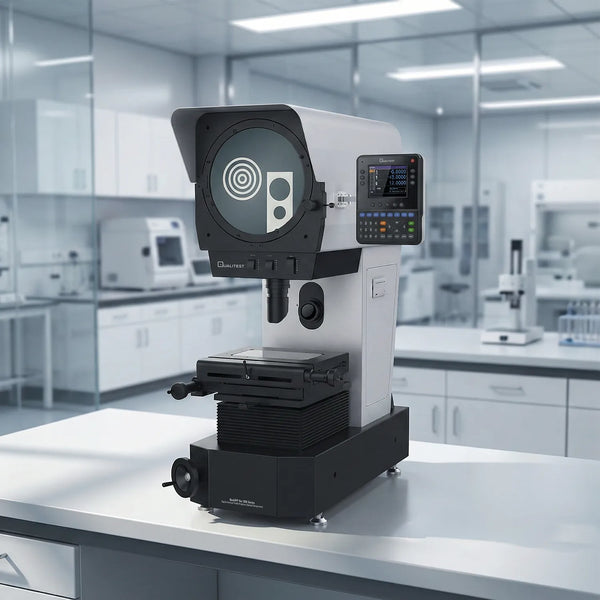
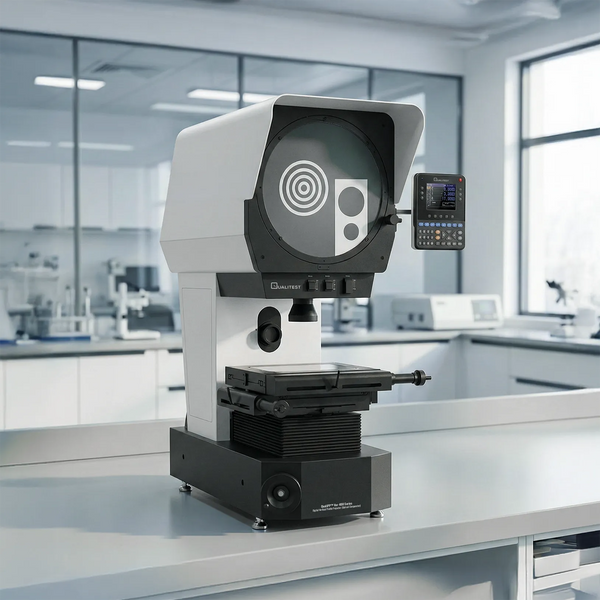
Modern versions, such as our highly reliable QualiPP™ H-Series and V-Series lineups, come packed with super-smart internal brains, coated reflector optics, and sensors that find the sharp edges without any human guesswork.
When looking at an optical comparator vs vision system, we think the straightforward, no-nonsense vibe of the comparator is its ultimate secret sauce, as it kicks all that confusing computer mess straight to the curb.
Core Advantages:
- Built like a heavy-duty armored tank and easily survives the daily grease and flying grit of the shop floor.
- So insanely easy to operate that your team can get the hang of it in a total heartbeat.
- Doesn't cost a gigantic pile of money for checking flat, two-dimensional shapes.
The Vision Measuring Machine
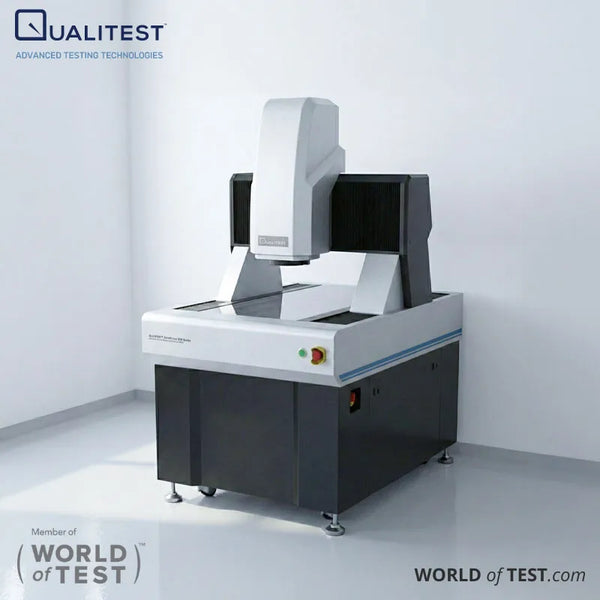
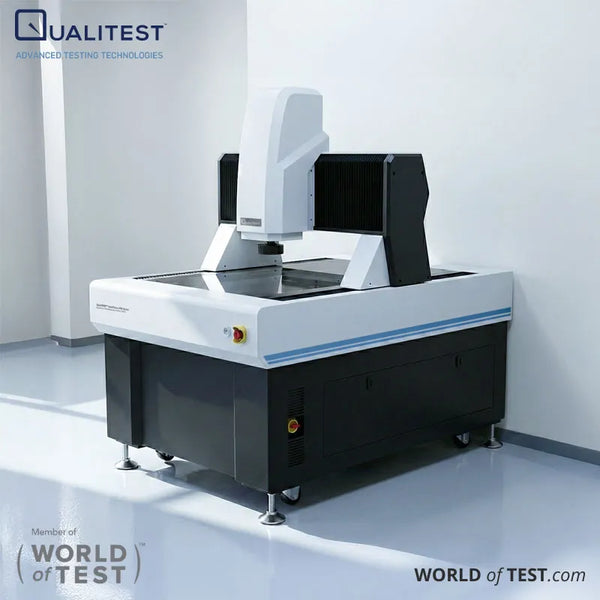
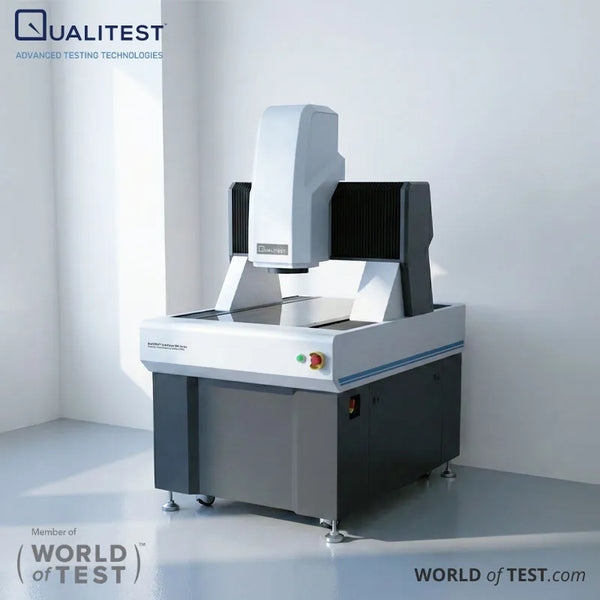
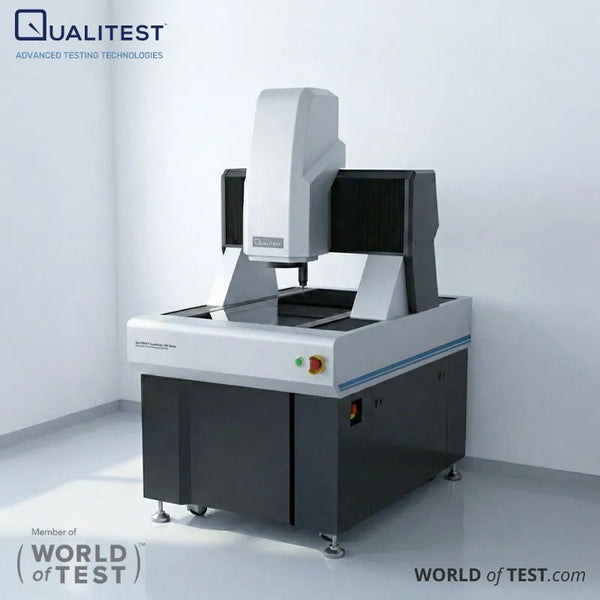
A vision measuring machine, like our highly automated QualiVMM™ AV 300 Series, relies on super-clear HD digital color cameras, 8.3x motorized zoom optics, and heavy-duty computer programs to snap pictures and look at the fine details of a part.
Instead of a human being squinting at a glass screen, the computer code finds the edges and does the heavy math for you, often checking a mountain of dimensions in the literal blink of an eye. When weighing an optical comparator vs vision measuring machine, the robust automation factor, supported by 4-axis CNC control, is often the biggest hook.
Core Advantages:
- Crazy-fast inspection routines that run all by themselves for huge piles of identical parts.
- Stops people from taking wild guesses because the computer makes the absolute final call.
- Can handle tricky three-dimensional shapes—especially when upgraded with MCP touch probes and laser sensor modules—and spits out massive digital files of highly detailed data.
Optical Comparator vs Vision Measuring Machine: Direct Comparative Analysis
When you are choosing an optical comparator vs vision measuring machine, it usually boils down to five main things: how messy and complex your parts are, how tight your tiny numbers need to be, how many parts you’re moving out the door, the dirtiness of your inspection room, and the total, bottom-line price tag.
We’ve noticed that the most wildly successful shops are the ones that pick tools they can actually use every single day instead of just constantly chasing the newest shiny toy.
Feature Comparison
| Feature | Optical Comparator | Vision Measuring Machine |
|---|---|---|
| Primary Application | Flat shapes and lightning-quick check-ups | Tricky 3D parts and dark, hidden holes |
| Precision Standards | High (0.0005 mm resolution) | Ultra-High (0.1 µm linear scales) |
| Throughput Capacity | Perfect for custom one-offs and first tries | The absolute king of checking hundreds of parts at once |
| Floor Compatibility | Tough as nails; absolutely loves the dirty shop floor | A bit physically sensitive; relies on a heavy marble base in a clean lab |
| Operator Skill Level | Simple as pie; ready to go in mere minutes | Needs a highly trained specialist to run the code |
| Investment and ROI | Low price to start and stays ridiculously cheap | Big buy-in and keeps asking for cash for software updates |
1. Part Complexity and Geometry
If you are just checking the sharp angles on a metal cutting tool or the flat outline of a plastic bit, the profile projector is sheer perfection. It gives you a giant, crystal-clear view that makes checking things manually feel like a total breeze.
Think about an extruded rubber O-ring or the flat profile of a standard drill bit. A heavy-duty vertical setup, such as the QualiPP™ V300 Series, handles these flat-laying, two-dimensional shapes with absolute, total ease.
On the flip side, consider a multi-level, injection-molded plastic casing with internal, hard-to-see blind holes. That is where the highly advanced, three-dimensional mapping abilities of a high-end camera setup, such as the moving-bridge QualiVMM™ AV 400 Series, become absolutely necessary.
We’d place a large bet that if 90% of your daily work is totally flat, the added tech in an optical comparator vs vision system comparison might just gum up your gears and drastically slow you down.
2. Precision and Tolerance Standards
When you’re talking about being incredibly exact, you need numbers you can totally trust. Both of these machines can be incredibly spot-on, though research shows vision systems often provide faster measurements with lower uncertainty.
High-end camera rigs equipped with 0.1 µm linear scales can measure things you can’t even see with your own human eyes, which is an absolute must for microscopic computer chips or 3D positional stability assessments.
However, a top-tier profile projector easily stays within an ultra-fine 0.0005 mm linear resolution, often boasting a magnification error below 0.08%. For the massive majority of normal metal-shaving and plastic-making jobs, we firmly call this the "perfection zone."
Here, the optical comparator vs vision measuring machine choice leans toward the simpler tool because you get high-end, reliable results without the machine being so intensely sensitive that a loud noise across the room throws the whole thing off.
3. Production Throughput
In the optical comparator vs vision system showdown, how much product you actually produce is the big, deciding differentiator. Let’s break down the ticking clock.
Picture a machine operator needing to verify the specific angles on a single, custom-machined heavy-duty gear. They can throw that chunky gear right on a comparator and get the final numbers before a camera rig even fully boots up its operating software.
Now, picture that exact same operator staring down a massive, overflowing bin of 500 identical microscopic connector pins. A high-speed, fully automatic camera setup, like our fast-moving QualiVMM™ AV 200 Series, will chew through that enormous batch on pure autopilot using closed-loop control, leaving the manual method completely choking in the dust.
In our view, it’s remarkably simple: lots of different, unique parts means you go with the comparator; one single part made a million times means the camera is the clear winner.
4. Environmental Durability
The loud, messy place where you actually make things is a remarkably rough spot for delicate gear. Profile projectors are built exactly like heavy-duty industrial machinery. They don’t care at all about a bit of flying dust or the concrete floor shaking.
Camera rigs, while highly impressive and built on rigid Indian marble bases, are stuffed with sensitive computer chips and delicate glass that really prefer a nice, chilly, walled-off office. When choosing an optical comparator vs vision system, we think a tool you are genuinely scared to put near the loud machines is a tool that’s going to cause a massive headache later down the line.
5. Investment and ROI
The financial price tag is usually where the rubber finally meets the road. Camera setups want a huge, intimidating pile of cash upfront, and they keep coming back to ask for more for software fees and training.
When you closely look at the total cost of an optical comparator vs vision measuring machine, we are highly convinced the comparator is a much more solid, sensible value for most folks.
They cost a tiny fraction of the price to buy and basically cost absolutely nothing to keep running since they don't have fragile sensors or messy code that needs updating. It’s a drastically faster way to get your hard-earned money back, period.
Industry-Specific Adoption
Medical & Electronics
If your facility is pumping out microscopic surgical implants with crazy internal geometries, or highly delicate smartphone circuit boards, the automated 3D mapping of a programmable LED-equipped camera rig, like the QualiVMM™ AV 100 Series, is usually the absolute only logical choice in the optical comparator vs vision system matchup.
Automotive & Machining
Consider the daily, oily grind of verifying the thread pitch on a custom automotive fastener, or double-checking the sharp edge radius on a heavy-duty stamped metal bracket. In these greasy situations, you desperately want the profile projector.
We’ve seen that the sheer physical toughness of a horizontal workhorse, like the QualiPP™ H350 featuring a 200 x 100 mm stage travel, makes it the undeniable king of the shop floor every single time.
Plastics & Extrusions
If your line is spitting out miles of rubber weather stripping or flat PVC pipe profiles, you need to verify those cross-sections constantly. A vertical profile projector, like our QualiPP™ V400 Series, handles these two-dimensional slices completely effortlessly, letting you keep the extruders running hot without waiting on complex software.
Tool & Die Making
When you are grinding custom cutting bits or verifying heavy-duty metal stamping dies, you want immediate, highly reliable numbers. The rock-solid comparator sits right next to the loud grinders and gives you the exact angles without blinking an eye.
Aerospace & Defense
Checking the microscopic cooling holes inside a high-tech jet engine turbine blade? You absolutely need the complex mapping of a camera rig. Verifying the physical threads on a thousand standard aircraft bolts? The heavy-duty comparator effortlessly takes the crown in the optical comparator vs vision measuring machine debate.
Operational Case Studies
The Custom Job Shop
Picture a local, high-mix, low-volume machine shop. They are constantly switching out totally different parts all day long. Dropping eighty grand on a high-end camera rig makes absolutely zero financial sense for their daily operations.
A heavy-duty profile projector—such as the highly versatile QualiPP™ H412—gives them the exact mechanical reliability they totally require without completely crushing their business bank account.
The High-Volume Medical Supplier
Now picture a massive, sterile manufacturing facility churning out tens of thousands of complex plastic syringes every single week. They simply cannot afford to have human beings checking every single piece manually.
When comparing an optical comparator vs vision measuring machine, the massive upfront cost of a vision system is easily justified by the sheer, staggering volume of parts running through those automated inspection routines.
Strategic Selection Criteria
So, how do you finally settle the optical comparator vs vision system debate?
- Grab the Camera Rig if: You possess a mountain of extra cash, desperately need to check huge, identical batches of 3D parts automatically, and have a squeaky-clean, climate-controlled lab to put it in.
- Grab the Profile Projector if: You strongly want a rock-solid, budget-friendly way to check flat shapes, need it to live right out there where the heavy action is, and want a simple tool that absolutely anyone on the team can use without a manual.
Metrology Solutions from Qualitest
At Qualitest, we know every shop has a budget and its own way of working. While others push the most expensive gadgets, we ensure you get the exact machinery that solves your daily bottlenecks.
We’re proud to supply North American makers with exceptionally accurate, wallet-friendly gear across the entire inspection spectrum.
Ready to equip your hardworking team? Check out our rock-solid QualiPP™ Optical Comparators for the shop floor, or explore our lightning-fast QualiVMM™ Vision Measuring Machines for those high-volume, automated jobs.
References:
- Baleani, A., Castellini, P., Chiariotti, P., Paone, N., Roccetti, D., Zampetti, L., Zannini, M., & Zitti, S. (2021). Dimensional measurements in production line: a comparison between a custom-made telecentric optical profilometer and on-the-market measurement systems. 2021 IEEE International Workshop on Metrology for Industry 4.0 & IoT (MetroInd4.0&IoT), 693-698.
- Butler, C., & Duggan, R. (1989). Automatic Inspection Of Components Using Profile Projection. , 1010.
- Health, B., Kernen, F., Wenger, S., Martin, L., Kernen-Gintaute, A., Müller, C., & Nelson, K. (2025). Optical measurement methods of the 3D-position stability of implant-abutment connections - an in vitro study. BMC Oral Health, 25.
- Rzepka, M., Łukianowicz, C., Zawadka, W., Rokosz, K., & Nadolny, K. (2024). Suitability Study of Optical Coordinate Measuring Machine for Quality Assessment and Wear Phenomena Identification of Blade Edge and Surface of Planer Technical Knives. Materials, 17.
- Thompson, G. (2008). Virtual Optical Comparator.
- Traxler, L., Ginner, L., Breuss, S., & Blaschitz, B. (2021). Experimental Comparison of Optical Inline 3D Measurement and Inspection Systems. IEEE Access, 9, 53952-53963.
- Tsumuraya, H., & Sakai, S. (2017). Noncontact Dimensional and Profile Metrology by Video Measurement. 829-852.
- Zhao, H., Xing, M., Jiang, H., Xu, Y., Diao, X., & Liu, C. (2019). A new non-contact coordinate measuring machine equipped with light-duty optical probe based on fringe projection profilometry. 11053.