Picking the wrong production method drains your budget fast, making CNC vs die casting an essential upfront choice.
Whether you manage an industrial R&D facility or direct a university engineering lab, die casting handles high volumes, but CNC machining delivers micro-precise tolerances and instant lead times without heavy mold fees. This guide compares real-world costs, lead times, and tolerances in die casting vs CNC machining.
Key Takeaways
- Cost and Volume: Die casting fits high-volume mass production (10,000+ units), while CNC machining is more cost-effective for short runs, custom prototyping, and academic research.
- Upfront Investment: Custom casting molds require $10,000 to $100,000+ upfront capital, whereas CNC machining works directly off CAD files with zero mold fees.
- Speed to Market: CNC machining delivers finished components in 24 to 48 hours, avoiding the 6 to 12 week lead time required for die fabrication.
- Precision and Testing: CNC milling achieves micro-tight tolerances (±0.0005 in) and smooth surface finishes (Ra 0.8 µm to 1.6 µm), ideal for ASTM specimen preparation and precision assembly.
- Hybrid Flexibility: Industrial plants and technical institutes often cast primary geometries in bulk, then use secondary CNC machining to finish tight bearing seats and alignment features.
What is CNC Machining?
Think of CNC machining as taking precision automated cutting tools to a solid metal block. You start with a solid chunk of billet stock, and high-speed rotary bits trim away every piece of excess material until your component emerges clean and exact.
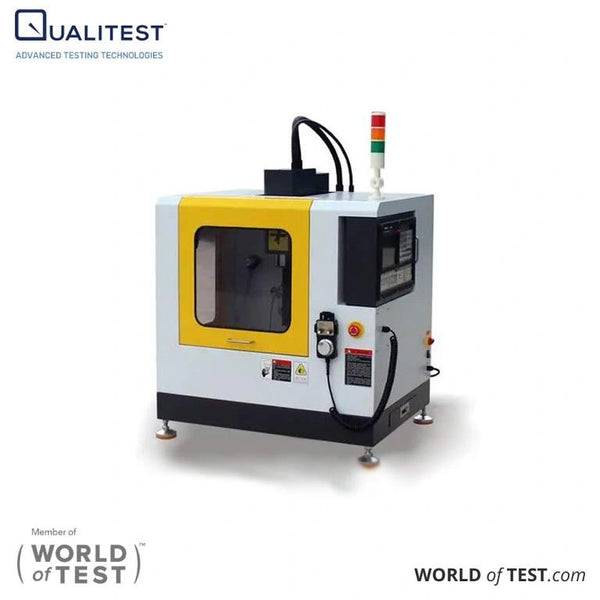
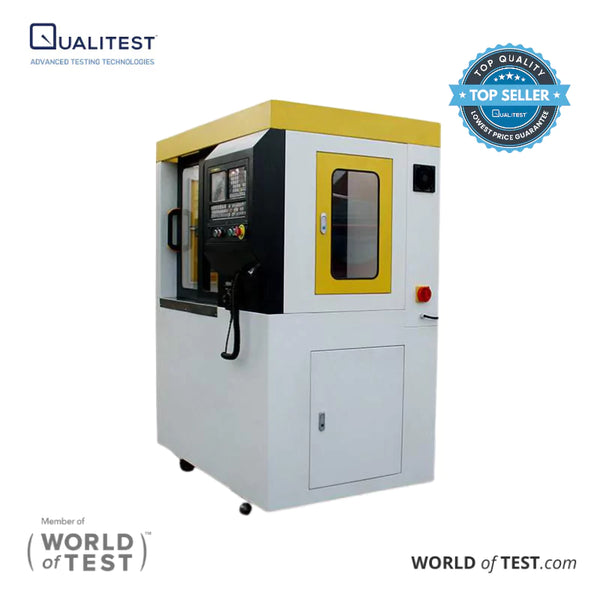
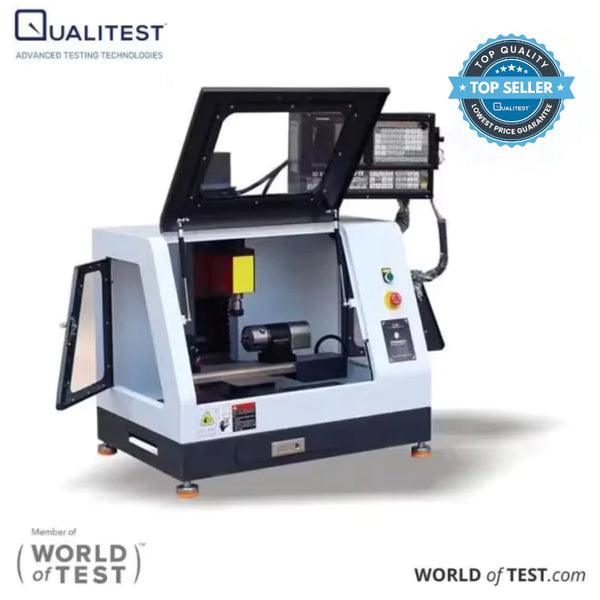
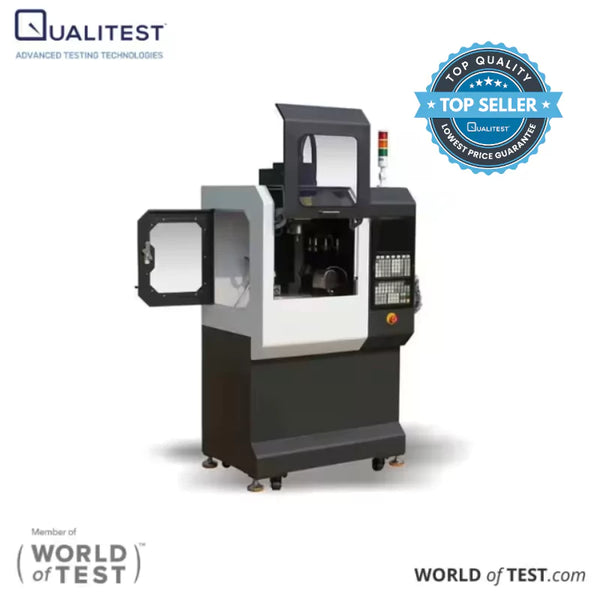
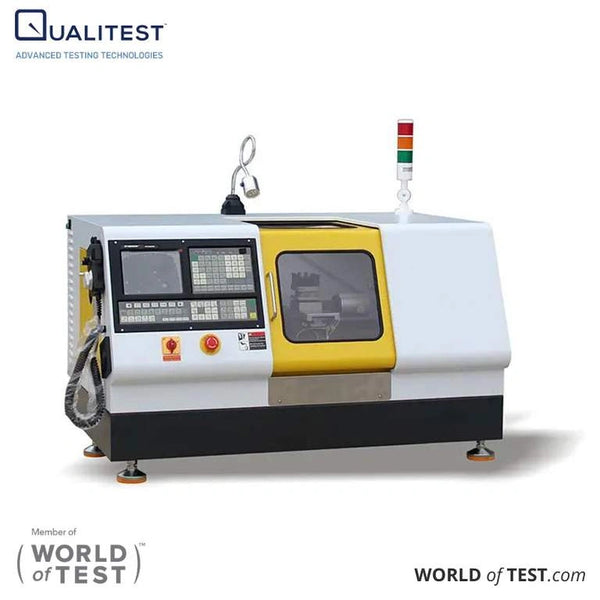
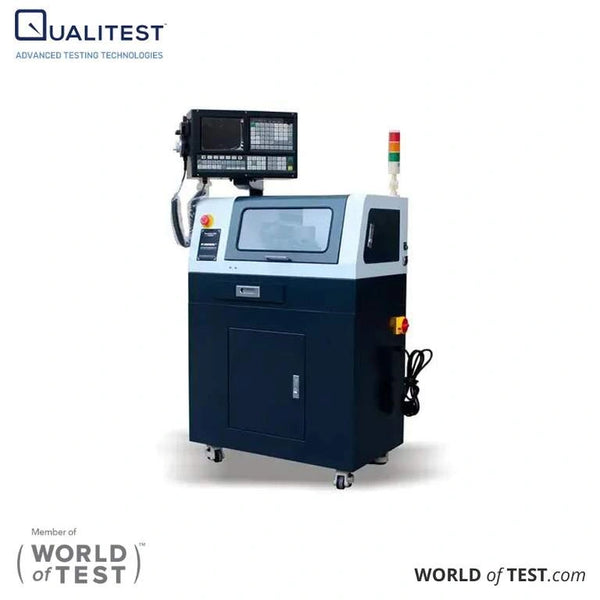
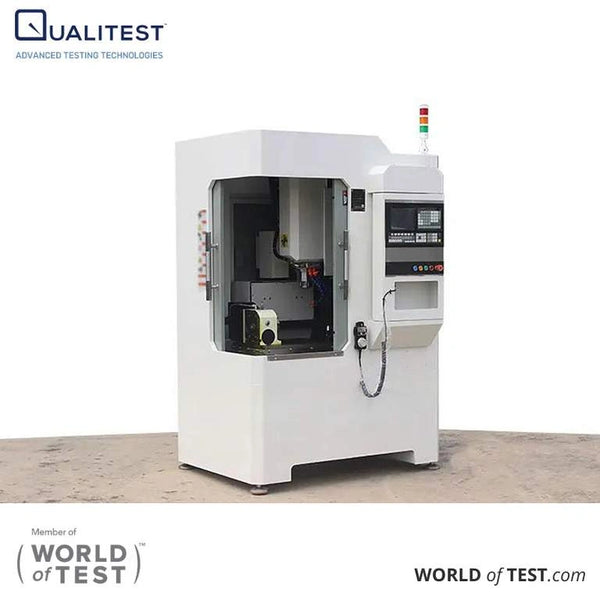
Multi-axis mills and precision lathes run on digital CAD files that tell the tools where to cut down to tiny fractions of a millimeter. Compact equipment like our QualiCNC™ 200 (a 3-axis desktop machining center with 230 × 130 × 220 mm X/Y/Z travel) or multi-axis setups like the QualiCNC™ 300 (a 5-axis system featuring an ARM CPU controller and 10-tool automatic tool changer) allow you to skip custom steel molds entirely.
Related article: 5-Axis vs 3-Axis vs 4-Axis CNC Machining Differences
This gets your prototypes, short production runs, and test specimens out the door remarkably fast while maintaining consistent product quality and lower defect rates.
What is Die Casting?
Die casting takes a totally different route. Instead of carving away at cold metal, you melt down non-ferrous metals like aluminum or zinc and force them under high hydraulic pressure into a hardened steel mold. Once the liquid cools down, the mold opens and ejects a finished component.
Because building those heavy steel molds requires serious capital upfront, this process is built specifically for large-scale operations producing massive volumes of identical parts week after week.
Core Differences: Breakdown
Pitting die cast vs CNC head-to-head highlights key technical differences that directly impact your operational bottom line.
1. Production Volume & Financial Break-Even
Die casting demands heavy capital upfront. You are spending anywhere from ten thousand to over a hundred thousand dollars on custom tooling dies before producing a single finished component.
Expenses for custom dies increase significantly with complex geometries, cavity counts, and surface finish demands. Conventional machining processes for building die tools can also be time-consuming and expensive. However, once that mold is built, each additional part becomes significantly cheaper per unit.
A hardened steel die typically lasts for 100,000 to over 1,000,000 injection shots depending on the metal alloy and mold geometry. That upfront tooling expense only amortizes effectively when production runs are large enough to spread out the cost, which is why die casting rarely makes financial sense for runs under 10,000 units.
Across the US manufacturing sector, reshoring trends have pushed Tier-1 and Tier-2 suppliers in the US Midwest to lean heavily into short-run CNC setups. Purchasing custom tooling dies for low-volume domestic production often ties up critical capital, whereas CNC machining allows North American machine shops to remain agile.
CNC machining skips the upfront mold cost entirely. You upload your software file, clamp down a metal block, and start carving right away. Activity-based costing shows machining setups are economically feasible for low-to-medium volumes and lower-complexity parts.
Picking die casting vs CNC ends up being an easy win for CNC when you only need short production runs, custom batches, or lab specimens.
Our Take on Costs: We think teams often oversimplify the break-even math. Procurement teams frequently jump into casting too early, completely caught off guard by the expensive costs of modifying a steel mold when a part design needs a quick adjustment.
2. Time-to-Market & Lead Time Comparison
If you go the die casting route, preparing molds, running thermal tests, and verifying sample parts takes a lengthy 6 to 12 weeks before your line actually runs. High-speed CNC milling of die cavities can shorten toolmaking time through optimized feed rates.
In fast-moving US aerospace and medical device hubs across California, Texas, and the Pacific Northwest, long lead times create severe bottlenecks. Waiting 8 to 12 weeks for overseas cast molds to be fabricated and shipped across ocean freight routes creates project delays, making 24-to-48-hour domestic CNC machining the preferred choice for rapid prototype verification.
CNC machining works directly off your 3D digital model, meaning your parts can be machined and delivered in 24 to 48 hours. We consider this turnaround speed one of CNC’s absolute best advantages. Waiting three months for a factory mold just to test a single idea creates unnecessary operational friction.
Related article: CNC Machine vs 3D Printer: Side-by-Side Guide
3. Design Flexibility and Iteration Speed
If your design changes halfway through a project, modifying a giant steel cast die is slow, expensive, and frustrating.
In a real-world die casting vs CNC comparison during product development, CNC stays exceptionally agile. Need to change a pocket or shift a hole location? Just update the CAD file, rerun the program, and your machine keeps running without missing a beat.
4. Geometric & Structural Design Constraints
Die casting comes with strict rules. You need uniform wall thickness so parts don't shrink or deform, plus you have to angle your vertical walls by 1° to 3° (draft angles) so the metal piece actually releases from the mold cavity.
In a die cast vs CNC evaluation for structural parts, CNC removes those limitations. It carves thick sections, thin walls, deep pockets, and sharp internal corners directly out of solid metal blocks without worrying about mold ejection pins.
Our Take: We often remind engineering teams that draft angles aren't just a drawing detail, as they subtly alter part geometry and fit. For high-precision applications, removing the need for draft angles simplifies component assembly significantly.
5. Dimensional Precision, Tolerances, and Surface Finish (Ra)
Comparing die cast vs CNC milling shows a clear difference in accuracy and surface feel:
- Die Cast Components: Hold tolerances around ±0.005 to ±0.010 inches and leave a textured finish between Ra 1.6 µm and 3.2 µm. Cast parts from multi-cavity molds can also exhibit dimensional variability between cavities, requiring careful management.
- CNC Milling: Exceptionally accurate, holding micro-tight tolerances down to ±0.0005 inches and leaving a smooth finish of Ra 0.8 µm to 1.6 µm right off the tool bed without secondary polishing. Research confirms CNC milling produces far tighter internal fit and lower dimensional discrepancy than traditional casting.
High-spindle systems like our QualiMill™ M4 micro mill and QualiMill™ 220 mini mill (featuring a 24,000 rpm spindle motor rating and 0.01 mm repeatability) achieve these refined surface finishes directly out of the machine bed, eliminating extra polishing stages.
Our Technical Stance: Achieving an as-machined Ra 0.8 µm finish without secondary surface treatment is crucial for quality control testing. Surface imperfections on cast parts can introduce stress concentration points, whereas CNC milling ensures uniform, reliable specimen preparation.
Related article: CNC vs Milling Machine Guide: Key Differences Explained
6. Material Selection & Structural Integrity
CNC machines process virtually any solid engineering material, including stainless steel, titanium, brass, heavy-duty plastics, and composites. Die casting is restricted mostly to non-ferrous alloys like aluminum, zinc, and magnesium.
Furthermore, high-pressure liquid metal can trap tiny air pockets inside cast parts, leaving micro-voids and gas defects. For North American testing facilities adhering to strict ASTM International standards, such as ASTM E8 for metallic tensile testing or ASTM D638 for plastics, material integrity is paramount.
Internal casting porosity can skew stress-strain curves, making solid billet-machined samples prepared on setups like our QualiLathe™ 210 tensile lathe (with a 210 mm swing over bed, MT4 mount, and automatic 4-to-8 tool turret) or our compact QualiLathe™ 140 essential for compliant quality assurance reporting.
7. Material Efficiency & Environmental Sustainability
Die casting is efficient because extra metal from runners melts right back into the process. CNC machining chips away shavings, but modern facilities recycle almost all of those metal turnings to maintain clean environmental standards.
Side-by-Side Technical Comparison
| Parameter | CNC Machining | Die Casting |
|---|---|---|
| Primary Process | Subtractive (Carving solid billet) | Formative (Injecting molten metal) |
| Upfront Tooling Cost | Minimal / None (Digital CAD setup) | High ($10,000 – $100,000+) |
| Production Lead Time | 24 to 48 Hours | 6 to 12+ Weeks (Die fabrication) |
| Unit Cost at Scale | Moderate (Linear per part) | Economical per unit (At scale) |
| Design Flexibility | Immediate (CAD software update) | Slow & Costly (Die rework) |
| Design Constraints | No draft angles; variable wall thickness | Draft angles required (1°–3°); uniform walls |
| Dimensional Tolerance | Extremely Tight (Up to ±0.0005 in) | Standard (±0.005 to ±0.010 in) |
| Surface Roughness (Ra) | Ra 0.8 µm – 1.6 µm (As-machined) | Ra 1.6 µm – 3.2 µm (Requires deburring) |
| Material Range | Metals, Plastics, Alloys, Composites | Non-ferrous metals (Al, Zn, Mg) |
| Optimal Volume | Low-to-Medium (1 to 5,000 parts) | High (10,000+ parts) |
Combining Both Methods: Hybrid Manufacturing
You don't always have to choose just one process. Many smart manufacturing setups run a hybrid workflow where they cast the main shape in volume and then use die cast vs CNC milling processes to finish critical bearing seats, smooth mounting surfaces, and drill precision screw holes.
In US automotive manufacturing, Tier-1 suppliers in the Midwest frequently cast large structural aluminum components, such as EV battery enclosures or engine cradles, and then rely on secondary CNC milling to achieve exact mounting faces. Cast components also frequently require secondary CNC surface processing to remove oxidation films, residues, and surface defects like air holes.
In our opinion, hybrid manufacturing represents a practical middle ground for complex, high-volume components requiring exact alignment points. Mid-sized machining centers like our QualiMill™ 400 (a 4-axis drilling and milling center with 400 × 500 × 200 mm travel, BT30 taper, and 8-tool automatic tool changer) suit these secondary finishing tasks.
CAM 2.5D programming offers substantial time savings during CNC die milling, while custom programming delivers higher machining accuracy. Furthermore, modern plants upgrade conventional casting setups with real-time CNC closed-loop injection control and IoT sensors to monitor mold wear and optimize combined production workflows.
Which Process Should You Choose?
When we advise procurement leads and engineering heads, we keep the evaluation straightforward:
- Go with Die Casting if: You are producing tens of thousands of identical parts, your design is completely finalized, and your budget supports upfront tooling expenditure.
- Go with CNC Machining if: You need fast turnaround times, high dimensional accuracy, flexible short batches, or pristine laboratory test samples without committing capital to steel molds.
Qualitest Precision CNC Systems for Any Budget
At Qualitest, we know commercial shop leads and academic lab directors need precision without overspending on massive machinery. Whether preparing tensile specimens, testing materials, running custom batches, or training future engineers, we offer budget-friendly, compact CNC machines built for total in-house quality control.
Explore our Qualitest CNC Milling & Lathe Machines or contact our team today for a quick quote!
References (Click to expand):
- Bibi, S., Sajid, M., Ahmad, W., Ali, M. A., Jahanzaib, M., & Hussain, S. (2025). Life Cycle Assessment and Activity-Based Costing for Low-Cost Aluminum die manufacturing: A comparative study of machining process, conventional and rapid investment casting. Results in Engineering.
- Chou, W.-T., Chuang, C.-C., Wang, Y.-B., & Chiu, H.-C. (2021). Comparison of the internal fit of metal crowns fabricated by traditional casting, computer numerical control milling, and three-dimensional printing. PLoS ONE.
- Jarosz, K., Chen, Y.-T., & Liu, R. (2023). Investigating the differences in human behavior between conventional machining and CNC machining for future workforce development: A case study. Journal of Manufacturing Processes.
- Khan, A., Sajid, M., Wasim, A., Hussain, S., Jahanzaib, M., Tunbell, H. S., & Hombegowda, N. (2024). Rapid Investment Casting: Towards Rapid Die Development. International Journal for Research in Applied Science and Engineering Technology.
- Kostrzewa, J., Jasiński, M., & Olejnik, M. (2025). Optimization of the Machining Process of AlSi12Cu1(Fe) Alloy Castings. Archives of Foundry Engineering.
- Mecheter, A., Tarlochan, F., & Kucukvar, M. (2023). A Review of Conventional versus Additive Manufacturing for Metals: Life-Cycle Environmental and Economic Analysis. Sustainability.
- Mickowski, J. (2003). Computerized monitoring and real-time injection control: Retrofitting - A case study.