Ready to scale up your trace elemental testing while keeping capital costs and turnaround times completely in check?
Making the right investment comes down to the core difference between flame AAS and graphite furnace AAS. Matching your sample concentrations with the correct atomization pathway ensures dependable throughput, clean compliance, and high analytical confidence.
Below, we break down the essential hardware setups, precision data, and operating costs to help you select the ideal bench configuration.
Executive Summary: Quick Comparison
| Analytical Parameter | Flame AAS (FAAS) | Graphite Furnace AAS (GFAAS) |
|---|---|---|
| Typical Detection Range | 1–100 µg/L (parts-per-billion range; calibration extends into parts-per-million) | 20–200× lower than FAAS (parts-per-trillion to parts-per-billion) |
| Signal Character | Steady-state static absorbance | Transient absorbance pulse |
| Typical Sample Volume | Few milliliters aspirated | Microliter aliquots deposited |
| Analytical Speed | Continuous throughput in seconds | ~2 minutes per analyte per sample |
| Required Process Gases | Air and acetylene (air-C₂H₂) | High-purity argon (Ar) |
| Optimal Sample Types | High-concentration solutions, mining digests, industrial effluents | Clean drinking water, biological tissues, trace organics |
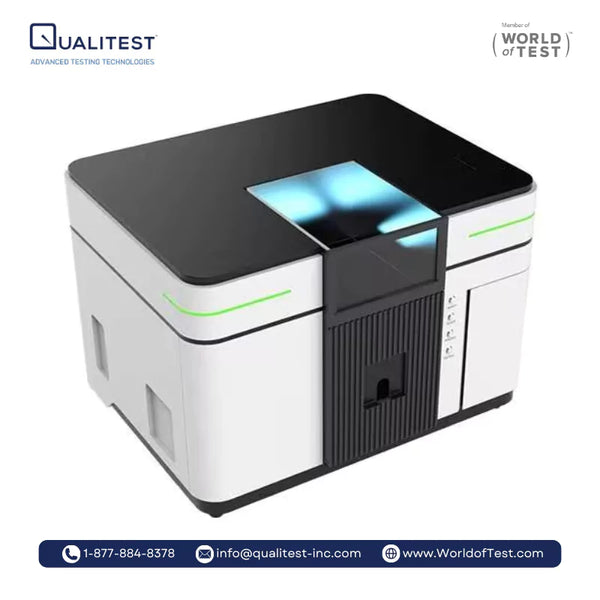
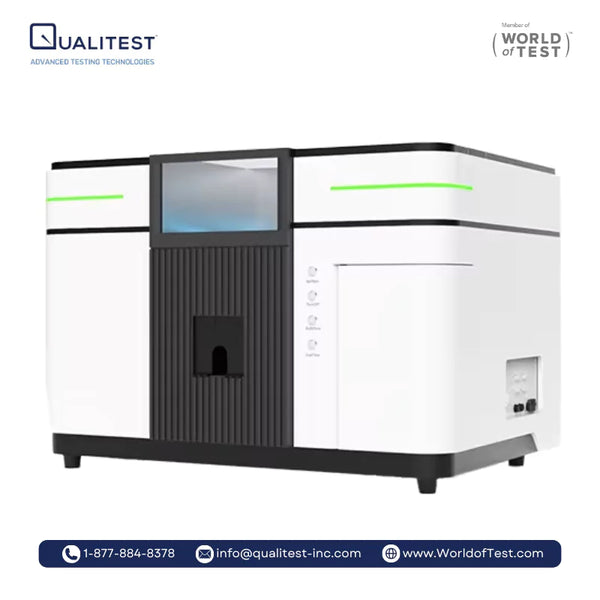
| Qualitest Models | QualiAAS™ 3000F (dedicated flame only) | QualiAAS™ 3000FG, QualiAAS™ 3000FG-Pro, QT-AAS29, QT-AAS30, QT-AAS60 (integrated dual-mode flame and graphite furnace) |
Atomization Mechanisms & System Hardware
The foundational difference between graphite furnace and flame AAS centers on the mechanical setup utilized to convert liquid samples into an absorbing cloud of ground-state atoms.
Flame Atomization Architecture
In flame mode, liquid sample solutions aspirate continuously into an open burner assembly. The QualiAAS™ Series incorporates a 10 cm titanium ("Ti") burner head explicitly shaped for air-acetylene (air-C₂H₂) combustion. Academic research highlights that nebulizing sample aerosols into an air/acetylene flame at ~2000 K (or nitrous oxide/acetylene at ~3000 K) creates a steady-state atomic absorption signal.
Maintaining proper optical alignment should not require cumbersome manual adjustment (and every laboratory manager knows the value of reproducible positioning!). The QualiAAS™ Series provides automatic height and angle adjustment, while QT-AAS29, QT-AAS30, and QT-AAS60 feature automatic height adjustment.
Process gases pass through an automatic pneumatic control module equipped with automated ignition and automatic safety shutoff. Because combustible fuel lines demand strict oversight, the hardware integrates active flame monitoring, automatic acetylene shutoff, acetylene leak alerts, and gas pressure interlocks for acetylene feeds.
Graphite Furnace Architecture
In furnace mode, samples deposit directly into an enclosed, electrically heated graphite cylinder. Longitudinal heating is standard equipment on the QualiAAS™ 3000FG and QT-AAS29 Series, while Transversely Heated Graphite Tube technology is integrated into the QualiAAS™ 3000FG-Pro and provided as standard on the QT-AAS30 and QT-AAS60.
In classical electrothermal methodology, a small liquid aliquot is sequentially driven through drying, pyrolysis, and atomization stages across 1800–3000 K. This generates a brief, transient absorbance pulse rather than a static plateau.
Published literature demonstrates that furnace methods frequently require chemical modifiers, such as palladium nitrate or magnesium nitrate, to thermally stabilize target analytes and isolate them from the matrix during pyrolysis. The entire atomization sequence occurs within an unreactive argon (Ar) environment protected by dedicated argon line pressure interlocks.
On dual-mode configurations in the QualiAAS™ lineup, the system provides fully automatic switching between flame and graphite furnace modes. In our technical assessment, this automated transition is an exceptional operational benefit for facilities alternating between concentration ranges without manual teardowns.
Analytical Performance: Sensitivity, Limits, and Precision
When comparing flame AAS vs graphite furnace AAS, technical buyers routinely evaluate graphite furnace AAS vs flame AAS to answer one critical question: why does flame AAS have better precision that graphite furnace?
Signal Dynamics and Precision Mechanics
Flame atomization generates a continuous, static absorbance signal that averages random background noise over time. Conversely, graphite furnace atomization creates a transient absorbance pulse lasting only seconds, which places elevated demands on signal capture and requires fast electronics for peak integration.
Historical evaluations using modified spectrometers confirmed that slow detector time constants distort the absorbance peak and degrade reproducibility.
Furthermore, graphite furnace measurements introduce chemical modifiers and physical interactions between free atoms and the graphite atomizer surface, which introduce analytical variability that flame atomization avoids entirely.
Sample homogeneity in solid or particulate materials also introduces substantial standard deviation swings, sometimes reaching up to 20% in graphite furnace workflows.
Empirical Validation Findings
Experimental research directly demonstrates this precision gap:
- Repeatability: In an aluminum validation study in rat tissues, flame AAS recorded a coefficient of variation of 0.61%, roughly half the 1.30% measured for graphite furnace AAS.
- Linearity and Recovery: The same investigation reported flame linearity at r = 1.000 (compared to r = 0.9993 for GFAAS) and recovery accuracy of 100.62% (versus 97.75% for GFAAS).
- Flame Baseline Consistency: Modified flame systems routinely report relative standard deviations between 1.4% and 5.5%.
Both systems deliver exceptional precision and selectivity across complex sample streams, but head-to-head precision numbers come down to how each atom cell physically operates.
When we look at independent laboratory evaluations, the reason flame AAS comes out ahead on repeatability is simple: a continuous, steady flame lets the detector average out signal noise smoothly over time, without chemical modifiers or graphite surface reactions introducing baseline variability.
Detection Thresholds in Practice
GFAAS generally reaches detection limits 20–200 times lower than FAAS, proving indispensable for trace and ultratrace determinations in pristine waters and biological tissues. FAAS typically operates on the order of 1–100 µg L⁻¹ (suited for minor constituents in contaminated solutions), whereas GFAAS reaches parts-per-trillion to parts-per-billion levels.
In specific comparative validation studies for aluminum, flame LOD was documented at 0.06 mg/L compared to 0.05 µg/L for furnace (roughly a 1,000-fold difference). Vapor generation and furnace techniques extend detection capability 10- to 1,000-fold beyond flame for sub-µg/g analytes.
Across our Qualitest instrument lineup, routine detection limits span the parts-per-billion (ppb) to parts-per-trillion (ppt) range depending on your selected atomization mode.
We often point to how US environmental regulations separate these two atomization pathways based on action limits. For instance, a municipal drinking water laboratory testing compliance under the US EPA Lead and Copper Rule faces low parts-per-billion action levels that fall beyond standard flame quantification thresholds, making graphite furnace sensitivity practically mandatory.
Conversely, testing agricultural irrigation runoff or industrial wastewater outfalls for heavier metal concentrations generally fits comfortably within the standard 1–100 µg L⁻¹ reach of flame atomization. Platforms utilizing transversely heated graphite tubes achieve "faster atomization," though general furnace runs average approximately 2 minutes per analyte per sample, whereas flame analysis executes in seconds.
Graphite Tube Heating Architecture
If your operational plan requires a graphite furnace, the thermal profile within the graphite tube represents a critical technical selection. The internal architecture directly affects how evenly thermal energy reaches your sample droplet.
Longitudinal Heating: Baseline Operation
Longitudinal heating serves as the standard configuration on the QualiAAS™ 3000FG and QT-AAS29 Series. This design applies electrical energy along the axis of the tube, establishing a standard longitudinal thermal distribution.
For facilities with baseline trace detection requirements, modular budgets, and routine sample matrices, longitudinal heating provides dependable analytical sensitivity and standard replacement intervals without the capital expenditure of higher hardware tiers.
Transversely Heated Tubes: Regulated Performance
Transversely Heated Graphite Tube technology comes equipped on the QualiAAS™ 3000FG-Pro and sits as standard equipment on the QT-AAS30 and QT-AAS60 Series. By applying heat across the diameter of the tube rather than along its length, this geometry generates an exceptionally uniform temperature distribution across the entire atomization zone.
This thermal balance delivers documented "faster atomization," "higher sensitivity" on the QT-AAS30, and "max sensitivity" on the flagship QT-AAS60. Crucially for operating budgets, it provides "extended tube service life" and pairs with standard automated graphite tube self-inspection (on QualiAAS™ 3000FG-Pro, QT-AAS30, and QT-AAS60).
In our technical view, facilities handling demanding regulatory submissions benefit substantially from prioritizing transversely heated configurations, as the uniform thermal profile and extended tube longevity directly protect long-term data quality.
Background Correction: Deuterium, Self-Absorption, and Zeeman
In graphite furnace testing, matrix vapors, salt smoke, and molecular bands scatter light and produce intense non-specific background absorption. If an instrument cannot isolate target atomic absorption from this background, analytical results suffer from severe false-positive bias. Choosing the right background correction configuration directly dictates what sample matrices your laboratory can process cleanly.
General Industry Technologies: Deuterium vs. Zeeman
Across the atomic absorption market, facilities typically encounter three distinct background correction methods:
- Deuterium Lamp Correction (Industry Standard): An auxiliary deuterium arc lamp emits a continuous spectrum across the atom cell. Because deuterium output is concentrated in the ultraviolet region (190 nm to approximately 350 nm), this method effectively subtracts broad, unstructured background in the UV range. However, its emission intensity drops sharply across visible wavelengths, limiting its effectiveness for elements tested above 350 nm.
- Zeeman Effect Correction (Competitor Market Alternative): Several competing high-end platforms incorporate strong magnetic fields around the furnace to split atomic energy levels. While Zeeman correction effectively resolves complex, highly structured background interferences across both UV and visible lines, it introduces substantial trade-offs. It significantly inflates instrument purchase costs, adds mechanical bulk, and inherently trades off baseline analytical sensitivity because magnetic splitting broadens the analytical absorption peak.
- Self-Absorption Correction (Industry Principle): Based on the established principle of pulsing hollow cathode lamps at high currents to self-reverse the emission line, this technique measures background directly at the exact analytical wavelength. It functions seamlessly across both ultraviolet and visible spectra (190 to 900 nm) without requiring auxiliary continuum lamps.
Our Product Specifications: Double-Beam Self-Absorption
We do not build Zeeman assemblies into our instrument family because the resulting price surge and sensitivity reduction run counter to our commitment to cost-effective laboratory solutions. Instead, we engineer a dual-method architecture:
- Standard Deuterium Correction: Equipped on all QualiAAS and QT-AAS instruments, our deuterium background system reliably corrects background absorption up to 1.0 Abs with an attenuation factor of at least 90 times.
- High-Performance Self-Absorption: Standard on all double-beam configurations (QualiAAS 3000FG, QualiAAS 3000FG-Pro, and double-beam versions of the QT-AAS29, QT-AAS30, and QT-AAS60 Series), our self-absorption system expands correction capacity up to 2.0 Abs at an attenuation factor of at least 90 times.
For facilities testing difficult environmental soils, high-salt waters, or complex pharmaceutical matrices, our double-beam self-absorption systems deliver the background resolution required to eliminate spectral interferences without the steep price tag of Zeeman hardware.
Regulatory Compliance & Industry Methods
Your equipment must satisfy regulatory auditors and client quality requirements. Published spectroscopic evaluations note that GFAAS holds a clear operational edge for samples with elevated organic content, whereas highly inorganic solutions reveal no clear analytical advantage over flame.
In biomedical work, flame AAS frequently addresses major elements (Fe, Ca, Cu, Zn), while furnace AAS isolates toxic trace targets (Cd, Pb, As, Ni) falling below flame thresholds.
Environmental & Water Monitoring
US municipal drinking water facilities and commercial contract laboratories testing per US EPA methods (including EPA Method 200.9 for graphite furnace and EPA Method 7000B for flame) and ISO 15586 routinely monitor heavy metals (Pb, Cd, As, Hg, Cr) in drinking water, surface runoff, wastewater, and soil matrices.
Experimental studies demonstrate that on-line sorbent extraction microcolumns can increase flame sensitivity 20- to 25-fold with brief loading times, while extending furnace detection limits in high-salt matrices like seawater to match pure aqueous solutions.
Pharmaceutical & Food Safety
In pharmaceutical manufacturing, quality control laboratories verify active pharmaceutical ingredients (APIs) and raw excipients strictly against United States Pharmacopeia (USP) monographs, European Pharmacopoeia (EP) specifications, and US FDA 21 CFR Current Good Manufacturing Practice guidelines.
Analytical procedures quantify trace metal contaminants and verify nutritional element profiles across strict release limits. For regulated facilities where data records demand the same scrutiny as the analytical measurement, our QualiAAS 3000FG and 3000FG-Pro platforms incorporate user permission management, electronic signatures, and full audit-trail traceability to support FDA 21 CFR Part 11 and GMP data integrity compliance.
Industrial Assays & Regulated Cannabis
Geological, mining, and metallurgical operations utilize AAS platforms for ore grade determination, process stream monitoring, and elemental profiling across metals, minerals, and alloy samples.
In the petroleum sector, systems monitor trace metals in crude oil, finished fuels, lubricants, refinery feedstocks, catalysts, and process fluids. Agricultural and soil laboratories quantify macro- and micronutrients (Ca, Mg, K, Fe, Mn, Zn, Cu) in soils, commercial fertilizers, plant tissue, and irrigation streams.
Commercial testing laboratories operating in legal US state markets (such as California, Colorado, or Michigan) face strict state and federal safety regulations requiring screening of the "big four" toxic heavy metals (As, Cd, Hg, Pb) in flower, concentrates, and finished goods.
For volatile hydride-forming elements (As, Se, Sb, Bi) and cold vapor mercury (Hg), hydride and vapor generation is available as an optional accessory on the QualiAAS 3000F and 3000FG, comes fully integrated as a standard configuration on the QualiAAS 3000FG-Pro, and is offered in an enhanced optional configuration on the QT-AAS60 (documented as absent on the QT-AAS29 and QT-AAS30).
Sample Throughput & Automation
From a laboratory management perspective, automated sample presentation and optical alignment directly influence daily turnaround times. Flame mode aspirates liquid volumes across a few milliliters, while graphite furnace testing deposits small microliter aliquots directly into the tube.
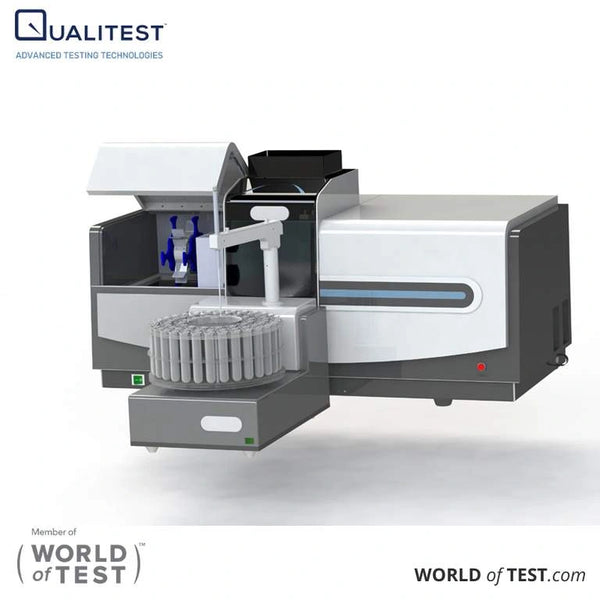
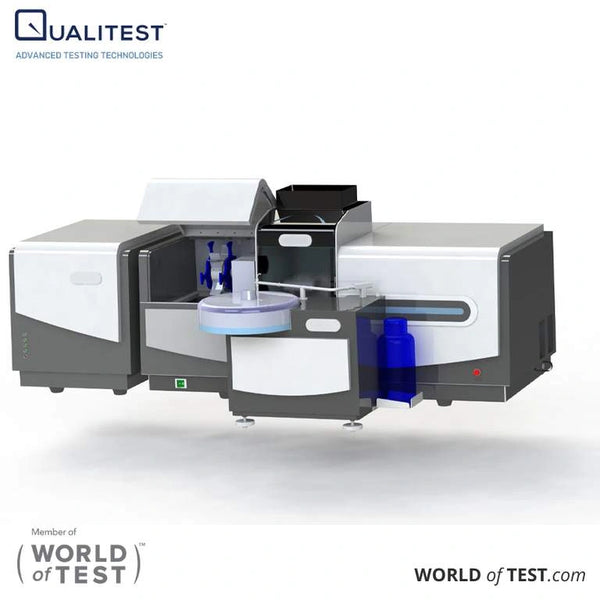
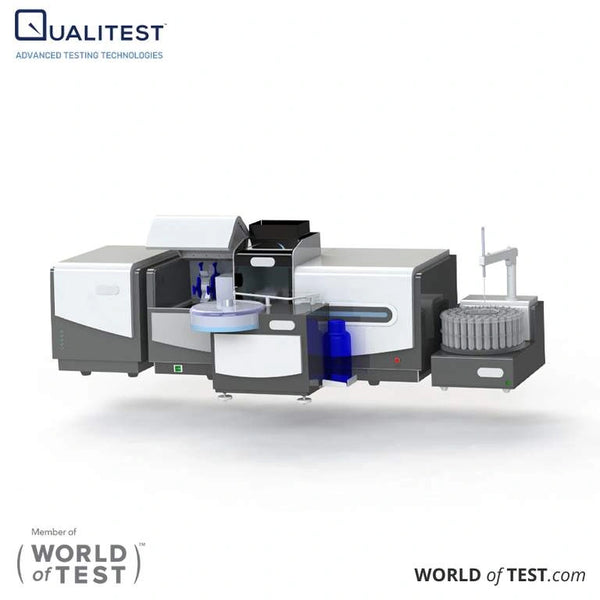
To manage unattended workloads, the QualiAAS™ Series connects with a 70-sample autosampler, which we regard as an outstanding asset for facilities running batch sequences during extended furnace temperature programs. For ultimate operational freedom, the flagship QT-AAS60 comes equipped with full furnace automation.
Conventional AAS instruments operate as single-element systems, though commercial multi-element instruments measure multi-element configurations sequentially by automatically indexing individual hollow cathode lamps into the optical path using rotating turrets. The QT-AAS29, QT-AAS30, and QT-AAS60 utilize a vertical 4 / 8-lamp auto turret with 360° rotation, while the QualiAAS™ Series utilizes an automatic multi-lamp turret.
Everything operates through PC-based RGWIN AAS software (MS Windows), handling burner adjustments, calibration routines, lamp indexing, and QA/QC reporting. In our opinion, grouping routine system tasks into a standardized Windows software interface provides reliable data integrity for commercial operations.
Operating Costs & Facility Utilities
Analyzing recurring operating expenditures is just as crucial as evaluating initial capital acquisition. The analytical modes diverge considerably in utility feeds, replacement parts, and infrastructure demands.
Gas Supplies & Facility Electrical Connections
Flame testing requires steady supplies of air and acetylene (air-C₂H₂), while graphite furnace testing runs on high-purity argon (Ar). In standard US testing facilities, these instruments commonly tie into central plumbed gas manifold systems engineered for instrument-grade acetylene and argon feeds.
The QT-AAS29, QT-AAS30, and QT-AAS60 accept a universal 110/220 V, 50/60 Hz electrical supply, allowing North American facilities to connect directly to standard 60 Hz line voltage without step-up transformers or frequency converters.
The QualiAAS Series ships configured for 220 V / 50 Hz by default, with 110 V North American configurations available upon request. Because rapid graphite furnace heating cycles draw substantial instantaneous current during thermal atomization, models such as the QT-AAS60 include a dedicated high-current electrical socket to support safe installation on an isolated branch circuit.
Because testing requirements, gas line layouts, and accessory needs vary across laboratories, we provide customized, application-specific quotations for each base unit and consumable package.
Hardware Wear & Diagnostic Protection
Flame testing incurs routine operational wear on the 10 cm titanium burner head. Furnace testing consumes graphite tubes (longitudinal or transverse). Modern furnace systems have achieved lower matrix interference levels than historical units, though tube-analyte surface interactions remain an ongoing research topic in analytical chemistry.
Transversely heated graphite tubes deliver documented "extended tube service life," while automated graphite tube self-inspection (on QualiAAS™ 3000FG-Pro, QT-AAS30, and QT-AAS60) assesses tube status prior to heating cycles. Argon and acetylene pressure interlocks, active flame sensors, and automated acetylene leak alerts protect against costly gas loss and physical hazards.
Platform Selection Framework
Analytical publications establish that the choice between flame and furnace rests on analyte concentration: flame shines for solutions above mg/L where rapid throughput is prized, while furnace is mandatory for ultratrace determinations where detection limits justify the 2-minute cycle time. We regularly consult with laboratory managers evaluating how to configure their benches around these analytical realities.
High-Throughput Screening: QualiAAS 3000F
Featuring single-beam optics built purely for flame atomization, this configuration serves as a sensible capital purchase for high-volume screening operations. Mining and metallurgical assay facilities (such as regional assay operations monitoring gold or copper ore streams across the Western United States) frequently run uninterrupted, higher-concentration digestions where furnace detection limits are unnecessary.
Pharma QC & Data Integrity: QualiAAS 3000FG Series
Featuring automated switching between flame and furnace, this dual-mode configuration is the dedicated choice for pharmaceutical, food safety, and cGMP facilities. With integrated 70-sample autosampling, user permission controls, electronic signatures, and complete audit-trail tracking, these systems directly support FDA 21 CFR Part 11 data governance.
Regulated Trace Testing: QT-AAS30 Series
Bringing together single or double-beam optics, flame atomization, and standard transversely heated graphite tubes, this setup offers a well-calibrated solution for environmental and industrial compliance laboratories seeking uniform thermal heating, higher sensitivity, and automated QA/QC reporting via RGWIN software.
High-Volume Automation: QT-AAS60 Series
Combining single or double-beam optics with flame, transversely heated furnace, full furnace automation, and enhanced hydride generation, this is the premier choice for high-volume commercial testing facilities demanding maximum sensitivity and extensive automation.
A large US commercial contract testing laboratory balancing varied municipal drinking water batches, industrial waste outfalls, and soil screening runs can handle differing regulatory sensitivities on a single workstation. Because every series accommodates 70+ metallic and non-metallic elements across both modes, selecting a dual-mode instrument represents a far more practical use of laboratory real estate than installing two separate analyzers.
When AAS Is the Right Choice and When to Consider ICP
A common question during equipment evaluation is whether a laboratory should step up to Inductively Coupled Plasma (ICP-OES). The practical boundary comes down to your target element count and operating utilities: if your facility tests a focused panel of under six elements per sample (such as lead, cadmium, arsenic, and copper), atomic absorption remains significantly faster to calibrate and far more economical to run.
Across the analytical market, a graphite furnace AAS generally involves a capital outlay between 30,000 and 60,000 USD with modest, intermittent argon use, whereas ICP-OES platforms routinely range from 60,000 to 100,000 USD and consume a continuous stream of 15 to 20 liters of argon per minute to sustain the plasma torch.
If your daily testing schedule requires screening broad panels of fifteen to twenty elements simultaneously in every run, the multi-element speed of ICP-OES justifies the higher capital and utility investment.
For a detailed breakdown of detection limits, gas infrastructure, and long-term operating costs between these two techniques, read our dedicated comparison guide on choosing between AAS and ICP platforms.
Technical Specifications
To help you evaluate which setup matches your testing volume and compliance goals, here is how our core instrument configurations compare across key operational specifications:
| Key Specification | QualiAAS™ Series (3000F / 3000FG / 3000FG-Pro) | QT-AAS29 Series | QT-AAS30 Series | QT-AAS60 Series |
|---|---|---|---|---|
| Atomization System | Flame (3000F); Flame + Graphite (3000FG/Pro) | Flame + Graphite Furnace | Flame + Graphite Furnace | Flame + Graphite Furnace |
| Optical System (190–900 nm) | Single-beam (3000F); Double-beam (3000FG/Pro) | Single or Double Beam | Single or Double Beam | Single or Double Beam |
| Spectral Bandwidth | 0.1 / 0.2 / 0.4 / 0.8 / 1.6 nm (auto) | 0.1 / 0.2 / 0.4 / 0.7 / 1.4 nm (auto) | 0.1 / 0.2 / 0.4 / 0.7 / 1.4 nm (auto) | 0.1 / 0.2 / 0.4 / 0.7 / 1.4 nm (auto) |
| Furnace Heating Design | Longitudinal (standard); Transverse (Pro) | Longitudinal heated | Transversely Heated Graphite Tube | Transversely Heated Graphite Tube |
| Lamp Turret Capacity | Auto multi-lamp turret | Vertical 4 / 8-Lamp Auto Turret (360° rotation) | Vertical 4 / 8-Lamp Auto Turret (360° rotation) | Vertical 4 / 8-Lamp Auto Turret (360° rotation) |
| Key Automation Feature | 70-sample autosampler; automated mode switching | Modular dual-mode configuration | Graphite tube self-inspection | Full furnace automation; enhanced hydride |
Choose Your Cost-Effective Qualitest AAS Bench
Balancing regulatory requirements, sample throughput, and capital expenditure is essential when equipping your analytical facility. We provide a full portfolio of cost-effective products spanning standalone flame spectrometers and fully automated graphite furnace platforms.
Connect with our team today to evaluate your analytical methods, review EPA, USP, or ISO alignment, and receive a customized quotation configured for your laboratory workflow.
References (Click to expand)
- Erspamer, J., & Niemczyk, T. (1981). Convenient Modifications to a Varian AA-6 Atomic Absorption Spectrometer to Allow Use with a Graphite Furnace Atomizer. Applied Spectroscopy, 35, 512-513.
- García-Alegría, A. M., Astiazaran-Garcia, H., Anduro-Corona, I., Burgos-Hernández, A., Ruiz-Bustos, E., Canett-Romero, R., Encinas-Soto, K. K., & Gómez-Álvarez, A. (2018). VALIDACIÓN DE UN MÉTODO ANALÍTICO PARA CUANTIFICAR ALUMINIO EN TEJIDOS DE RATAS SPRAGUE DAWLEY MEDIANTE EAA-FLAMA Y EAA-HORNO DE GRAFITO. Revista Internacional de Contaminación Ambiental.
- Planeta, K., Kubala-Kukuś, A., Dróżdż, A., Matusiak, K., Setkowicz, Z., & Chwiej, J. (2021). The assessment of the usability of selected instrumental techniques for the elemental analysis of biomedical samples. Scientific Reports, 11.
- Slavin, W. (1994). Chapter 4 Atomic absorption spectrometry Flame AAS. Techniques and Instrumentation in Analytical Chemistry, 15, 87-90.
- Sperling, M. (2006). Flame and Graphite Furnace Atomic Absorption Spectrometry in Environmental Analysis.