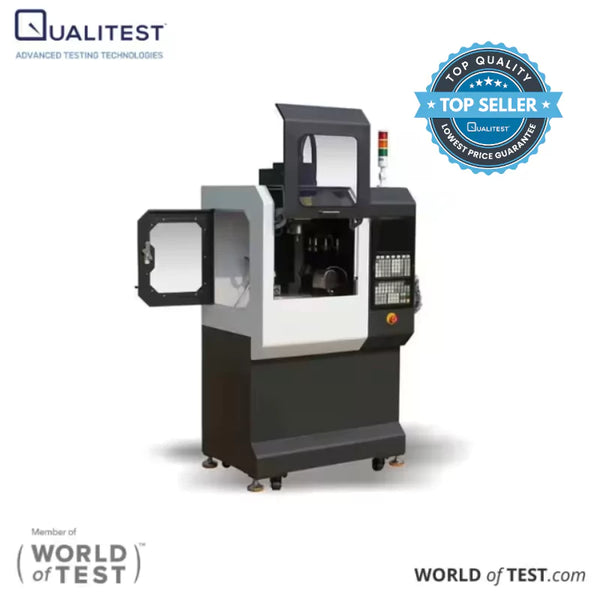
Securing top-performing shop gear without overpaying is a rare art form. Human error easily drains profits, making automated precision an absolute necessity for modern manufacturing facilities. If you are currently debating a CNC machine vs lathe or trying to decide on a CNC milling machine vs CNC lathe, you need a setup that avoids bloated software features your operators will never touch.
Research shows that choosing correctly between rotary turning and multi-axis shaping dictates your long-term efficiency and operational costs. Read our straightforward guide below to select the exact machinery your operational floor requires.
Key Takeaways
- The Main Motion Difference: CNC lathes primarily machine rotary workpieces using two-axis turning motions, while milling machines use multi-axis cutter motion to shape more varied geometries.
- Optimal Part Geometry: Select a CNC lathe for cylindrical, conical, and threaded components. Choose a CNC milling machine for flat surfaces, slots, and complex three-dimensional forms.
- Operational Trade-Offs: Lathes are highly effective for high-speed, uniform production of symmetrical parts. Milling machines offer superior shape versatility but generally require a higher initial capital investment.
- Software and Safety: Standard G-code systems are crucial to prepare operators for the US job market, and fully enclosed setups are essential for meeting strict OSHA safety standards.
Defining the Technology: Lathe Machine vs CNC
Before looking at the operational details, we need to clear up one common industry mix-up. People often compare a lathe machine vs CNC as if they are two completely different categories.
A traditional lathe is simply a tool that spins a block of raw stock at high speeds while a stationary cutting instrument shaves it down to form rotary workpieces. Decades ago, technicians turned handwheels manually to achieve this. "CNC" simply refers to the computerized control unit we attach to automated machinery to make it run on pre-programmed digital instructions.
So comparing a manual lathe vs CNC machine is like comparing a basic mechanical typewriter to a modern digital word processor. They operate in completely different leagues of production speed and efficiency.
Very few professional facilities rely on manual operation for scalable production today. This brings us to the actual, high-stakes debate: milling versus turning.
CNC Milling vs CNC Lathe: Core Differences
When laying out your shop floor plan or planning an educational syllabus, your core decision almost always boils down to a CNC milling machine vs CNC lathe. Both of these systems run on programmed instructions, but the way they remove material is completely opposite.
The CNC Lathe (Turning)
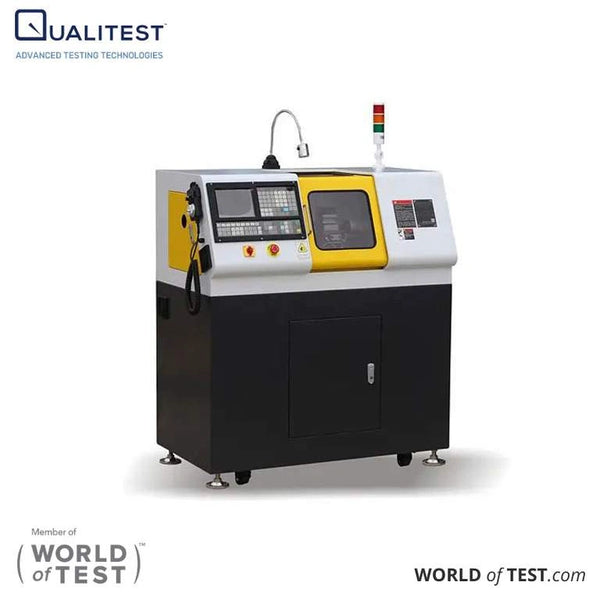
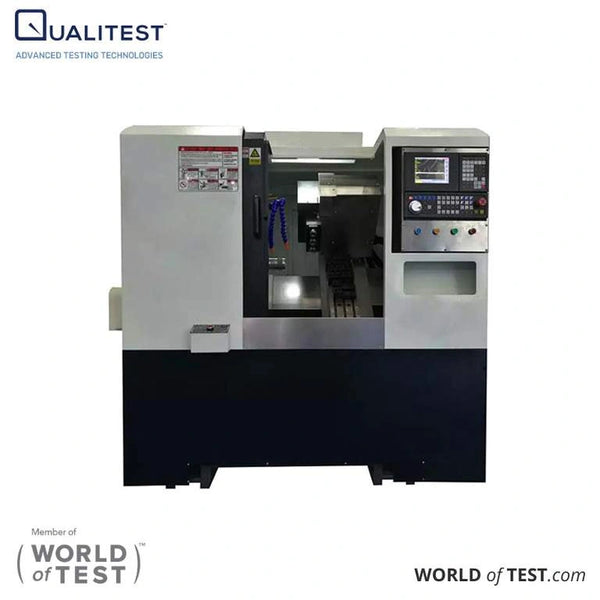
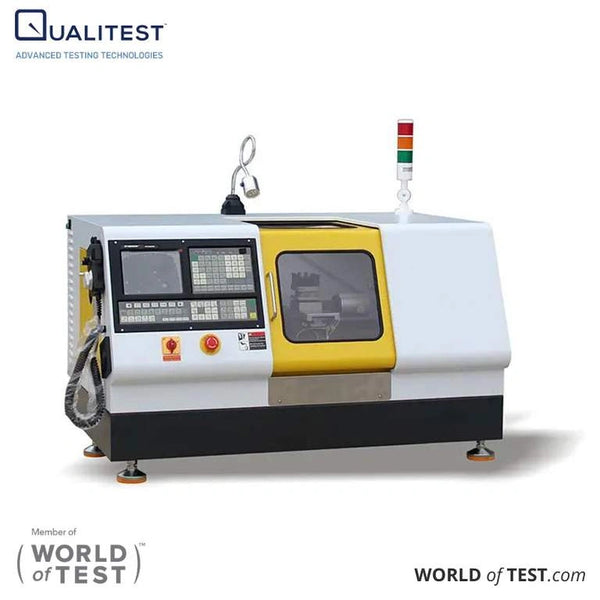
This system, such as our CNC Lathe – QualiLathe™ 210B, secures your raw stock firmly in a chuck and spins it at exceptionally high speeds. A stationary cutting tool then moves along the material to shave away excess stock, producing shafts, disks, cylinders, cones, threaded sections, and other rotationally symmetric parts.
The CNC Milling Machine (Milling)
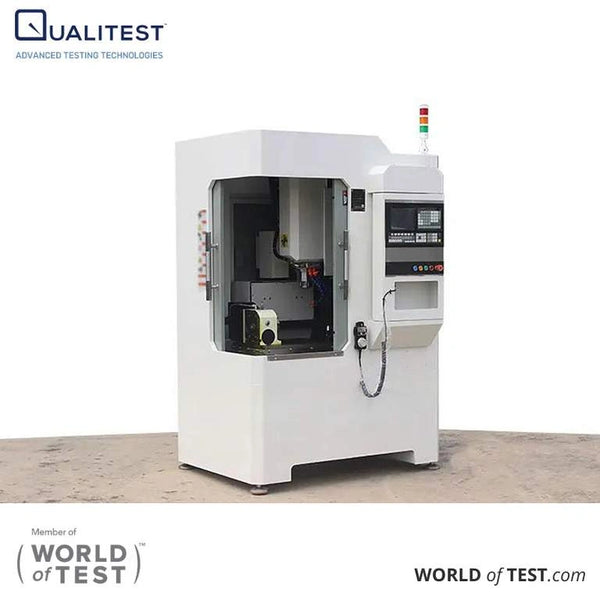
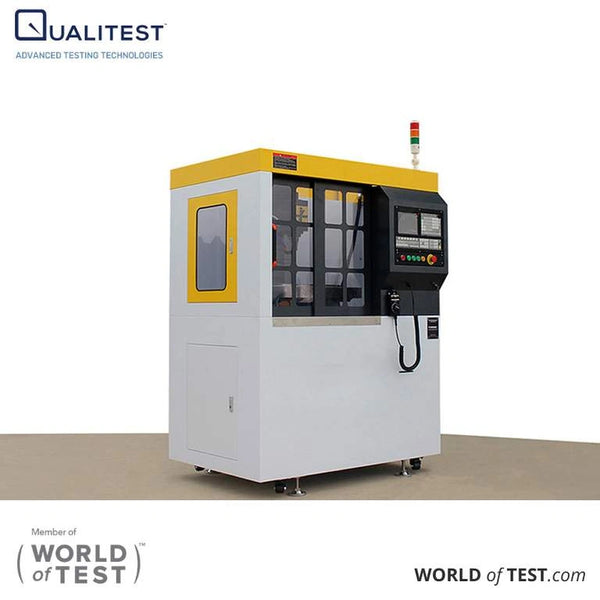
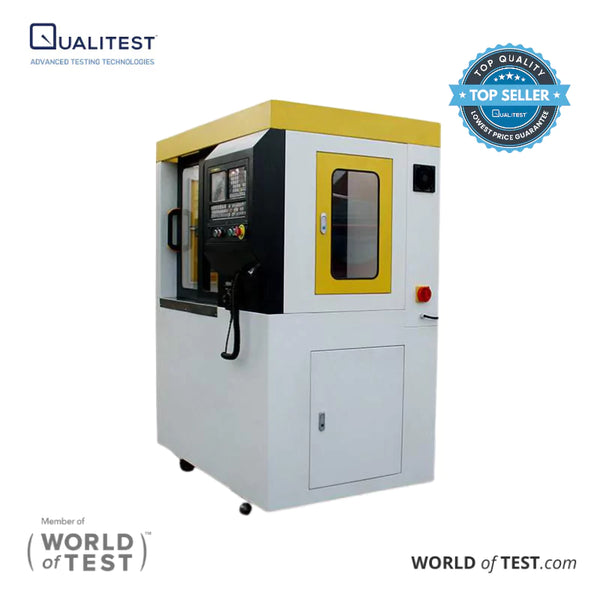
This system does the reverse. Your raw stock sits completely stationary, clamped firmly to the machine bed, while a spinning, multi-toothed cutter, like the ones utilized on our Drilling & Milling Center – QualiMill™ 400, drops down to remove material from prefabricated blocks, carving out complex, predesigned 3D forms using CAD/CAM-generated toolpaths.
Our view is simple. If budget constraints restrict you to purchasing only one system, we generally recommend prioritizing a mill first due to its sheer geometric versatility, unless your main operational goal is producing purely cylindrical components.
Alternatively, if your production demands both, hybrid options exist, like our CNC Turn Mill Machine - QualiMill™ TM500, that combine turning and milling functions into a single workstation.
Related article: CNC vs Milling Machine Guide: Key Differences Explained
Kinematics and Axis Configurations
To truly break down the CNC lathe vs mill choice, we have to look closely at the shape of the parts you want to create and how the internal mechanical systems move.
Spinning Action
To keep it simple, on a lathe, the workpiece spins. On a mill, the cutter spins. Anyone who has monitored tool wear during a high-speed production run knows exactly what we mean.
Related article: Should You Buy a CNC or Laser Cutter for Your Lab?
Axes of Motion
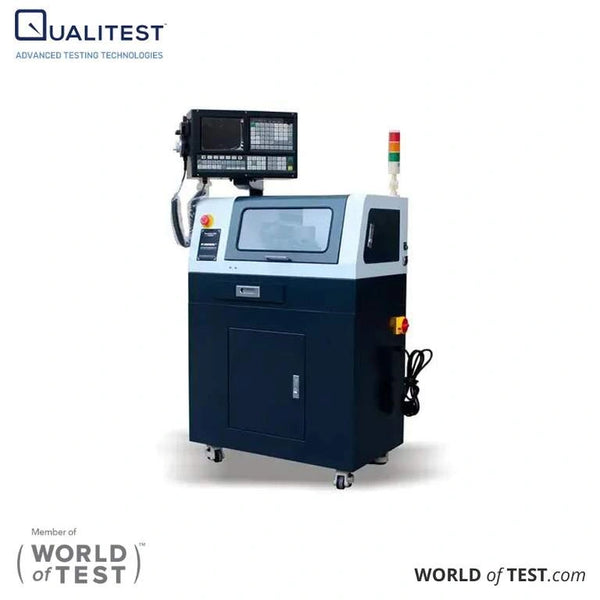
A standard turning setup, similar to our Mini CNC Sample Preparation Lathe – QualiLathe™ 140, operates using two main kinematic axes, specifically X and Z. This two-axis movement is highly efficient for shaping cylinders.
A mill, however, operates on at least three descriptive axes: X, Y, and Z. Advanced systems, including our 4 Axis CNC Milling Machine – QualiMill™ 300A and the highly adaptable 5 Axis CNC Machine – QualiCNC™ 300, also exist to shape highly complex, varied geometries.
Related article: 5-Axis vs 3-Axis vs 4-Axis CNC Machining Differences
Turning vs Milling: Material Removal Processes
The physical material-cutting action of CNC milling vs CNC turning changes your whole workspace operational dynamic.
CNC Turning on a Lathe
This is a continuous, uninterrupted cut heavily reliant on specialized turning-focused programming and simulation workflows. The tool stays in constant contact with the spinning stock, creating a smooth ribbon of hot metal. It provides extreme repeatability and strict uniformity.
This is exactly why highly specialized systems like our Mini CNC Lathe for Preparation of Round Tensile Specimens – QualiLathe™ 210 are incredibly popular for preparing standardized round tensile specimens that must strictly align with ASTM (American Society for Testing and Materials) guidelines.
CNC Milling on a Mill
This is an interrupted cutting process that follows a strict sequence from 3D CAD modeling to CAM generation, G-code translation, and final machining. The teeth of the spinning cutter engage and disengage the stationary material repeatedly.
Related article: CNC Machine vs 3D Printer: Side-by-Side Guide
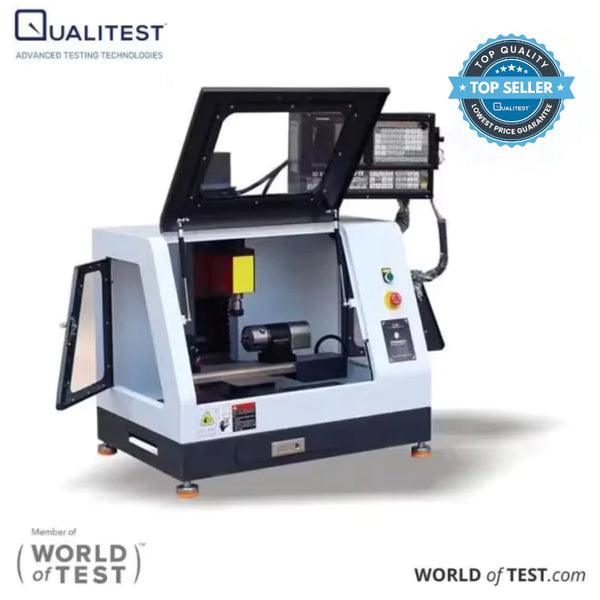
This provides high accuracy for carving flat surfaces and complex shapes, using versatile equipment like the compact Micro CNC Milling Machine QualiMill™ M4 for tiny components or the Mini CNC Milling Machine QualiMill™ 220 for educational labs. Multiple researchers note these advanced multi-axis systems are often more expensive to acquire, making budget-friendly suppliers crucial.
The Reference Sheet: CNC Lathe vs Mill Comparison
| Feature | CNC Lathe | CNC Milling Machine |
|---|---|---|
| Material Motion | Workpiece spins, tool is stationary | Tool spins, workpiece is stationary |
| Optimal Part Geometry | Shafts, disks, threads, and cones | Complex 3D shapes from blocks/discs |
| Optimal Batch Size | High-volume continuous production & batch testing prep | Low-to-medium volume, high-mix runs, & prototyping |
| Typical Motion Paths | X and Z | X, Y, Z, and advanced 5-axis systems |
| Standard Workflow | Turning-focused programming and simulation | CAD to CAM to G-code sequence |
| Core Theme | High precision, strict repeatability, and uniformity | High accuracy for complex shapes, but often expensive |
| Featured Models | QualiLathe™ 210B, QualiLathe™ 210, QualiLathe™ 140 | QualiMill™ 400, QualiMill™ 220, QualiMill™ M4, QualiMill™ 300A, QualiCNC™ 300, QualiCNC™ 200 |
Operational and Facility Requirements
When sourcing equipment for a professional lab or manufacturing floor, there is more to look at than just the spin direction.
Material Compatibility
Both setups are highly capable when processing dense materials. Lathes are the proven standard for producing round material test specimens, while mills are highly effective for carving out specialized brackets.
Interestingly, energy consumption patterns differ significantly. Turning electricity draw is largely uniform regardless of the specific lathe chosen, whereas non-cutting and milling energy consumption depend heavily on the specific milling machine you purchase.
Production Volume and Batch Size
Batch size is a critical consideration when selecting equipment. CNC lathes are generally optimized for high-volume, continuous runs of round components due to rapid cycle times and non-stop tool contact.
Conversely, CNC milling machines are ideal for low-to-medium batch sizes, high-mix short runs, and prototyping. For R&D labs, vocational schools, and testing facilities, compact CNC mills and sample-prep lathes provide the ideal balance for short-run production without requiring massive industrial capital.
Software and Controls
We believe the digital control system is a critical factor that buyers often overlook during procurement. Training operators on machinery that runs on standard, industry-recognized G-code provides far greater long-term value.
This is especially true for the US manufacturing job market, where operators who know standard G-code on controllers like Haas or Fanuc are in high demand compared to those locked into proprietary software systems that commercial production facilities rarely utilize.
Workspace Safety Standards
Especially in educational and corporate training settings, safety is a non-negotiable priority. Professional machines must feature fully enclosed work areas, prominent emergency stop buttons, and electronic door safety interlocks.
For school workshops and corporate labs across the US, meeting strict OSHA (Occupational Safety and Health Administration) regulations is an absolute baseline requirement, and a fully enclosed unit is essential to keep hot chips and chemical coolant mist securely contained. (No exceptions!)
Related article: CNC vs Die Casting: Cost, Precision & Speed Guide
Cost-Effective CNC Solutions from Qualitest
Securing top-performing equipment should never require overextending your capital budget.
We are a North American supplier offering practical, cost-effective machining setups that deliver reliable, industrial-grade results day after day. By choosing a domestic partner, your facility benefits from reliable US-based customer support, quick delivery times, and a domestic supply chain that avoids overseas shipping bottlenecks.
Our space-efficient setups are built to handle intense daily use while keeping operators safe. We provide automated systems that deliver high-rigidity performance without taking over your shop floor, backed by prompt technical support, installation guidance, and reliable warranties.
Ready to scale up your manufacturing capabilities without overextending your financial budget? Take a look at our complete, cost-effective CNC Milling & Lathe Machines lineup today and contact our dedicated team for a detailed quote!
References (Click to expand)
- Acuna, F., Gordon, A., & Núñez, W. (2013). Design and implementation of a prototype lathe milling of computer numerical control. 2013 II International Congress of Engineering Mechatronics and Automation (CIIMA), 1-6.
- Agrisa, H. (2020). An Overview of process CNC Machining. 029-033.
- Alghauli, M., Almutairi, S., Aljohani, R., Aljohani, W., & Alqutaibi, A. (2025). Advanced subtractive manufacturing, micromilling, and laser micromachinery in dentistry: Current applications, limitations, and future perspectives. Biomaterials Connect.
- B, M. (2023). Modify and Convert Conventional Lathe Machine to Special Purpose Lathe Machine Operated using CNC Unit. International Journal for Research in Applied Science and Engineering Technology.
- Hermana, R., Setyoadi, Y., & Aza, M. F. (2022). KAJI EKSPRIMENTAL PEMBANDINGAN KETELITIAN MESIN CNC MILLING DENGAN KONTROL SMC DAN MESIN CNC MILLING DENGAN KONTROL ESP32 WIFI. Majalah Ilmiah Gema Maritim.
- Kurniawan, E., Syaifurrahman, S., & Jekky, B. (2021). Pengujian Tingkat Akurasi dan Error Dimensi Hasil Produk Mesin CNC Lathe Mini Custom. Jurnal Rekayasa Mesin.
- Lv, J., Tang, R., Jia, S., & Liu, Y. (2016). Experimental study on energy consumption of computer numerical control machine tools. Journal of Cleaner Production, 112, 3864-3874.
- Nugroho, S. A., Sena, B., & Ujiburrahman, U. (2024). A COMPARISON OF CNC LATHE MACHINE PROGRAMMING SIMULATION AND CNC LATHE MACHINE PRODUCTION RESULTS. Jurnal Dinamika Vokasional Teknik Mesin.
- Rahmatullah, R., Amiruddin, A., & Lubis, S. (2021). EFFECTIVENESS OF CNC TURNING AND CNC MILLING IN MACHINING PROCESS. International Journal of Economic, Technology and Social Sciences (Injects).
- Suyash, N., Chetan, N., Milind, R., Avadhoot, P., Pushkaraj, P., & Ketki, S. (2025). Mini CNC Milling Machine. 2025 3rd International Conference on Disruptive Technologies (ICDT), 1079-1084.
- Zhang, L., & Calderon, A. D. (2024). Research and prospects of CNC lathe. Cogent Engineering, 11.