Purchasing over-engineered multi-axis CNC machinery can quietly drain your company's capital budget. We believe that getting a firm grasp on the actual 5-axis vs 3-axis vs 4-axis CNC machining differences reveals exactly how many moving paths your components truly require.
By matching your part geometry to the right kinematic system, your facility reduces cycle times, cuts setup mistakes, and protects capital reserves. Read on to analyze the exact tradeoffs of each setup so you can make an informed, cost-effective machinery choice.
Key Takeaways
- 3-Axis Machining: This setup is best for flat, simple 2D or 2.5D geometries where the surface is accessible from a single direction. It remains the most budget-friendly entry point but requires manual repositioning for multi-sided parts.
- 4-Axis Machining: This system adds one coordinated rotary axis to rotate the workpiece automatically, which is ideal for cylindrical engraving, camshafts, and helical details.
- 5-Axis Machining: This setup delivers five-sided, single-setup cutting for complex curved surfaces like impellers and molds. It drastically reduces alignment errors but requires a higher upfront capital investment and more advanced programming.
- Compact Footprint Systems: Desktop, mini, and micro CNC units provide these same exact kinematic capabilities in space-saving configurations, making them ideal for R&D facilities, testing laboratories, and university engineering departments.
The Fundamentals of CNC Motion and Axes
Before we stack up a 5 axis CNC machine vs traditional CNC machines, let's look at how these systems actually move relative to your part.
- X, Y, and Z: This is your standard three-way linear slide: think left-to-right, front-to-back, and up-and-down.
- A, B, and C: These are the rotational paths that spin around those straight lines.
The number of pathways your machine can use determines how the spinning cutter and your raw block of metal interact.
3-Axis CNC Machining: Core Capabilities
The classic 3-axis rig is the old faithful of the production floor. Your block of raw material sits completely fixed to the worktable, and the spinning cutting tool moves along those three basic straight lines to shape your component.
Research backs up this simplicity. 3-axis machining is best when the surface is reachable from a single direction, which is why some freeform parts still do not require 5-axis capability.
The Good Stuff
It is remarkably gentle on your company's balance sheet, won't strain your capital budget, and is highly straightforward to program with minimal training.
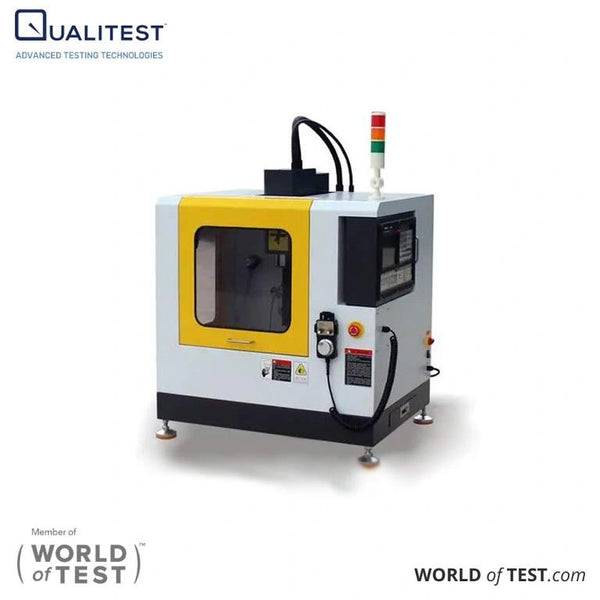
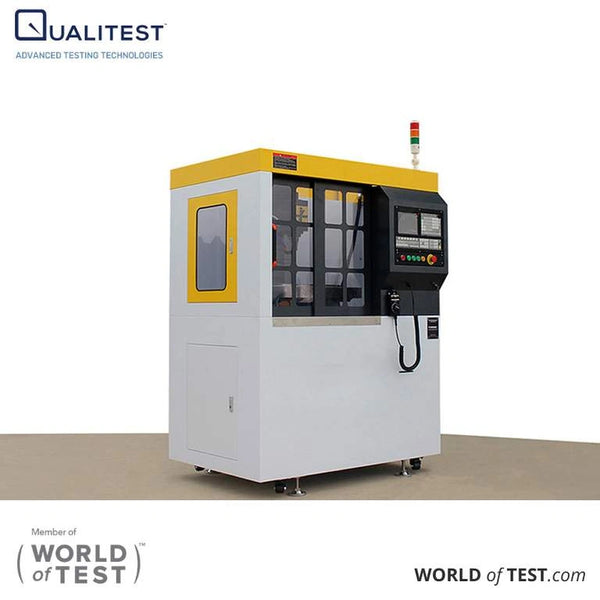
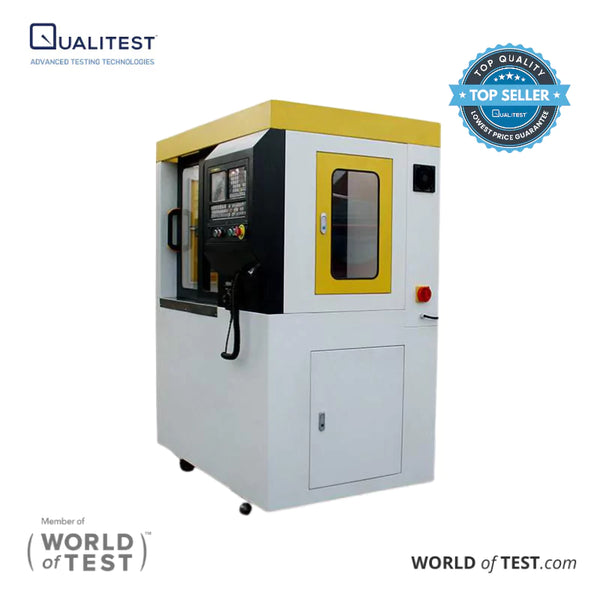
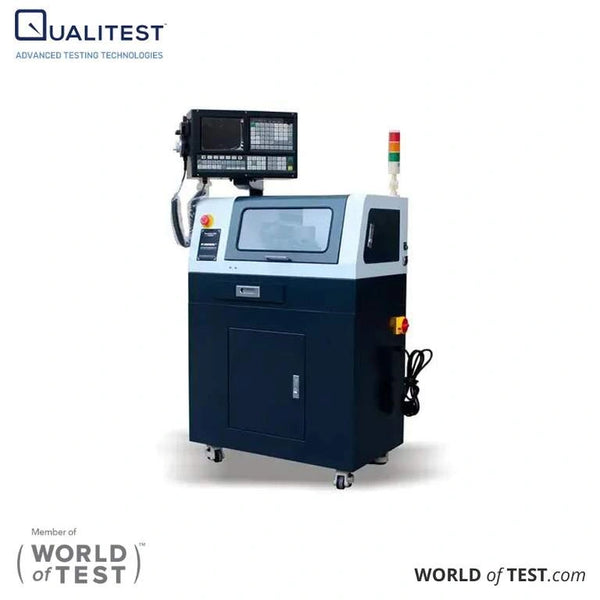
For example, systems like our Mini CNC Milling Machine QualiMill™ 220 prove that basic does not mean weak. With a 2.2 kW spindle hitting 24,000 rpm and maintaining incredibly tight 0.01 mm repeatability, it handles flat plates beautifully. If you need a flexible XYZ setup, our Desktop CNC Machine – QualiCNC™ 200 offers a generous 230 x 130 x 220 mm travel area for flat workpieces.
Furthermore, 3-axis can compete when geometry is accessible and toolpath/software optimization is strong. One study matched 5-axis-like finish and cut machining time by over 17% on the same 3-axis machine.
The Challenging Stuff
If you need to machine multiple sides of a part, your operator has to pause everything, manually unclamp the metal, flip it over, and clamp it back down. This consumes your precious production time and increases the risk of costly operator setup errors.
Our Honest Stance: We often see 3-axis setups unfairly dismissed as overly basic. But in our opinion, if you are just carving out flat brackets or straightforward plates, trying to use anything fancier is just throwing your hard-earned operational budget into a campfire.
4-Axis CNC Machining: Rotational Access
Now, add a rotary indexer to that setup, and you have a 4-axis system. It still uses the usual three-way linear slide, but now it can also rotate the metal workpiece (the A-axis) like a spinning cylinder while the tool cuts.
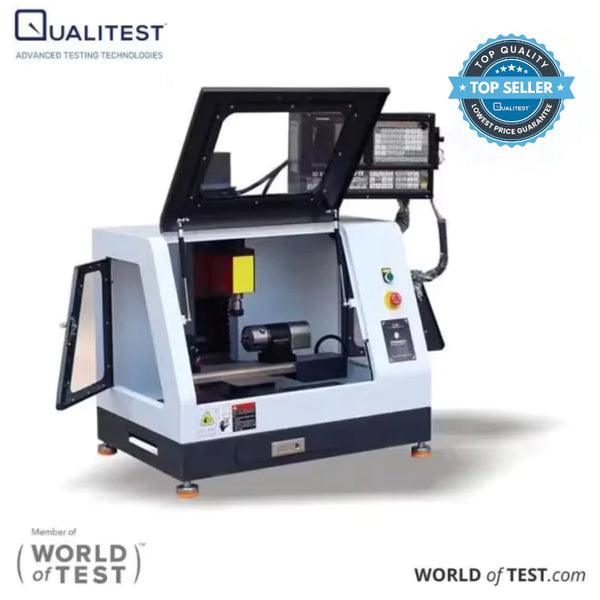
When we stack up a CNC machine 3 axis vs 4 axis setup, the massive benefit here is that you do not have to keep pausing the machine to manually turn your workpiece. To give you an idea of the hardware, our 4 Axis CNC Milling Machine – QualiMill™ 300A utilizes a BT30 spindle taper and offers 310 x 180 x 290 mm of travel area to handle those cylindrical cuts with ease. If your facility is extremely short on space, the Micro CNC Milling Machine QualiMill™ M4 steps in with similar rotational capability but fits right on a standard laboratory workbench.
The 4-axis adds one coordinated rotary motion, improving access but not matching full 5-axis tool orientation freedom. However, it is not just a compromise. Sometimes it is the faster option. One study found 4-axis blade machining to be shorter in machining time than 5-axis.
Our Honest Stance: In our view, the 4-axis is frequently overlooked. It gives you a substantial portion of that valuable rotational freedom without making your programming process unnecessarily complicated.
Related article: CNC vs Milling Machine Guide: Key Differences Explained
5-Axis CNC Machining: Multi-Sided Spatial Capability
This is the high-performance system. It slides on all three straight lines, plus it tilts and spins on two extra rotational axes. There is also a middle ground called 3+2 machining where the tool is tilted to a fixed angle, then the cut proceeds like 3-axis rather than continuously changing posture as in simultaneous 5-axis.
When evaluating a simultaneous 5 axis CNC machine vs traditional CNC machines, the physical arrangement of those extra rotary axes dictates your machine's footprint, rigidity, and weight capacity. The manufacturing industry generally relies on three kinematic configurations: Head-Head (where the spindle handles all articulation for massive parts), Head-Table (a hybrid setup where the spindle tilts and the table spins), and Table-Table or Trunnion (where the worktable manages both rotational movements).
When you compare a simultaneous 5 axis CNC machine vs traditional CNC machines, the difference is massive. 5-axis is favored for complex curved surfaces, impellers, blades, molds, and similar parts needing spatial tool orientation.
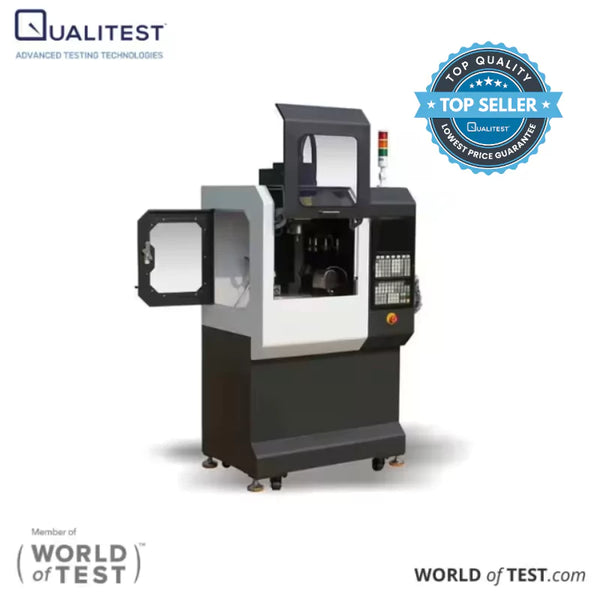
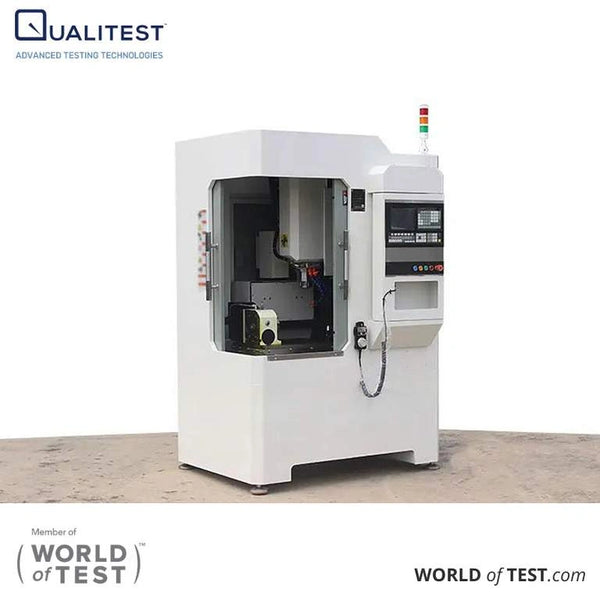
Real-world equipment like our 5 Axis CNC Machine – QualiCNC™ 300 makes this happen. By utilizing a 10-tool automatic tool changer (ATC) and an ISO 20 spindle, the machine continuously tilts and shapes those five sides without anyone touching the part.
Every single angle of the cut is satisfyingly spot on. For freeform and sculptured surfaces, 5-axis machining usually achieves better surface finish than conventional 3-axis finishing because tool tilt improves contact conditions and reduces cusp-related limitations. Direct accuracy comparisons show simultaneous 5-axis outperforming both 3-axis and 3+2-axis on free-form samples, reaching 0-17 μm deviation in the best case.
Our Honest Stance: Let's be totally blunt. Unless you are actively making curved impeller blades, complex medical implants, or intricate aerospace parts, a full-blown 5-axis setup is probably an unnecessary expense.
Comparative Analysis: 3-Axis vs. 5-Axis Setups
Let's look at 3 axis vs 5 axis CNC machining head-to-head.
Capital Outlay vs. Setups
A 3-axis is wonderfully friendly to your annual operating budget but requires more hands-on operator time. A 5 axis CNC machine vs 3 axis setup is going to demand a significant capital outlay up front, and it costs more to introduce and program. Its coupled rotary axes create extra kinematic and nonlinear-error challenges.
Time Savings
The strongest productivity advantage of 5-axis is fewer setups. One-time or reduced-setup machining lowers alignment error, fixture count, and labor for complex parts. It also allows shorter tools, which tends to reduce vibration and enable higher cutting speeds and longer tool life.
The Catch
5-axis is not automatically faster in every single scenario. A CAM simulation found 5-axis strategies 3-12% slower with more undercut in some cases.
Tolerance and Repeatability
Adding rotational axes often improves final accuracy on complex shapes. By removing manual flipping, 5-axis setups eliminate human alignment mistakes, hitting 0 to 17 μm deviation on free-form samples.
Yet, rigid 3-axis setups still deliver exceptional precision for flat geometries. For example, our 3-axis QualiMill™ 220 maintains a tight 0.01 mm repeatability, proving you do not always need five axes for highly precise standard parts.
Our Honest Stance: We feel that if you are not running high-volume, highly intricate parts, that massive 5-axis price tag is just going to sit on your shop floor looking impressive while quietly draining your cash flow.
5-Axis vs 3-Axis vs 4-Axis CNC Machining Comparison Table
To help visualize how these setups compare, here is a quick, highly practical guide:
| How It Works | 3-Axis CNC Machine | 4-Axis CNC Machine | 5-Axis CNC Machine |
|---|---|---|---|
| How It Moves | Straight lines only (X, Y, Z) | Straight lines + 1 Spin axis (A-axis) | Straight lines + 2 Spin axes (A/B or A/C) |
| Part Complexity Capacity | Flat brackets and basic plates | Multi-sided parts, cylinder shapes | Wild, twisty, organic 3D shapes |
| Typical Achievable Tolerance Factors | Excellent for single planes (0.01 mm repeatability), but manual flips increase human alignment error risks. | High precision for cylindrical cuts; reduces human error by automating single-axis rotation. | Highest accuracy on complex geometries (up to 0 to 17 μm deviation) by eliminating multiple manual setups. |
| Manual Repositioning Required | High (frequent manual flips and alignment checks) | Very low (the machine spins it automatically) | Almost none (single setup, done-in-one) |
| What Is It Actually Good For? | Flat parts, slotting, simple teaching tools | Helical details, cylinder engraving, camshafts | Impellers, turbine blades, complex bone screws |
| Capital Outlay Required | Very budget-friendly | Moderate | Significant investment required |
| Our Relevant Models | QualiMill™ 220 / QualiCNC™ 200 | QualiMill™ 300A / QualiMill™ M4 | QualiCNC™ 300 |
Selecting the Optimal Configuration for Your Facility
- Go with 3-Axis if: You are making simple, flat parts on a tight budget, need to prep basic test specimens, or are training students on foundational CNC principles.
- Go with 4-Axis if: You need to carve around cylinders without stopping to manually rotate the workpiece.
- Go with 5-Axis if: You are making incredibly complex, curvy shapes with razor-thin margins of error.
Academic Labs and R&D Applications
Space Constraints & Desktop Capabilities
Who says you need a massive industrial facility to do high-end machining? We think it is fantastic that mini, desktop, and micro systems can pack this exact same logic into a machine that fits comfortably on a sturdy laboratory workbench. It is a lifesaver for school labs and tight R&D spaces.
Material Versatility & Sample Preparation
These smaller machines are surprisingly tough. They slice through metals and polymers with ease, making them absolute gold for prepping tensile test samples without wasting a huge pile of valuable material.
For testing new composites or machining standard parts, compact CNC machines offer incredible material versatility. In US-based testing and quality control facilities, compliance with rigorous domestic standard testing methods is a top priority.
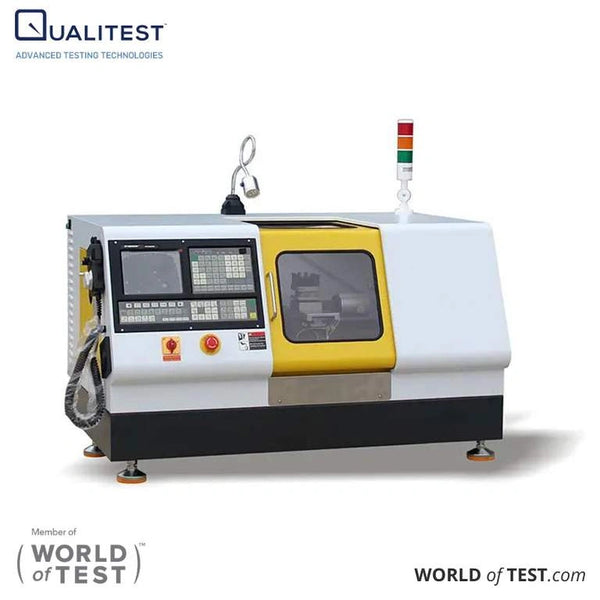
Using compact units like our Mini CNC Lathe for Round Tensile Specimens – QualiLathe™ 210 (featuring a 210 mm swing over the bed and 300 mm Z-travel) or the even smaller QualiLathe™ 140 (equipped with a 4-tool ATC) allows you to prep test specimens that strictly conform to US testing standards, such as ASTM E8/E8M for metallic materials or ASTM D638 for plastics, with extreme repeatability.
Related article: CNC Milling vs Lathe: Choosing the Right Facility Tool
The Software Learning Curve
Working through the transition to multi-axis programming can feel like learning a completely foreign language. Within the United States, engineering departments aligning their curriculums with ABET (Accreditation Board for Engineering and Technology) requirements, as well as local vocational workforce programs, face unique safety and space restrictions.
We believe that starting students on a smaller desktop rig is the best way to build confidence. Bringing units like the Drilling & Milling Center – QualiMill™ 400 (boasting up to 4.5 kW spindle capacity and an 8-tool ATC) into the classroom takes the intimidation out of the process, letting students make mistakes without the terrifying sound of a high-priced factory machine crashing.
Plus, these machines are perfectly suited for teaching actual CIM (Computer Integrated Manufacturing) and FMS (Flexible Manufacturing Systems) skills for Industry 4.0 curriculums, helping institutions meet rigorous US educational criteria.
Select Your Cost-Effective CNC from Qualitest
At Qualitest, we support your operations with highly capable, cost-effective CNC machinery. We eliminate the stress of long-distance support through our North American service network, local technical support hubs, and OSHA-compliant systems.
We offer direct solutions for your team:
- QualiCNC™ 300 (5-Axis): Excellent multi-sided precision with a 10-tool automatic tool changer.
- QualiMill™ 300A (4-Axis): Steady rotary milling with a fast 24,000 rpm spindle.
- QualiMill™ 220 (3-Axis): A space-saving beast perfect for everyday testing and simple cuts.
We focus on keeping things practical, efficient, and highly affordable for schools, laboratories, and dedicated testing workshops.
Ready to optimize your production workflow? Check out our full family of highly accurate, cost-effective setups on our CNC Milling & Lathe Machines page. Let's discuss your facility requirements and find the exact right fit for your workbench today!
References (Click to expand)
- [1] Lee, W.-C., & Wei, C.-C. (2019). Visualization of the setup location of a workpiece for five-axis machining. Journal of Advanced Mechanical Design, Systems, and Manufacturing.
- [2] Sivam, S., Saravanan, K., Pradeep, N., Kumar, S. R., & Karuppiah, S. (2018). Comparison of Manufacturing Data Analysis For 5 & 3-Axis Vertical Machining Center for the Time and Tool Benefits of Industries. International Journal of Engineering & Technology.
- [3] Inui, M., Taguchi, S., & Umezu, N. (2022). Graphical Assistance for Determining Cutter Axis Directions in 3+2-Axis Machining. Computer-Aided Design and Applications.
- [4] Ižol, P., Varga, J., Vrabeľ, M., Demko, M., & Greš, M. (2022). EVALUATION OF 3-AXIS AND 5-AXIS MILLING STRATEGIES WHEN MACHINING FREEFORM SURFACE FEATURES. Journal of Production Engineering.
- [5] Zębala, W., & Plaza, M. (2014). Comparative study of 3- and 5-axis CNC centers for free-form machining of difficult-to-cut material. International Journal of Production Economics, 158, 345-358.
- [6] Ueda, N., Ishizuka, A., Morimoto, Y., Hayashi, A., Kaneko, Y., & Suzuki, N. (2022). A Study on 5-Axis Turning for Non-Axisymmetric 3D Surfaces. Volume 2A: Advanced Manufacturing.
- [7] Morimoto, Y., Ueda, N., Hamano, S., & Hayashi, A. (2023). A Study on 4-Axis Turning for Non-Axisymmetric 3D Surfaces - Creation of high-precision curved surfaces by synchronizing the spindle and rotary tool axis. Transactions of the JSME (in Japanese).
- [8] Saito, A., Hasegawa, M., Iwasaki, T., & Sato, R. (2017). Comparison of 4-axis and 5-axis Simultaneous Machining of Complex Shaped Blade. 098.
- [9] Sadilek, M., Poruba, Z., Cepova, L., & Šajgalík, M. (2020). Increasing the Accuracy of Free-Form Surface Multiaxis Milling. Materials, 14.
- [10] Sivam, S., Saravanan, K., Pradeep, N., Kumar, S. R., & Karuppiah, S. (2018). Comparison of Manufacturing Data Analysis For 5 & 3-Axis Vertical Machining Center for the Time and Tool Benefits of Industries. International Journal of Engineering & Technology.
- [11] Ying, W., Ali, I., Kumar, B., & Bashir, U. (2020). NC Machining Simulation for Design and Manufacturing of Integral Impeller Based on UG NX 12.0.
- [12] Li, X., Huang, T., Zhao, H., Zhang, X., Yan, S., Dai, X., & Ding, H. (2022). A review of recent advances in machining techniques of complex surfaces. Science China Technological Sciences, 65, 1915 - 1939.
- [13] Baptista, R., & Simões, J. (2000). Three and five axes milling of sculptured surfaces. Journal of Materials Processing Technology, 103, 398-403.
- [14] Cho, H., Jun, Y., & Yang, M.-Y. (1993). Five-axis CNC milling for effective machining of sculptured surfaces. International Journal of Production Research, 31, 2559-2573.
- [15] Liu, X., Han, N., Wang, Y., Zhang, S., & Tan, J. (2024). Influences of rotary axes on nonlinear error for five-axis machine tool with different configurations: Theoretical model, deduction and simulation. Journal of Manufacturing Processes.
- [16] Qualitest Product Specifications. (2026).