The best way to win in this market is to deliver products that simply refuse to break.
Reliability is your strongest asset, and environmental test standards are the roadmap to achieving it. These guidelines don't just ensure compliance; they turn your product into a market leader.
At Qualitest, we see testing as more than a checklist. It is your opportunity to prove to every customer that your brand stands for quality.
Key Takeaways
- Reliability is non-negotiable: Meeting environmental test standards is the only way to ensure your product survives real-world stress and protects your brand reputation.
- Precision over approximation: Standards like ASTM C1363 and IEC 60068-3-5 demand exact conditions. Using equipment that drifts results in invalid data and potential product failure.
- Strategic business value: Compliance is a gateway to global markets and a shield against liability. It prevents costly recalls by catching defects early in the design phase.
- Matching gear to goals: Choosing the right chamber is critical. Whether you need Thermal Shock or Salt Spray testing, the equipment must align perfectly with the specific standard code.
- Cost-effective solutions: You do not need to overspend for accuracy. We offer high-performance, compliant testing chambers that fit your budget and come with a Best Price Guarantee.
The Essential List of Environmental Testing Standards
Staring at a long list of alphanumeric codes can feel like trying to decipher a foreign language without a dictionary.
We often see engineers treating these codes as just another bureaucratic hurdle, but we view them differently: they are the blueprints for durability. We have organized the environmental testing standards that actually matter to your bottom line so you don't have to guess.
| Industry | The Critical Codes | The Real-World Application |
|---|---|---|
| Automotive | ISO 16750, SAE J1455 | Vehicles and trucks; handling road vibration, temperature cycling, and humidity in electronics. |
| Electronics | IEC 60068-2 Series | Resistance to extreme cold, dry heat, and sudden thermal shifts for circuit boards. |
| Coatings & Materials | ASTM B117, ASTM G155 | Determining if materials will rust in salty fog or fade under simulated solar radiation (UV). |
| Military & Aerospace | MIL-STD-810 | Survival testing for harsh conditions, including high altitude, fungus, and explosive atmospheres. |
| Medical Devices | ASTM F1980 | Accelerated aging protocols for sterile packaging systems. |
A Closer Look: Adhering to Environmental Chamber Test Standards
To properly run tests defined by environmental testing standards, you need equipment that operates with unyielding accuracy. Environmental chamber test standards, such as ASTM C1363, ISO 8990, ISO 16000-9, and IEC 60068-3-5, provide specific guidelines for constructing and operating chambers.
These protocols ensure accurate and reliable testing of materials under controlled conditions, including temperature, humidity, and emissions (Palani & Karatas, 2023; Wei et al., 2012; C.P, 2020).
A chamber must be capable of hitting specific performance criteria like temperature stability, uniformity, and emission rate consistency. These factors are critical for valid and reproducible test results, as demonstrated in thermal performance evaluations of building envelopes and VOC emission testing (Palani & Karatas, 2023; Wei et al., 2012; Even et al., 2019).
Consider a sensitive printed circuit board test. If a lower-quality chamber allows the humidity to spike unexpectedly due to poor control, you might end up with unwanted condensation on the unit. This moisture leads to short circuits that have nothing to do with the product's design and everything to do with the faulty test equipment.
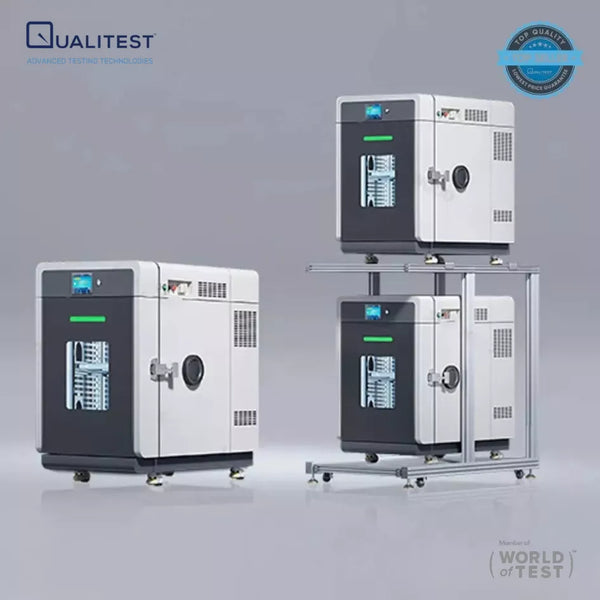
This is why even our compact units, like the Quali22L Benchtop Environmental Humidity Chamber, are engineered to maintain strict stability despite their small footprint.
Related article: Benchtop vs Walk-In Environmental Chamber Comparison
There is a risky assumption in the industry that "close enough" is acceptable for meeting environmental chamber test standards. We have to disagree. If your equipment drifts even slightly, your data becomes essentially invalid.
Furthermore, reliability analysis using models like those from the IEC helps in maintenance planning and prolonging chamber lifespan, emphasizing the importance of standard adherence (Gu et al., 2021).
When time is the primary constraint, standard testing timelines simply won't work. This is where our HAST Highly Accelerated Stress Test Chamber series comes in, pushing components to their limits in a fraction of the time to catch failures before they hit the assembly line.
Related article: What is HAST Test? Get Data in Days, Not Weeks
Why Adhering to Environmental Test Standards is a Strategic Move
Following environmental test standards does far more than just validate your engineering team's hard work. We consider it a vital tactic for protecting your business interests.
Global Market Entry
You cannot simply enter markets in Europe or North America without proving your products adhere to the rules (IEC or ISO).
Standardized testing allows for comparability of results across laboratories and over time, which is essential for product development, quality control, and exposure risk assessments (Wei et al., 2012; Even et al., 2019; Rösner-Friese et al., 2015).
Imagine a container of new industrial sensors arriving at a port in Rotterdam. Without the proper documentation proving adherence to IEC environmental testing standards, that shipment sits on the dock, racking up storage fees and delaying revenue. It is a logistical nightmare that is entirely preventable.
Liability Protection
In the unfortunate event that a product fails and causes damage, possessing a documented history of testing to recognized environmental test standards acts as your strongest defense. Adhering to these standards ensures the safety and integrity of tested hardware while preventing costly errors such as over- or under-testing (Fields, 2009).
Protecting Your Budget
We have observed that identifying a weakness during the design phase is infinitely cheaper than managing a widespread recall after the product has shipped. Compliance guarantees test accuracy, safety, and cost-effectiveness, which are vital for both research and industrial applications.
Matching Your Equipment to the Standards
Once you grasp the necessity of compliance, the next step is pairing the right standard with the correct hardware. A frequent error we observe is labs purchasing equipment that is either woefully under-powered or completely overkill for their actual needs. Here is how we help you avoid that costly oversight:
Thermal Shock (IEC 60068-2-14)
If your testing protocol requires freezing and heating your product in seconds, a standard climatic chamber is insufficient.
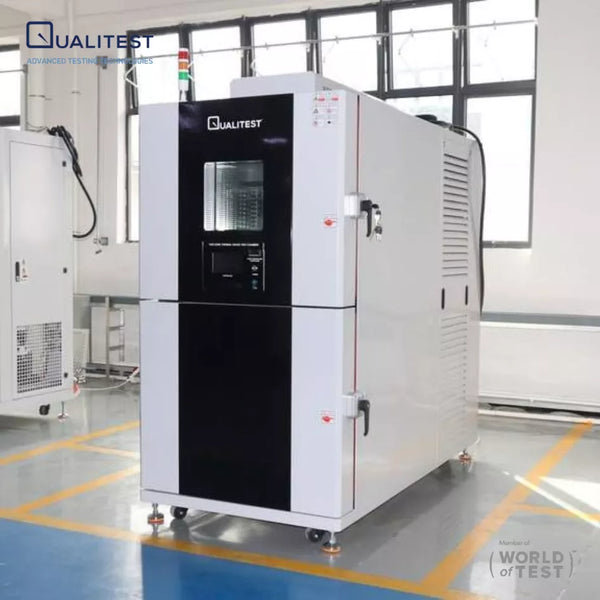
Consider an automotive sensor exposed to a winter morning start-up; if the solder joints crack because they weren't tested against rapid freezing, the vehicle fails. You require our Thermal Shock Test Chamber (Two-zone), specifically constructed to achieve the rapid recovery times mandated by this standard to prevent such failures.
Related article: Thermal Shock Test Method & Procedure Guide
Corrosion Resistance (ASTM B117)
This is the definitive benchmark for salt fog testing. Think of a marine bracket that seizes up after one month at sea because the coating thickness wasn't verified.
For standard salt fog tests, our QPSST Programmable Salt Spray Test Chamber maintains the exact pH balance required.
Related article: ASTM B117 vs ISO 9227: Pick the Best Salt Spray Standard
However, if your standards demand complex cycling between wet, dry, and salty conditions, the QCCT Programmable Cyclic Corrosion Test Chamber (available in sizes up to 1280L) provides the advanced control needed to mimic real-world coastal environments.
Related article: Guide to Cyclic Corrosion Test Standards & Method
Long-Term Weathering (ISO 4892)
To simulate years of solar exposure in just a few days, precision is non-negotiable.
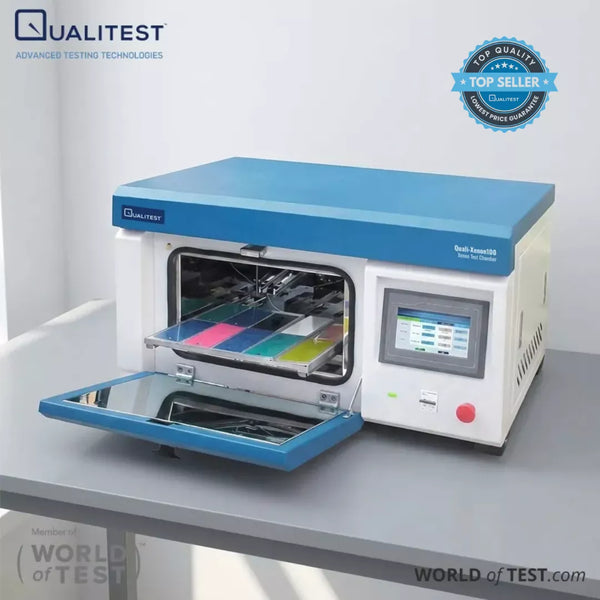
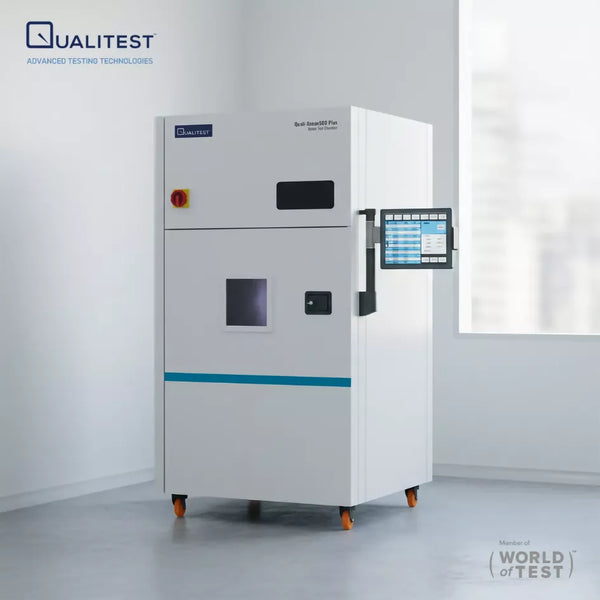
Whether you need the compact Quali-Xenon100 Benchtop for small samples or the Quali-Xenon500-Plus for high-volume testing, our equipment delivers the precise spectral irradiance control necessary. This ensures you don't end up with dashboard materials that turn yellow and brittle after a single summer.
Related article: Stop Fading: A Complete Lightfastness Guide
Ready to Upgrade Your Lab with Qualitest?
Verifying that your products adhere to global environmental test standards shouldn't be an obstacle course. We stand by the idea that high-performance testing gear should fit within a reasonable budget, which is why we offer a "Best Price Guarantee" on our premium machines.
Examine our comprehensive range of cost-effective environmental chambers today and secure the ideal setup for your facility.
View our Environmental Chambers Collection
References
- C.P, J. (2020). Measuring the Performance of Temperature Chambers in Accordance with IEC60068-3-5:2018. NCSL International Workshop & Symposium Conference Proceedings 2020.
- Even, M., Hutzler, C., Wilke, O., & Luch, A. (2019). Emissions of volatile organic compounds from polymer-based consumer products: comparison of three emission chamber sizes. Indoor air.
- Fields, K. (2009). The Certification of Environmental Chambers for Testing Flight Hardware.
- Gu, C., Zhai, L., Gu, W., Sun, Y., Han, C., Zhou, X., & Wangqiang, N. (2021). System Analysis and Reliability Analysis for Environmental Test Chambers. International Journal of Circuits, Systems and Signal Processing.
- Palani, H., & Karatas, A. (2023). Innovative Environmental Chamber Construction for Accurate Thermal Performance Evaluation of Building Envelopes in Varied Climates. Buildings.
- Rösner-Friese, K., Kaul, S., Vieths, S., & Pfaar, O. (2015). Environmental exposure chambers in allergen immunotherapy trials: Current status and clinical validation needs. The Journal of allergy and clinical immunology, 135(3), 636-43.
- Wei, W., Zhang, Y., Xiong, J., & Li, M. (2012). A standard reference for chamber testing of material VOC emissions: Design principle and performance. Atmospheric Environment, 47, 381-388.