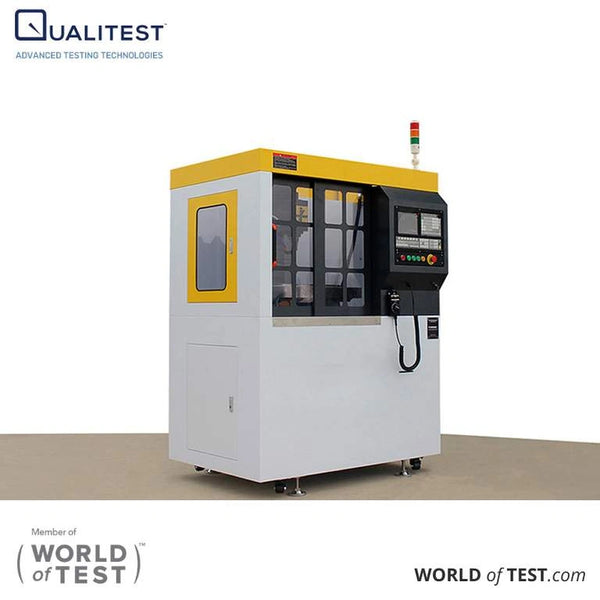
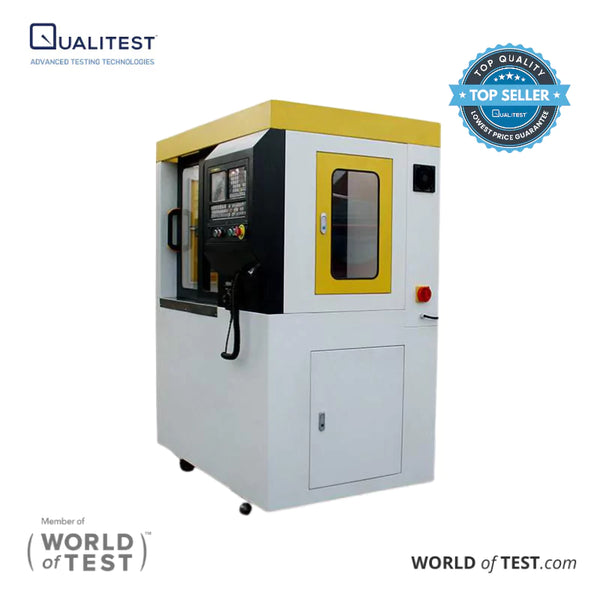
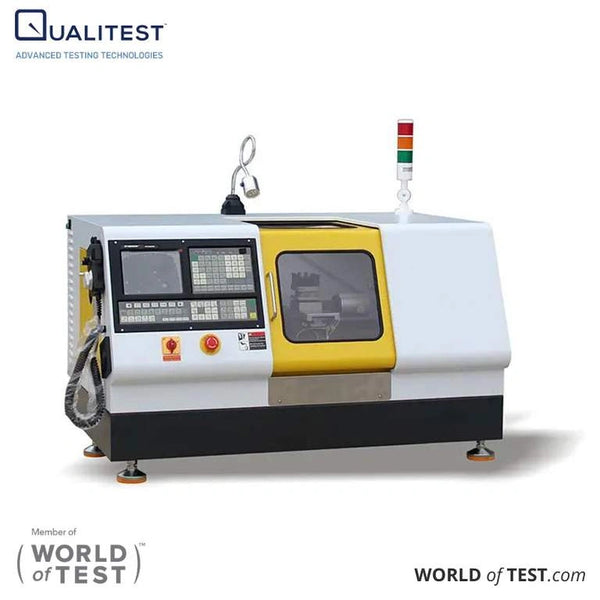
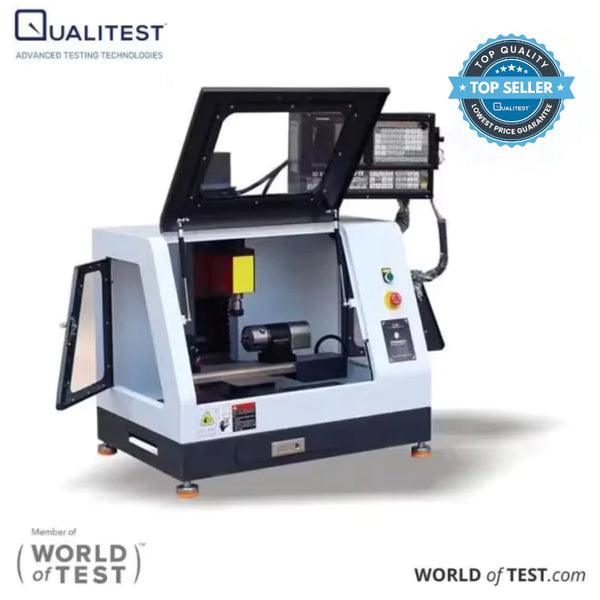
Investing in the right CNC machine vs laser engraver offers technical facilities a fantastic opportunity to boost production output and streamline quality testing. While mechanical milling shapes solid material with high-torque cutting tools, laser engraving delivers fast, non-contact surface marking.
Aligning the ideal platform with your material thickness ensures clean, ASTM-compliant results and long-term operating efficiency. This guide breaks down core metrics, facility setup, and equipment costs to help your team make the best capital investment.
Key Takeaways
- Core Operational Physics: Mechanical CNC machinery uses physical cutting edges to shear away thick stock, while laser engravers rely on non-contact thermal vaporization for surface marking.
- Testing & Compliance Integrity: Cold mechanical milling and turning preserve natural material grain structures, preventing heat-affected zones (HAZ) on ASTM E8/E8M metal test samples and analogous melt-induced stress points on ASTM D638 plastic test samples.
- Material Thickness & 3D Geometry: Physical end mills and lathe inserts process thick alloys and complex 3D shapes, whereas laser beam penetration drops off sharply on thick substrates.
- Facility Safety Infrastructure: Industrial laser marking requires multi-stage HEPA/carbon exhaust systems to meet OSHA fume limits and ANSI Z136.1 optical enclosures, while CNC platforms require basic chip and mist containment.
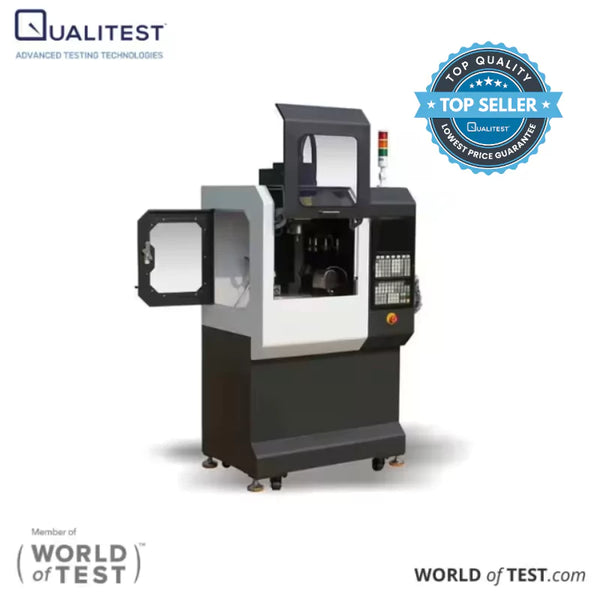
- Cost-Effective Solutions: Qualitest provides high-precision CNC mills and lathes that maintain strict dimensional repeatability for production plants and accredited labs without inflated capital costs.
Mechanical Milling vs. Thermal Vaporization
To make an informed purchase, we believe it is essential to analyze how a CNC and laser engraver interact with raw materials at a structural level. Stripping away the technical jargon, the choice centers on physical mechanical force versus focused thermal energy.
Mechanical CNC Machining (Milling & Turning)
A standard multi-axis mill or precision lathe functions as a heavy-duty, direct-contact removal system. It converts G-code into axis movements, driving physical cutting tools (such as solid carbide end mills and tough turning inserts) to shear away material from solid bar stock or block material.
- How it works: Subtractive physical machining (shaping solid raw material into precise, functional components).
- Physical force: Spindles operating up to 24,000 rpm (such as those featured on our QualiMill™ 300A with BT30 tapers) drive physical cutting edges directly into metal or polymer stock with substantial mechanical force.
- Primary capabilities: Deep slotting, 3D surface profiling, drilling, turning, and facing. It processes heavy material volumes while maintaining strict dimensional tolerances.
Laser Engraving & Marking
Rather than using physical bits, a laser engraver directs a concentrated beam of thermal energy (typically CO2, fiber, or UV) to melt, scorch, or vaporize the top layer of a workpiece layer by layer without physical contact.
- How it works: Non-contact thermal vaporization and surface alteration.
- Physical force: Zero physical contact, eliminating clamping strain on fragile components.
- Primary capabilities: High-speed 2D surface etching, fine serial numbers, barcodes, and shallow vector cutting on thin sheet materials.
Although both a CNC and laser engraver utilize digital G-code to drive positioning, we consider physical cutting tools the clear choice for structural 3D machining, while laser platforms serve as high-speed options for surface marking.
Related article: CNC Machine vs 3D Printer: Side-by-Side Guide
Key Operational Differences: CNC vs Laser Engraving
In our experience, a common miscalculation occurs when teams assume laser beams can easily replace physical metal-cutting tools for deep material removal. Here is how CNC vs laser engraving platforms compare across core operational metrics:
| Feature & Factor | CNC Milling & Turning Systems | Laser Engraving & Marking Systems |
|---|---|---|
| Material Contact | Direct contact cutting tool | Non-contact thermal beam |
| Tool Wear Overhead | Ongoing physical tool wear | No physical tool wear, lower day-to-day tool maintenance |
| Thick Material Stock | Preferred for thick wood or metal stock | Limited penetration depth |
| Surface & Channel Quality | Smooth surfaces, highly consistent channel geometries | Clean sheet edges, though less consistent deep channels |
| Material Stress | High cutting forces (requires rigid workholding) | Zero physical contact (requires minimal clamping) |
Upfront Capital Expenditure vs Total Cost of Ownership
For facilities comparing sticker price alone, entry-to-mid laser engraving systems typically carry a lower upfront purchase price than an equivalent-class CNC mill or lathe, since laser marking omits heavy structural castings, ball screws, and multi-axis servo drives.
However, once optical safety infrastructure (HEPA and activated carbon filtration, ANSI Z136.1 enclosures) and periodic laser source replacements are factored into a multi-year ownership period, that initial cost gap narrows significantly.
Thickness and Material Flexibility
When comparing CNC vs laser engraving, material thickness frequently dictates the final equipment choice. We strongly maintain that for thick blocks of aluminum, steel, or engineering plastics, physical cutting bits remain unmatched.
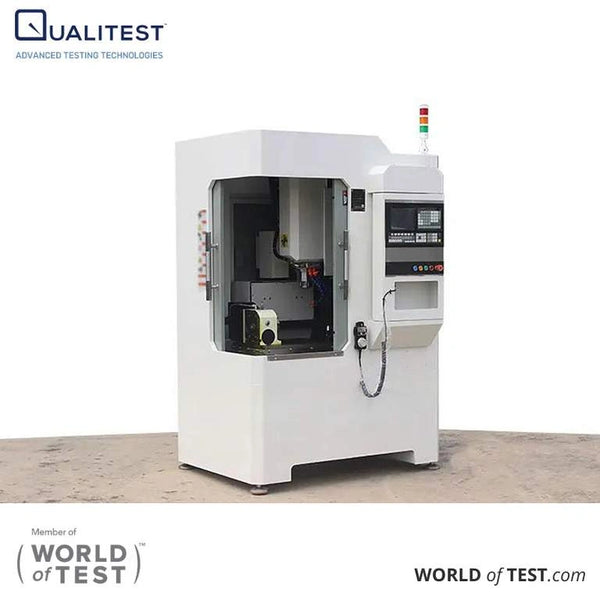
Compact multi-axis machining centers (such as our 5-axis QualiCNC™ 300 with an integrated 10-tool Automatic Tool Changer) process complex 3D geometries with ease.
Related article: 5-Axis vs 3-Axis vs 4-Axis CNC Machining Differences
Laser engravers encounter steep physical limitations when trying to cut deep into solid metal stock unless you invest heavily in high-wattage industrial fiber laser systems. However, for applying serial numbers onto thin metal sheets or etching part identification codes onto plastic housings at high speeds, non-contact laser systems perform exceptionally well.
Material Testing & Compliance Standards
For quality control laboratories, choosing machinery is about strictly adhering to recognized testing standards without compromising sample validity.
Across North American testing facilities—from aerospace suppliers in the Pacific Northwest to automotive machining operations in the US Midwest and energy component shops in Texas—adhering to ASTM guidelines is essential for audit verifications. For ISO/IEC 17025 accredited laboratories operating across the United States, equipment choices directly dictate whether test results pass formal accreditation audits.
ASTM E8 / E8M & ISO 6892 (Metal Tensile Bars)
Testing metal coupons under tensile load requires smooth dog-bone geometries with clean radius transitions. In our opinion, using thermal laser cutting for tensile bars creates unnecessary risk because intense localized heat leaves behind a Heat-Affected Zone (HAZ).
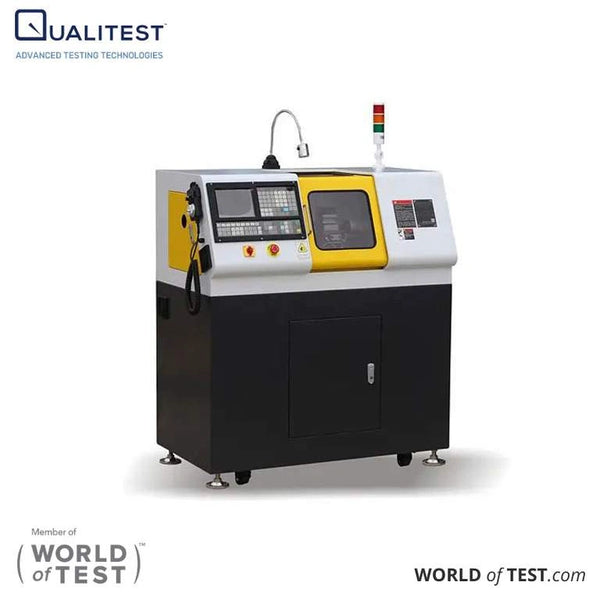
That microscopic heat-damaged layer can cause premature fracturing and invalidate test data. Purpose-built turning platforms (such as our QualiLathe™ 210, specifically engineered for round tensile test specimen preparation with an 1100 W spindle and MT4 taper) preserve cold-cutting conditions, maintaining the metal's natural grain structure.
ASTM D638 (Plastic Tensile Samples)
Laser heat melts polymer edges, introducing micro-structural stress points along the sample boundary. Recent research confirms that mechanical CNC milling produces significantly more consistent channel geometries and smoother surfaces than CO2 laser engraving.
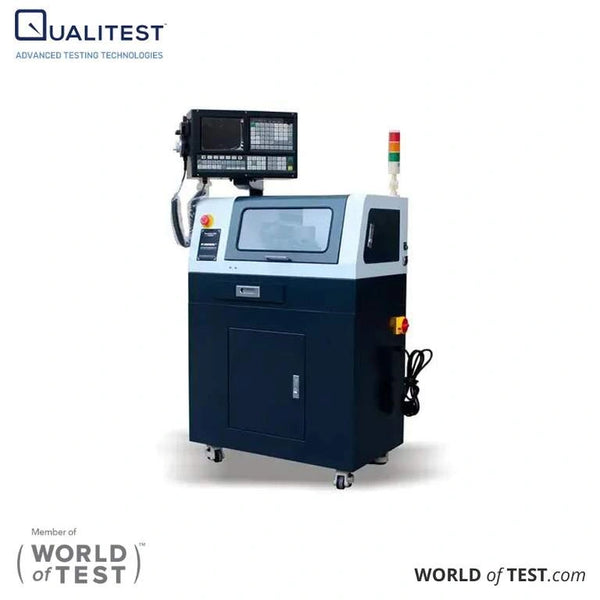
We view compact benchtop mills (such as our QualiMill™ M4 and QualiMill™ 220, featuring 230 × 130 × 220 mm travel and 0.01 mm repeatability) as the far safer option here, as physical end mills shear plastics cleanly without melting the polymer structure.
Charpy / Izod Impact Specimen Preparation
Machining standardized V-notches or U-notches into impact bars requires physical cutters with precise radius profiles that thermal laser beams cannot replicate. High-capacity platforms like our QualiMill™ 400 drilling and milling center utilize 8-tool Automatic Tool Changers to machine these features efficiently.
For testing facilities and research labs, we consider physical cutting machinery the definitive standard for producing valid, compliant test specimens.
Software, Control Systems, & Industry 4.0 Compatibility
We advocate for standardized software workflows so your facility avoids proprietary file formatting headaches. In typical American machine shop environments, controller compatibility drives software integration.
Running Fanuc America controls, Haas systems, or PC-based Mach3/Mach4 setups (as well as the KY980Tc turning controllers featured on our QualiLathe™ 210B), maintaining standard communication protocols prevents isolated data islands.
CNC Mills & Lathes
Operate on standard G-code produced by established CAD/CAM programs such as Fusion 360, Mastercam, or SolidWorks. In our view, open G-code control is essential because it integrates seamlessly with standard industrial controllers, automatic tool changers, and remote monitoring setups.
Educational & Research Integration
For academic and training laboratories, systems like our Educational CNC Industry 4.0 platforms connect CIM (Computer Integrated Manufacturing) and FMS (Flexible Manufacturing Systems) directly into modern smart factory curricula.
Laser Engraving Systems
Path-mode laser marking applies motion control algorithms directly adapted from CNC machining. Advanced NC control methods incorporate speed profile adaptation and input shaping to reduce tracking errors and vibrations during high-speed laser marking.
Operator Skill Levels & Learning Curves
Labor availability and training timelines are major operational factors when comparing a CNC machine vs laser engraver. With the ongoing reshoring of manufacturing across North America, US facilities face significant labor availability constraints for skilled machinists.
Vocational frameworks established by NIMS (National Institute for Metalworking Skills) and NTMA (National Tooling and Machining Association) emphasize foundational G-code fluency as a baseline requirement for modern technicians.
CNC Milling & Turning
Requires a higher technical skill baseline. Operators must understand cutting speeds, feed rates, tool selection, workholding setup, and zero-point calibration.
That said, we believe the investment in operator training pays long-term dividends because a trained CNC operator can produce virtually any physical component your facility requires.
Laser Engraving
Features a shorter learning curve. Because there are no physical cutting forces or tool offsets to account for, operators can learn to align graphics and run marking jobs with minimal initial instruction.
Environmental, Health, & Safety (EH&S) Facilities Requirements
Before installing new machinery, facility managers in the United States must align machinery choices with strict occupational safety rules.
CNC Machining Facility Requirements
Footprint & Spatial Planning
While full-scale industrial machining centers demand substantial floor space for large chassis enclosures and coolant reservoirs, compact desktop CNC platforms (such as our QualiMill™ M4 or QualiLathe™ 140) execute heavy mechanical cutting within a space-saving benchtop footprint comparable to standard laser marking stations.
Chip & Coolant Containment
Requires chip collection trays and basic mist extraction when applying flood coolant or mist systems during heavy cutting operations (our QualiMill™ TM500 turn-mill platform comes standard with an integrated coolant sink, precision nozzles, and workpiece cooling system to manage coolant and chip buildup).
Acoustic & Vibration Control
Cutting heavy metals generates physical vibration, requiring heavy steel chassis construction and enclosed safety doors to manage shop floor noise.
Laser Engraver Facility Requirements
Fume Extraction Infrastructure
In our view, facility planners frequently underestimate the exhaust filtration required for laser platforms. For laser platforms, OSHA (Occupational Safety and Health Administration) permissible exposure limits (PELs) for polymer fumes and toxic airborne particles require heavy filtration.
Vaporizing polymers, rubber, or coated metals generates chemical smoke, requiring multi-stage HEPA and activated carbon filtration to meet federal OSHA and regional standards (such as Cal/OSHA or local EPA air emission rules).
Optical Safety Standards
ANSI Z136.1 (Safe Use of Lasers) guidelines dictate strict controls for Class 1 laser safety enclosures or protective eyewear to prevent eye injury from reflected laser beams in US workplaces.
What About Hybrid CNC + Laser Conversion Kits?
We are often asked whether commercial facilities should consider 2-in-1 desktop machines that swap between a milling spindle and a lightweight laser head.
While research highlights that mounting a laser module on a CNC platform can reduce setup times for light-duty tasks, we advise commercial and testing operations against hybrid conversion kits. In our assessment, using a single machine chassis for both tasks introduces major engineering compromises:
- Chassis Rigidity Compromises: A frame light enough for rapid laser positioning lacks the mass required to dampen structural vibration during solid metal milling.
- Motion Profiles: Laser marking requires rapid acceleration with lightweight tool heads, whereas metal milling requires high torque at controlled speeds.
- Safety & Containment Challenges: Swapping attachments complicates laser optical shielding, chip containment, and fume extraction setups simultaneously.
For commercial manufacturing and accredited labs, dedicated platforms built for specific tasks deliver superior operational reliability.
Final Decision Framework
When evaluating a CNC machine vs laser engraver, we recommend prioritizing material thickness, 3D geometric needs, and compliance standards above initial setup speed. Here is a clear decision overview grounded in both manufacturing practice and empirical literature:
| What your facility needs to process... | Recommended Equipment Choice | Recommended Qualitest Platform |
|---|---|---|
| Heavy 3D metal parts, functional prototypes, turned shafts | Precision Mechanical CNC Mill or Lathe | QualiMill™ 300A / QualiLathe™ 210B |
| ASTM / ISO standardized material test coupons & microchannels | Precision Mechanical CNC Mill or Specimen Lathe | QualiLathe™ 210 / QualiMill™ M4 |
| Fast surface barcodes, serial numbers, and part etching | Dedicated Fiber or CO2 Laser Engraver | Specialized Fiber/CO2 Marking System |
| Thick alloy stock, dense engineering polymers, tough composites | Heavy-Duty CNC Mill or Machining Center | QualiMill™ 400 / QualiCNC™ 300 |
| Thin organic sheets, films, or thin acrylic materials | CO2 Laser Engraver | Specialized CO2 Laser Cutter |
Choose the Right CNC Solution with Qualitest
Choosing between a CNC and laser engraver comes down to your material requirements, cutting depths, and compliance goals. For solid metal components and ASTM test specimen preparation, mechanical CNC machining remains the proven choice.
At Qualitest, we offer a lineup of cost-effective CNC milling and lathe machines built for research laboratories, quality control departments, educational institutions, and manufacturing facilities across North America.
We build our cost-effective products to deliver strict dimensional tolerances and dependable operation, giving you industrial-grade performance while keeping equipment expenditures under control.
Explore our complete lineup of CNC Milling & Lathe Machines or contact our team today to consult with our application specialists and receive a fast, cost-effective quote.
References (Click to expand)
- Anrinal, Fadherizal, M., & Yanto, A. (2023). Performance Testing of The CNC Laser Engraver Machine on Plywood Media. Jurnal Teknik Mesin, 13(1), 1-5.
- Atwee, T., Swidan, A., & Zahra, N. (2023). An Overview Study on Laser Technology and Conventional Technology’s Effect on Wood and Sheet Metal Manufacturing for The Furniture Industry. International Design Journal.
- Jaafar, R., Wahab, N. A., Bidin, B. B., Johari, M. N. M. B., Mogal, K. A., & Fedileh, M. I. (2022). An Interim Study of Integrating Spindle, Laser, and Plotter in a CNC Router Machine. Engineering Science Letter, 1(2), 159.
- Júnior, E. S. C., Marinho, M., Obana, F. Y., Sperotto, L. K., De Oliveira, D. C., Nascimento, L. X. D., Macedo, S., & Rocha, T. (2022). Low Cost Multifunctional CNC Laser and Mill Built from the Reuse of Computer Equipment and E-Waste: REM-CNC Router. Journal of Engineering Research.
- Ko, K., Sim, J. U., & Hong, S. (2022). Application of Input Shaping to a CNC Laser Processing Machine to Enhance Processing Precision. Journal of the Korean Society of Manufacturing Technology Engineers, 31(5), 346.
- Koprda, Š., Balogh, Z., Magdin, M., Reichel, J., & Molnar, G. (2020). The Possibility of Creating a Low-Cost Laser Engraver CNC Machine Prototype with Platform Arduino. Acta Polytechnica Hungarica, 17(9), 181-198.
- Martinov, G., Obuhov, A. I., Martinova, L., & Grigoriev, A. S. (2016). An Approach to Building a Specialized CNC System for Laser Engraving Machining. Procedia CIRP, 41, 998-1003.