Are you ready to maximize your laboratory's testing throughput and verify your product toughness with absolute confidence? Investing in the right testing equipment is one of the most effective ways to scale your manufacturing quality and secure major client contracts.
This guide settles the classic analog vs digital charpy impact tester debate once and for all, showing you exactly how to match your daily testing volume with a highly precise, budget-friendly configuration. Review our quick-reference comparison below to find the perfect fit for your facility.
Comparison Matrix
If you are too busy running operations to read the full analysis, here is our straightforward assessment of how these two options compare:
| Feature | The Mechanical Dial (Analog) | The Screen-Based Platform (Digital) |
|---|---|---|
| Upfront Investment Cost | Highly budget-friendly | Higher initial capital expenditure |
| Primary Output Data | Single absorbed energy value (KV) | Energy plus full force/strain-time history (Wt) |
| Data Recording | Hand-written logs (labor-intensive) | Integrated PC software connectivity |
| Measurement Precision | Basic mechanical pointer accuracy | High precision with wind and friction correction |
| Metrological Traceability | Mechanical scale or basic encoder | Direct SI-traceable force and deflection |
| Ideal Operational Setting | Low-frequency testing, education, startups | Continuous production lines, strict audits, detailed research |
| Featured Qualitest Models | QPI-Series | QPI-D (Charpy & Izod), QualiGIT™ Galaxy |
Testing Fundamentals & Compliance Standards
To put it in plain terms, a Charpy test involves swinging a heavy pendulum to break a plastic test piece, measuring the exact amount of energy required to snap it. That remaining energy indicates if your polymer is incredibly tough or highly brittle.
If you must satisfy strict external inspectors who check for ISO 179 or ASTM D6110 compliance, you need testing hardware that delivers highly repeatable results every single time without introducing unexpected variables. This is especially true for US domestic manufacturing contracts; strict adherence to ASTM standards is essentially a non-negotiable requirement to participate in major North American supply chains.
Analog Charpy Impact Testers
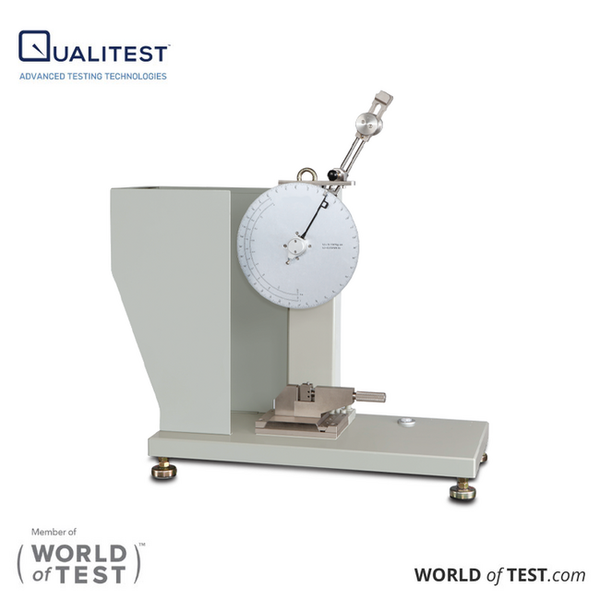
Let's discuss the mechanical pendulum configurations. These analog setups have been standard fixtures in laboratories for decades, and they continue to deliver dependable utility.
Advantages
- Highly Wear-Resistant: With almost no delicate electronic parts or microchips, these mechanical setups remain functional indefinitely. There are no software errors to trouble your team, meaning you will not spend valuable hours on tech support calls.
- Extremely Cost-Effective: They require a significantly lower initial investment, making them an excellent choice for growing companies, academic laboratories, or smaller production facilities.
Limitations
- Visual Measurement Error: Operators must read values directly from a physical dial, which introduces the potential for human reading mistakes and parallax errors.
- Higher Data Scatter: Studies indicate that relying solely on dial or non-instrumented encoder energy readings (KV) results in significantly higher variance and scatter compared to instrumented energy readings.
- Manual Administrative Work: Because there is no internal processor, operators must write down every single measurement by hand or manually type the values into spreadsheets. For high-volume testing schedules, this administrative burden slows throughput.
Our Perspective on Analog Systems: While some technical commentators dismiss mechanical dials as outdated relics, we consider that viewpoint entirely incorrect. For routine toughness checks, these machines are perfectly usable. These simple machines are straightforward, uncompromised workhorses.
For facilities focusing on Izod methodologies, the Izod Impact Tester for Plastics - QPI-Series provides that exact same indestructible reliability.
Digital Charpy Impact Testers
Now, let's examine the electronic models equipped with automated processing features and instrumented sensors.
Advantages
- Richer Fracture Information: Digital or "instrumented" systems do much more than read a final number. They record complete force-time and strain-time histories. This allows your team to calculate maximum force, track crack initiation energy, and separate pre- and post-maximum energy, insights that standard analog dials simply cannot provide.
- Effortless Records Management: Digitalized systems automatically record absorbed energy and pendulum angles, display impact diagrams in real time, and export data directly to software for analysis.
- Guaranteed Traceability: Upgrading to a digital system and utilizing instrumented absorbed energy (Wt) guarantees traceability to SI units, which is a massive advantage that can reduce measurement bias between different laboratories.
Limitations
- Higher Acquisition Cost: You must budget for a premium price point to acquire these electronic systems. The initial capital outlay for an instrumented digital configuration involves purchasing advanced force sensors, high-speed data acquisition boards, and specialized analysis software, which can strain tight laboratory budgets.
- Calibration Sensitivity: Adding sensors and microcontrollers aggregates enormous value, but it requires careful design. Inter-laboratory comparisons reveal that identical setups can still display statistically significant differences due to acquisition hardware malfunctions or surface finish variables, meaning expert calibration is absolutely critical to avoid data deviations.
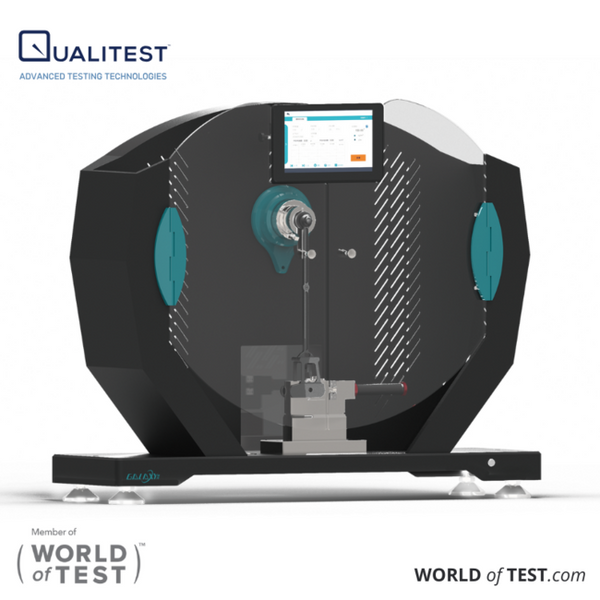
Our Perspective on Digital Systems: In our view, a digital tester is no longer a luxury reserved for high-budget research facilities; it is a vital asset for modern production. With modern supply chains emphasizing total data transparency, utilizing an advanced electronic platform is the smartest choice.
Systems like the Izod & Charpy Impact Testers for Plastics - QPI-D or the highly advanced Pendulum Impact Tester for Plastics - QualiGIT™ Galaxy are the most efficient way to maintain compliance, as having unalterable digital files of your test results immediately eliminates costly human entry errors.
Selection Criteria for Your Facility
When deciding on an analog vs digital charpy impact tester, we suggest evaluating your daily testing volume and compliance demands:
- Weekly Testing Throughput: If your personnel are testing hundreds of specimens every single week, relying on manual dial readings will significantly limit your daily output. The digital option quickly pays for itself in saved labor hours.
- Budget Allocation Limits: If you only run occasional quality checks or operate with limited capital, there is no need to overspend on advanced software features. A mechanical tester provides the essential metrics you need.
- Compliance and Traceability Needs: If you supply critical components to the US automotive sector (such as major manufacturers in the Midwest) or the North American aerospace industry, hand-written logs are a significant liability. These highly regulated sectors demand the unalterable digital audit trails that only a digital system provides.
Our Evaluation Strategy: We frequently observe facilities spending heavily on advanced digital platforms when they only run a handful of tests each month. This represents an unnecessary expenditure. Conversely, attempting to save money by placing a cheap analog dial in a high-speed production environment is a slow, expensive way to lose time to manual paperwork.
Ultimately, for routine toughness checks, analog machines remain highly usable. However, for deep research, strict standards work, and detailed fracture analysis, digital instrumented Charpy systems offer clear, undeniable advantages. Be clear about your daily workload, and your budget will benefit.
Related article: Choosing Instrumented vs. Non-Instrumented Impact Testing
Multi-Method Testing Configurations
What if you need to test materials using completely different methodologies? Purchasing multiple large, single-purpose testing units can quickly crowd your workspace and deplete your budget.
This is why we offer the Universal Impact Tester for Charpy & Izod - QualiHIT. This space-saving, dual-purpose machine allows laboratory technicians to quickly switch between Charpy and Izod configurations without requiring two separate setups.
Related article: Charpy vs Izod Impact Test: Choose the Right Method
Our View on Universal Systems: We believe these multi-functional machines are one of the smartest ways to maximize equipment return on investment. If your customer requirements frequently shift, having one device that handles both standards provides immense versatility without doubling your hardware acquisition costs.
Impact of Specimen Notch Precision
Here is a straightforward truth: you can invest in the most expensive testing platform on the market, but if your specimen notches are inconsistent, your testing data will be highly unreliable. A poor cut completely skews your results.
To ensure consistent, standard-compliant notches on every specimen, we highly recommend pairing your testing machine with our V Notcher and Notch Cutter - QuickNotch II or the dedicated QuickNotch Notcher for Izod Impact Test Specimen.
Our Stance on Notching Precision: We firmly believe that sample preparation is where the majority of laboratory errors occur. Attempting to manually cut notches with basic blades will inevitably lead to inconsistent results.
Securing a high-precision notch-cutting instrument is critical, but we advise taking the process one step further. Utilizing a Notch & Depth Measuring Device - QualiNDM™ to physically verify the exact dimensions of your cut before the pendulum swings is just as important as selecting the primary test machine itself.
Achieve Compliance and Precision with Qualitest
We focus on delivering high-utility testing instruments that keep your laboratory compliant without exceeding your budget. By choosing a North American supplier, you bypass unpredictable shipping delays and secure fast local support.
We back our entire lineup of Charpy & Izod Pendulum Impact Testers for Plastics with solid warranties, swift delivery, and local calibration technicians ready to keep your operations running smoothly. We provide the exact tools your facility requires, from dependable mechanical dials to advanced digital systems.
Contact our team today to request a quote. Let us help you secure a cost-effective testing setup that maintains your high quality standards and protects your bottom line!
References (Click to expand)
- Kobayashi, T. (1984). Analysis of impact properties of A533 steel for nuclear reactor pressure vessel by instrumented Charpy test. Engineering Fracture Mechanics, 19, 49-65.
- Kohne, G., & Spiegel, F. (1994). An automated digital data collection and analysis system for the Charpy Impact Tester.
- Lucon, E., & Machado, R. (2022). Instrumented Charpy tests on low- and high-energy specimens. Metrologia, 59.
- Lucon, E., Mccowan, C., Santoyo, R., & Lefrançois, S. (2015). Establishment of an International Scale for Instrumented Charpy Testing: comparison between NIST and LNE.
- Mccowan, C., Lucon, E., & Santoyo, R. (2011). Evaluation of Bias for Two Charpy Impact Machines with the Same Instrumented Striker. Journal of Astm International, 8, 1-11.
- Riyanta, B., Nugroho, H., & Rahman, B. N. (2024). Modification Of Impact Testing Tools For Research Of Aluminum Alloys Energy Absorption Profile. JMPM (Jurnal Material dan Proses Manufaktur).
- Zainuddin, H., Ali, M. B., Zakaria, K. A., Paijan, L. H., Mamat, M. F., & Bakar, M. H. A. (2024). Investigation of Impact Properties under Instrumented Charpy Test. Journal of Engineering and Technological Sciences.
- Zainuddin, H., Basri, M., Said, N. M., Zakaria, K. A., Malingam, S. D., Hadzley, M., Bakar, A., & Tamin, N. F. (2024). Impact Strain Signal Characteristics of Al and Mg under Instrumented Charpy Test. Journal of Advanced Research in Applied Sciences and Engineering Technology.
- Zheng, Y., Wang, J. L., Ye, Y., Jiao, J., Wang, G., Deng, Y., Qin, S., & Peng, Z. (2012). Design of a Digitalized Testing System for Simple Beam Charpy Impact Testing Machine. Advanced Materials Research, 430-432, 1536-1541.