Want to guarantee your manufactured components are truly built to last? Proving your product's durability starts with selecting the right physical testing standard, bringing us to the classic charpy vs izod impact test comparison.
You want a straightforward guide that simplifies material toughness, boosts your quality control rankings, and keeps your operations running smoothly. Read on for our direct breakdown of the izod vs charpy impact test to help you select your ideal lab configuration today.
Key Takeaways
- Core Mechanics: Both testing setups rely on a heavy swinging arm to calculate the exact amount of impact energy your components can swallow before snapping.
- The Izod Approach: This method grips your sample completely upright and serves as the primary standard for checking molded plastics and stiff polymers.
- The Charpy Approach: This technique rests the material flat across two supports and is the undisputed champion for evaluating structural steel and heavy industrial metals.
- Regional Preferences: Your physical location heavily dictates your testing style. North American operators usually follow Izod guidelines, while European facilities strongly lean into Charpy rules.
- Flawless Preparation: The tiny groove you cut into your sample controls the entire test. Using highly precise motorized notch cutters is absolutely mandatory for securing completely trustworthy data.
The Mechanics Behind Pendulum Impact Testing
At its heart, this whole testing method is wonderfully straightforward. You take a heavy, swinging pendulum arm, release it from a precise, known height, and let it strike directly through a small, standardized bar of your material that has a tiny groove cut into it.
By looking at how high that swinging arm travels after it breaks through your sample, we can calculate exactly how much energy the material absorbed during the collision, which we record in Joules or foot-pounds. That crucial figure tells us if your material is highly resilient and pliable or if it is prone to cracking unexpectedly when stress levels rise.
The Core Principles of the Izod Method
Named after the English engineer Edwin Gilbert Izod, this testing style is frequently described as the most widely used impact test for checking the quality of molded plastic parts and polymers.
- Specimen Placement: Picture a small sample bar gripped tightly at the very bottom, standing straight up like a miniature vertical cantilever.
- The Groove and the Hit: That small, typically V-shaped notch you carved into the bar faces directly in the direction of the incoming swing. The weighted hammer drops down and strikes the very top of the upright bar, hitting it on the exact same side as the notch.
- The Regulatory Standards: Typically, you will run these tests according to the ASTM D256 or ISO 180 guidelines for non-metallic materials.
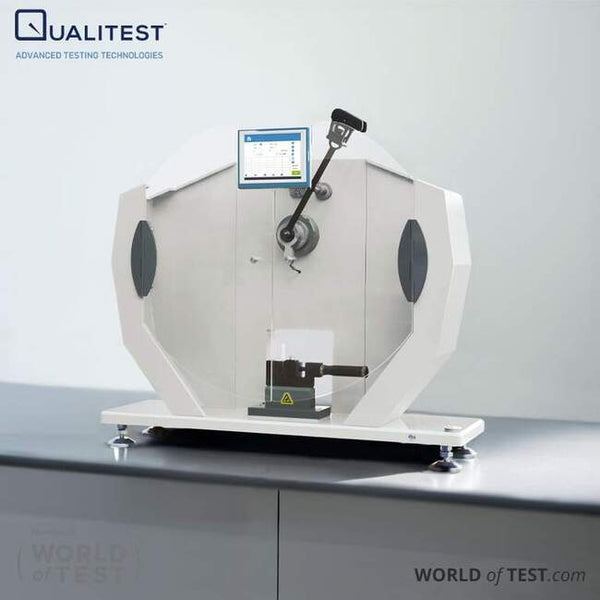
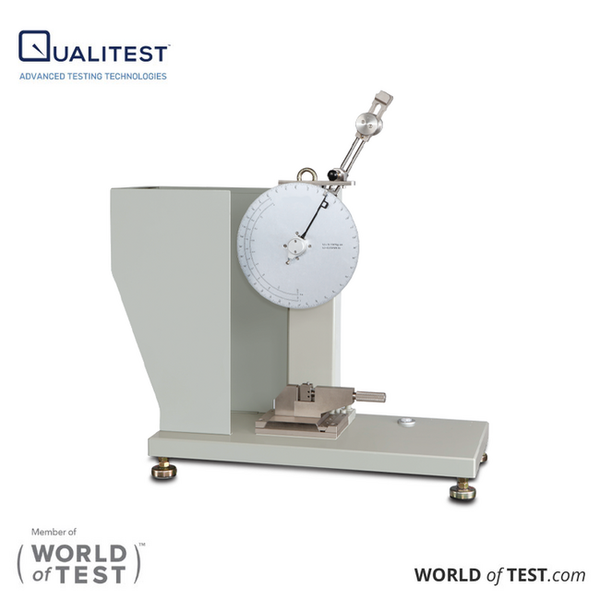
- The Impact Force: Because this is mostly used for plastics, these setups do not require massive, heavy-duty forces. They usually operate with a lighter touch, which is exactly why purpose-built machines like our Izod Impact Testing Machine - Quali5.5J & 22J or the highly reliable Izod Impact Tester for Plastics - QPI-Series are calibrated specifically for those targeted, lower-energy swings.
- Primary Applications: Since the sample is gripped upright, the plastics sector absolutely loves this approach for evaluating stiff polymers, multi-layered composites, and small test specimens. For instance, think about the highly durable plastic casings needed for tech devices engineered in Silicon Valley, or the heavy-duty packaging components mass-produced across the Midwest. Those manufacturing hubs rely heavily on these exact upright testing methods to guarantee their items will survive daily wear and tear.
Our standpoint on daily use: We believe holding the sample straight up and clamping it down tightly is incredibly handy if you need to run high-volume, back-to-back tests. It keeps the piece from shifting when the hammer lands, although we should point out that how tightly your technician secures the clamp can introduce small, unwanted variables into your final data.
The Charpy Method: Simple, Direct, and Highly Standardized
First introduced by Georges Charpy, this style is heavily favored by the metalworking sector, though it remains equally vital for specific plastic-testing setups.
- Specimen Placement: Instead of standing up, the bar lies flat, resting horizontally across two metal supports like a tiny bridge. No clamping is used.
- The Groove and the Hit: This time, the notch faces completely away from the pendulum. The swinging hammer comes flying in and strikes the dead center of the bar, hitting the backside directly opposite the notch.
- The Regulatory Standards: You will mostly see this aligned with ASTM D6110 and ISO 179 for plastics, or the heavy-duty ASTM E23 for metals.
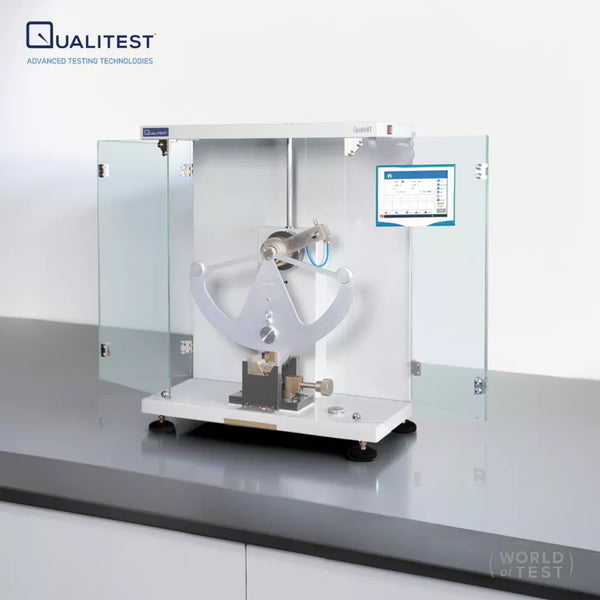
- The Impact Force: While the plastic version stays in that gentle 1-to-50 Joule range—perfectly handled by units like our dedicated Charpy Impact Tester for Plastic - Quali5J & 50J—the metal version is a far more powerful setup. We are talking about massive swings that deliver 300 to 750 Joules of force to fracture structural steel.
- Primary Applications: If you are assessing long bars, structural beams, incredibly tough industrial alloys, or checking metals to find out their exact ductile-to-brittle transition temperatures, this setup is the clear-cut winner. Consider the massive steel support beams holding up skyscrapers in Chicago or New York, or the thick industrial pipelines operating in the freezing Alaskan wilderness. Verifying that those metal components won't crack under sudden pressure is exactly what this horizontal test is built for.
Our standpoint on the design: From our point of view, the Charpy setup is beautifully straightforward because you simply lay the sample down without wrestling with a clamp.
This eliminates the risk of human error related to clamping pressure, but the trade-off is that you must be extremely precise when centering the sample so the hammer hits the exact target. Furthermore, Charpy methods give you the flexibility to use either a sharp V-notch or a rounded U-shape depending on your testing needs.
Head-to-Head: Izod vs Charpy Impact Test
To help you figure out which configuration makes the most sense for your daily quality control routines, let's stack the izod vs charpy impact test side-by-side. Here is a quick, highly practical comparison sheet featuring our most relevant equipment recommendations:
| Feature | Izod Style | Charpy Style |
|---|---|---|
| Specimen Position | Standing vertically (clamped at the bottom) | Lying flat horizontally (resting on supports) |
| Groove Direction | Facing directly in the direction of the swinging hammer | Facing completely away from the hammer |
| Striking Point | Strikes the upper tip of the upright bar | Strikes the exact center of the horizontal bar |
| Typical Notch Type | Almost always a sharp V-shaped notch | Can be a V-shape or a rounded U-shape |
| Testing Standards | ASTM D256, ISO 180 | ASTM D6110, ISO 179, ASTM E23 |
| Impact Energy | Typically 1 to 50 Joules (mainly for plastics) | Up to 50 Joules (plastics) or 300 to 750+ Joules (metals) |
| Top Dedicated Machines | Izod Impact Testing Machine - Quali5.5J & 22J | Charpy Impact Tester for Plastic - Quali5J & 50J |
| Best Dual-Style Testers | Universal Impact Tester for Charpy & Izod - QualiHIT | Izod & Charpy Impact Testers for Plastics - QPI-D |
We also believe that regional geography plays a massive part in this decision. Based on typical industry practices, facilities operating across North America almost always default to the Izod setup, whereas European manufacturing plants are heavily biased in favor of the Charpy technique.
For example, a Michigan-based automotive parts manufacturer producing plastic interior components might easily fulfill domestic US contracts using vertical ASTM test numbers. However, if they plan to supply those exact same dashboard parts to an assembly plant in Germany, the buyers overseas will absolutely demand horizontal ISO-approved results before signing off on the shipment.
It is also critical to recognize that absolute energy values can differ between the two tests depending on the material and geometric standards applied. For some materials like polystyrene, Charpy and Izod results can give directly comparable fracture toughness numbers when analyzed using advanced mechanics concepts.
However, for low-alloy steels, Izod tests often yield consistently higher energy numbers and show completely different transition temperatures compared to Charpy readings, meaning they are not easily interchangeable without careful calibration.
Related article: Choosing Instrumented vs. Non-Instrumented Impact Testing
Charpy vs Izod Impact Test: Which One Should You Actually Choose?
Deciding which testing methodology to adopt in the charpy vs izod impact test standoff really comes down to the exact material you are running, what specific characteristics you need to measure, and which rulebook your customers expect you to follow.
- Go with the Izod style if: You are mostly dealing with plastics, layered composites, or small molded specimens. That vertical, cantilever-style setup is highly effective at showing how easily a notch will cause a hard plastic piece to crack, which is exactly what you need to know to make sure your product won't fail when dropped in real-world scenarios.
- Go with the Charpy style if: You are evaluating structural metals, tough alloys, or need precise correlation with fracture toughness for industrial pipelines. It is also necessary if your international contracts specify horizontal-style impact testing for polymers.
If you are setting up a brand-new testing space, relying on a single, consistent method greatly simplifies your daily operations and limits laboratory errors. Fortunately, many modern testing systems are brilliantly designed to perform both methods on the exact same machine.
Machines like our Universal Impact Tester for Charpy & Izod - QualiHIT or the versatile Izod & Charpy Impact Testers for Plastics - QPI-D keep your laboratory highly flexible so you can easily adapt to any new testing specifications that come your way.
Related article: Choosing an Analog vs Digital Charpy Impact Tester
Why Specimen Preparation Dictates Your Entire Result
Once you select your preferred approach in the izod vs charpy impact test debate, there is one critical factor you absolutely cannot ignore. Your testing data is highly sensitive to the tiny groove you cut into your sample. Notch depth, shape, and overall specimen size significantly affect the measured impact strengths across both testing methods.
If you want our honest opinion, preparing the sample is easily the most ignored step in the entire quality-assurance process. Furthermore, machining these notches can easily introduce unwanted variability into your results, which is a known drawback in polymer and dental material testing.
It is surprisingly common to see teams spend a significant portion of their budget on high-end testing machines, only to use a basic, manual method to cut their notches. That is a major operational oversight. If that groove is even a hair too deep, slightly crooked, or affected by friction-heat from a dull blade, your final testing figures will be wildly inaccurate.
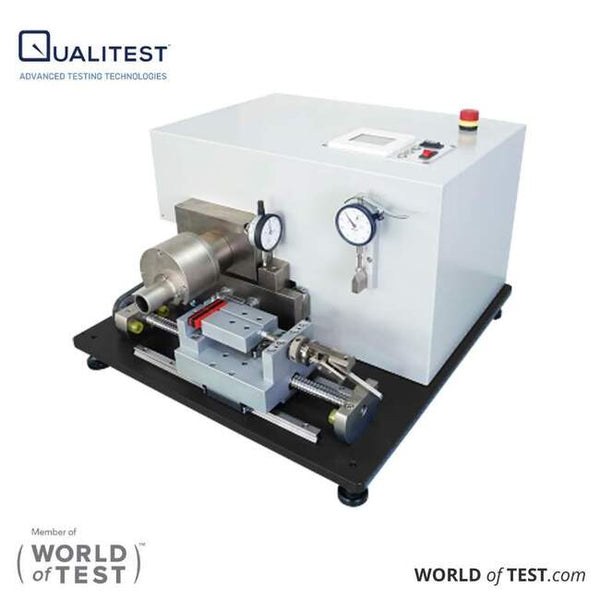
To make sure you are operating strictly by ASTM and ISO guidelines, you need a highly precise motorized cutter—like the V Notcher and Notch Cutter - QuickNotch II or our specialized QuickNotch Notcher for Izod Impact Test Specimen—to carve a clean, identical groove every single time.
And to be absolutely certain your groove is flawless, verifying it with a Notch & Depth Measuring Device - QualiNDM™ is a brilliant operational move. Perfectly prepped samples are the real, quiet champions behind data you can actually rely on with complete confidence.
Let Us Help You Simplify Your Testing Process
Securing accurate material toughness measurements should not cause daily operational stress.
At Qualitest, we provide budget-friendly equipment delivering highly accurate, repeatable results every time. We are here to keep your operations running smoothly, helping you prepare flawless specimen notches and secure reliable data for your izod vs charpy impact test.
For facilities testing polymers and composites, our highly cost-effective Charpy / Izod Pendulum Impact Tester for Plastics collection satisfies strict ASTM and ISO guidelines. We build practical testing systems that protect your capital budget while ensuring your engineering team obtains completely trustworthy data.
Explore our cost-effective Charpy & Izod Impact Testers today to simplify your quality control routines.
References (Click to expand)
- Abidin, N. Z., Sultan, M., Shah, A., & Safri, S. (2019). Charpy and Izod impact properties of natural fibre composites. IOP Conference Series: Materials Science and Engineering, 670.
- Boangmanalu, E. P. D., Pratama, A. B., Qadry, A., Saragi, J. F. H., & Sinaga, F. T. H. (2023). Charpy and Izod Method Impak Strength Analysis on ST 37 Steel with Temperature Variations. Formosa Journal of Science and Technology.
- Cao, Y., Ying, Z., Ming, S., Yi, H., Li, F., & Li, X. (2020). Determination of Johnson–Cook parameters and evaluation of Charpy impact test performance for X80 pipeline steel. International Journal of Mechanical Sciences.
- Chaouadi, R., & Gérard, R. (2021). Development of a method for extracting fracture toughness from instrumented Charpy impact tests in the ductile and transition regimes. Theoretical and Applied Fracture Mechanics, 115, 103080.
- Frontini, P. (2015). Can the standard impact tests become a true materials evaluation tool. Express Polymer Letters, 10, 83-83.
- Hardiana, F., Budiman, H., & Samantha, Y. (2016). PERANCANGAN ALAT UJI IMPAK METODE CHARPY DAN IZOD.
- Harijono, H., & Purwanto, H. (2017). Analisis Keakuratan Hasil Uji Impact dengan Metode Izod dan Charpy.
- Hirose, H., Kobayashi, T., & Kohmo, Y. (1984). Charpy impact and dart drop impact. Polymer Testing, 4, 31-44.
- Khalaf, M. H., & Salman, S. D. (2021). APPARATUS AND METHOD FOR CALCULATING PENETRATION FORCE BY DROP WEIGHT IMPACT TECHNIQUE. Journal of Engineering and Sustainable Development.
- Rachmat, A., Basyamchoh, N. S., & Koswara, E. (2016). PEMBUATAN ALAT UJI IMPAK METODE CHARPY DAN IZOD.
- Rao, C. L., Narayanamurthy, V., & Simha, K. (2016). Experimental Impact Mechanics.
- Rogers, M. G., & Plumtree, A. (1992). A comparison of Charpy and Izod test modes for polystyrene. Polymer Testing, 11, 13-21.
- Server, W., & Ireland, I. (1974). Nonstandard Test Techniques Utilizing the Instrumented Charpy and Izod Tests. ASTM special technical publications, 74-91.
- Sunarno, S., & Zainuddin, Z. (2023). Impact Test Analysis on Steel Metal Materials and Aluminum. Journal of Social Research.
- Ty, A., Mokhtari, M., Balcaen, Y., Votié, A., Cloué, J., & Alexis, J. (2023). Performance evaluation of Charpy impact tests to investigate and detect process defects of a Ni-based superalloy elaborated by laser powder bed fusion. Journal of Materials Research and Technology.
- Uemura, Y., Yamashiro, S., & Kobayashi, M. (1966). Correlation between Impact Strengths Measured on the Basis of Various Standards for Rigid PVC Plates.
- Unal, M., & Dalmış, İ. (2022). A PROTOTYPE CHARPY AND IZOD IMPACT TESTER DESIGN AND IMPACT TEST ANALYSIS OF DIFFERENT ALUMINUM ALLOYS. Journal of the Technical University of Gabrovo.
- Wardani, C. U., Samantha, Y., & Budiman, H. (2016). ANALISIS PENGUJIAN IMPAK METODA IZOD DAN CHARPY MENGGUNAKAN BENDA UJI ALUMUNIUM DAN BAJA ST37.
- 植村, 幸., 山城, 貞., & 政治郎, 小. (1966). 硬質塩ビ板の各種規格 (JIS, ISO, ASTM) の試験片形状による衝撃値間の関係. Journal of The Society of Materials Science, Japan, 15, 602-608.