Pavement turning into a dusty, crumbling mess is a total construction nightmare. If aggregates break down prematurely, the result is structural failures, costly repairs, and massive safety hazards.
To keep your reputation from crumbling along with the asphalt, putting your materials through rigorous aggregate wear testing is a mandatory move. Let's break down how the two heavy hitters, the Micro-Deval and Los Angeles (LA) Abrasion tests, measure material toughness in completely different ways.
Quick-Reference Comparison: Micro-Deval vs. LA Abrasion
For a fast look at the technical specs and ideal use cases, check out the table below:
| Feature | Micro-Deval Tester | Los Angeles (LA) Abrasion Tester |
|---|---|---|
| Primary Measurement | Surface abrasion and polishing | Impact and fragmentation crushing |
| Test Environment | Wet soaking | Completely bone dry |
| The Action | Constant wet grinding and rubbing | High-speed tumbling and violent drops |
| Aggregate Type | Small bits and big chunks alike | Mostly just the big, coarse stuff |
| Abrasive Charge | Tiny magnetic steel balls | Big, heavy steel spheres |
| Operating Speed | Fast (100 RPM) | Slow and steady (31 to 33 RPM) |
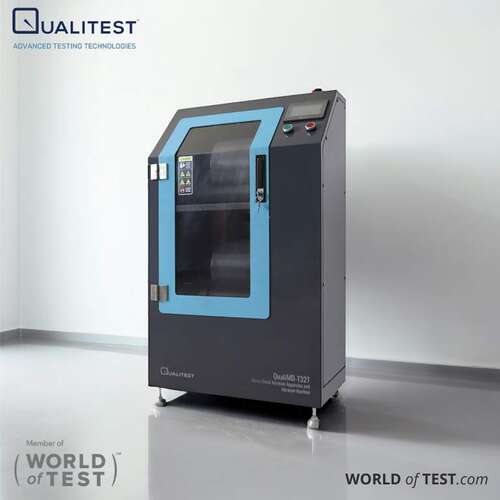
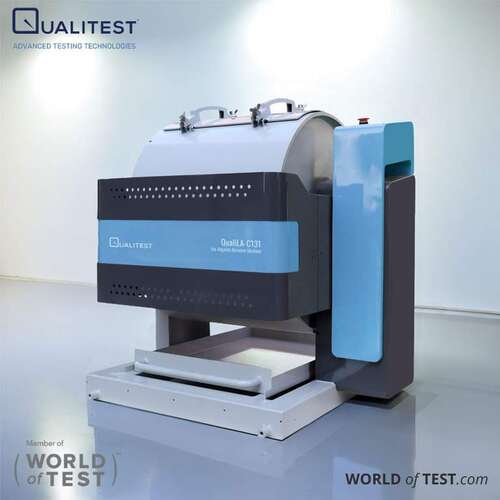
| Relevant Qualitest Model | QualiMD™ T327 | QualiLA™ C131 |
Los Angeles (LA) Abrasion: Evaluating Impact and Fragmentation
The Los Angeles Abrasion test is the old reliable method in North America. It is the widely accepted benchmark for seeing if your coarse aggregates are solid enough to handle a brutal physical beating.
- The Hardware: The machine uses a massive, heavily built drum. For instance, the QualiLA™ C131 uses a 12 mm thick rolled steel drum with 710 mm by 510 mm internal dimensions, sitting on an ultra-stable 340 kg heavy-duty frame to control violent vibrations.
- The Setup: You place your chosen rock samples inside the dry drum along with a specific "abrasive charge" of heavy steel spheres.
- The Action: The drum rotates at a steady, slow pace (usually 31 to 33 RPM). An internal shelf picks up the rocks and the steel balls, carries them high, and drops them back down.
- The Result: After a set number of revolutions, you measure how much of the rock was pulverized into dust.
Because of those heavy drops, the LA Abrasion test is primarily a test of impact resistance and fragmentation. It tells you how well the rock will survive the physical trauma of being crushed in a plant, handled by massive machinery, and compacted down on a busy job site.
However, because the heavy steel balls dominate the breakup process, this test can sometimes misrepresent the actual internal properties of the material.
For example: If a crew is laying down a base layer that must survive fully loaded dump trucks rolling over it before the final surface is poured, the LA Abrasion number is the first thing an engineer checks.
Micro-Deval Testing: Assessing Wet Wear and Surface Abrasion
While the LA test is great for measuring blunt force impact, research shows it doesn't always reflect how an aggregate will perform after years of rainy weather and constant traffic. That is where the Micro-Deval test steps in to fill the gap.
- The Hardware: This test utilizes much smaller, tightly sealed stainless steel jars.
- The Setup: You load your rocks inside with tiny magnetic steel balls (usually 9.5 mm) and a generous amount of plain water.
- The Action: These jars spin much faster, and running this test requires absolute precision. Equipment like the QualiMD™ T327 utilizes an electronic control system to maintain exactly 100 RPM, tracking up to 32,762 cycles flawlessly.
- The Result: This wet environment creates a continuous rubbing and grinding motion, primarily measuring the polishing and abrasive wear of the particle surfaces.
Numerous studies confirm the Micro-Deval test is a more realistic simulation of actual field moisture and abrasion conditions. By adding water to the mix, it catches those sneaky rocks that might seem hard when they are bone dry but turn into soft gunk when they get soaking wet.
Think about a busy interstate in a soaked region that gets hit with pounding rain. If the surface aggregate fails this wet-wear test, it is highly likely that road is going to get dangerously slippery or deeply rutted within a few short years.
Which Tester Fits Your Lab?
When weighing the Micro-Deval vs Los Angeles abrasion tester, the scientific consensus is clear: you don’t want to pick just one. Multiple comparative studies report poor or no significant correlation between the two tests because they measure entirely different aspects of material degradation.
- The LA Abrasion Tester makes sure your materials won't shatter while you are building.
- The Micro-Deval Tester makes sure those same materials won't degrade and polish smooth after years of wet weather.
Many experts strongly recommend using the Micro-Deval test alongside the LA test for a truly reliable durability assessment. Relying solely on the dry LA test is a massive gamble. You might pass hard aggregates that are secretly highly susceptible to wet wear, a vulnerability the Micro-Deval is specifically designed to expose.
Related article: Complete Abrasion Test Guide: Methods & Tester Choice
Operational Reliability: Maintenance and Calibration
When you are buying heavy-duty hardware, the sticker price is only one part of the story. If your gear is constantly breaking down, it is going to bleed your budget dry. We build our aggregate wear testing equipment to survive the long haul.
By using high-grade steel that doesn't bend or warp and stainless steel that laughs at rust, we make sure your lab stays up and running.
Calibration is designed to be a straightforward breeze so your team can focus on getting through the pile of samples rather than fighting with a machine that won't stay tuned. True value is found in a machine that works exactly like it should every single time you hit the start button.
Qualitest: Reliable Gear for Aggregate Wear Testing
Ensuring the longevity of infrastructure starts with accurate, repeatable data. At Qualitest, we provide reliable aggregate wear testing equipment that forms the backbone of a successful quality control lab.
We build our heavy-duty gear so it won't drain your operating budget with constant repairs. Whether you need precision wet testing or rugged, high-impact stability, our equipment hits the highest international standards while remaining highly cost-effective.
Ready to see what your materials are really made of? Take a look at our full lineup of Abrasion Testers or give our team a shout for a price that works for you. Let’s get to work!
References (Click to expand)
- Adomako, S., Engelsen, C., Thorstensen, R., & Barbieri, D. (2021). Review of the relationship between aggregates geology and Los Angeles and micro-Deval tests. Bulletin of Engineering Geology and the Environment, 80, 1963 - 1980.
- Cooley, L., & James, R. (2003). Micro-Deval Testing of Aggregates in the Southeast. Transportation Research Record, 1837, 73 - 79.
- Cuelho, E., Mokwa, R., & Obert, K. (2020). Comparative Analysis of Coarse Surfacing Aggregate Using Micro-Deval, L.A. Abrasion and Sodium Sulfate Soundness Tests.
- Cuelho, E., Mokwa, R., Obert, K., & Miller, A. (2008). Comparative Analysis of Micro-Deval, L.A. Abrasion, and Sulfate Soundness Tests.
- El, A. (2025). Investigation of Fragmentation and Abrasion Resistance of Basalt and Limestone Aggregates in Bitlis Region and the Relationship between MgSO4 and Flatness Index Values. Firat University Journal of Experimental and Computational Engineering.
- Ézsiás, L., Tompa, R., & Fischer, S. (2024). Investigation of the Possible Correlations between Specific Characteristics of Crushed Stone Aggregates. Spectrum of Mechanical Engineering and Operational Research.
- Hossain, M., Lane, D., & Schmidt, B. (2007). Use of the Micro-Deval Test for Assessing the Durability of Virginia Aggregates.
- Liu, J., Zhao, S., & Mullin, A. (2017). Laboratory assessment of Alaska aggregates using Micro-Deval test. Frontiers of Structural and Civil Engineering, 11, 27-34.
- Nener-Plante, D. (2013). Durability Assessment of Coarse Aggregates for Hot-Mix Asphalt in Maine. Transportation Research Record, 2335, 29 - 36.
- Rangaraju, P., & Edlinski, J. (2008). Comparative Evaluation of Micro-Deval Abrasion Test with Other Toughness/Abrasion Resistance and Soundness Tests. Journal of Materials in Civil Engineering, 20, 343-351.
- Roshan, A., & Abdelrahman, M. (2024). Improving Aggregate Abrasion Resistance Prediction via Micro-Deval Test Using Ensemble Machine Learning Techniques. Engineering Journal.
- Strzałkowski, P., & Kaźmierczak, U. (2021). Wear and Fragmentation Resistance of Mineral Aggregates—A Review of Micro-Deval and Los Angeles Tests. Materials, 14.
- Tanyu, B., Yavuz, A., & Ullah, S. (2017). A parametric study to improve suitability of micro-deval test to assess unbound base course aggregates. Construction and Building Materials, 147, 328-338.
- Wang, D., Wang, H., Bu, Y., Schulze, C., & Oeser, M. (2015). Evaluation of aggregate resistance to wear with Micro-Deval test in combination with aggregate imaging techniques. Wear, 338, 288-296.