Struggling to choose between a bulky laboratory system and a compact field unit?
Finding the perfect ion chromatography setup can feel like a high-stakes puzzle. Getting those analytical numbers precisely spot-on is critical, but making the wrong equipment choice can completely derail your daily testing workflows.
You need a system that matches your specific deployment context, analytical boundaries, and application scope directly to your exact lab throughput and budget. Let’s look at a quick comparison before examining the specific technical details to help you make the right pick.
At-a-Glance: Benchtop vs. Portable Comparison
| Feature | Benchtop Setup (e.g., Quali-IC™ 180H / 160+) | On-The-Go Portable Setup (e.g., Quali-IC™ 80) |
|---|---|---|
| Lab space needed | Big footprint; needs a dedicated counter | Compact design; fits in a carrying case or truck |
| Sample load | High volume; ideal for running hundreds of tubes all day | Small to medium; great for targeted batches |
| Energy supply | Requires a continuous wall connection | Wall outlet or rechargeable battery system |
| Best application | High-volume testing facilities, deep research, trace-level checks | Out in the field, emergency response, fast off-site runs |
| Cost factor | Greater upfront capital investment | More accessible starting investment |
While this quick comparison provides a fast look, selecting the right setup requires a closer examination of how these systems perform. Let us start with the heavy-duty benchtop machines.
The Heavy-Duty Strengths of Benchtop Setups
If you picture a classic laboratory, you are probably visualizing a benchtop setup sitting on a counter. These are the tireless, heavy-duty machines that just keep running day after day.
In our view, the exceptional capacity for growth and modularity of a benchtop setup makes it the safer long-term investment if you expect your testing lists to grow over the next five or ten years.
The Advantages:
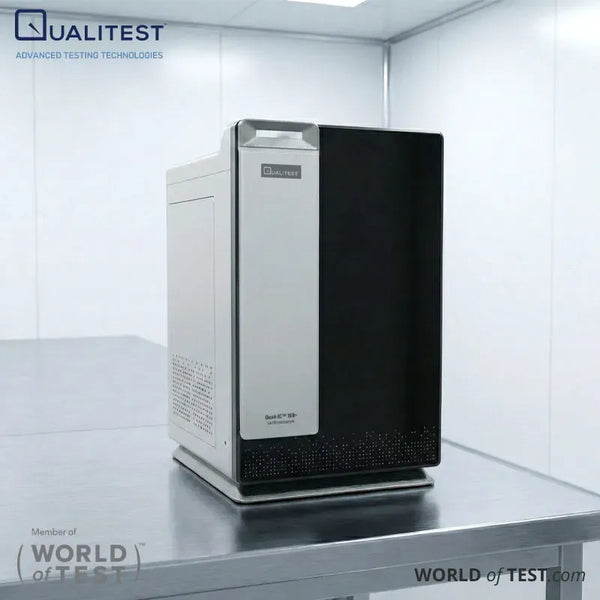
- Exceptional Capacity for Growth and Automation: These systems are built to grow alongside your facility. For instance, models like our Ion Chromatograph – Quali-IC™ 160+ offer automated sample injection and built-in eluent generation. Because the generator handles KOH, NaOH, LiOH, and MSA across a 0.1 to 100 mM range, it completely saves your staff from mixing chemicals by hand. Furthermore, the accompanying software processes large volumes of data seamlessly.
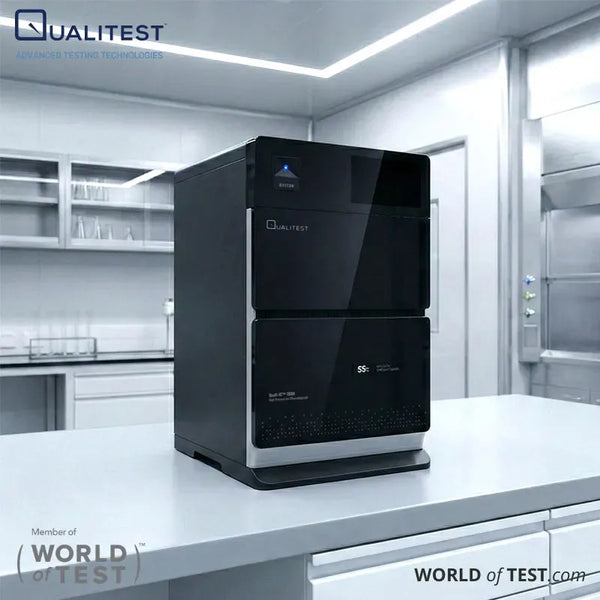
- Remarkable Sensitivity: There is not a trace of a jumpy baseline anywhere. Thanks to top-tier suppressed conductivity setups and vacuum degassing, benchtop systems generally outperform portable instruments on sensitivity and detection limits. You get rock-steady, quiet baselines that provide the sensitive, reliable quantitative performance needed for serious laboratory analysis. A fantastic example is our High Pressure Ion Chromatograph – Quali-IC™ 180H. It handles a maximum system pressure up to 45 MPa (6600 psi) while maintaining a high gradient accuracy of ±0.15 percent and precise column temperature control anywhere between 15 and 80 °C.
- Switchable Detectors and Durable Materials: You can easily swap and plug in different detectors (like conductivity, amperometric, or UV). This gives you a wide array of options for complicated testing methods. Plus, with metal-free PEEK flow paths handling the entire pH 0 to 14 spectrum, you do not have to worry about sample contamination.
Related article: Tips on How to Choose IC Detector Models for Testing
The Trade-offs:
The primary constraint in the portable versus benchtop ion chromatography discussion is mobility. Benchtop units require a stationary, temperature-controlled environment and a lot of counter space.
If your water samples degrade quickly while sitting in transit, a stationary benchtop setup might cause some logistical challenges.
The On-The-Go Flexibility of Portable Systems
Since environmental oversight and industrial audits are happening more out in the field, the demand for on-site testing has gone through the roof. Enter the portable setup. This is a compact, tough system built to bring the laboratory straight to the remote test site or manufacturing facility.
While some traditionalists believe that testing out in the elements always compromises your data quality, we think modern technology has closed that gap in a big way. Portable instruments support real-time, on-site measurements and are especially useful for emergency response, process monitoring, and selecting which specific samples actually need later laboratory analysis.
The Advantages:
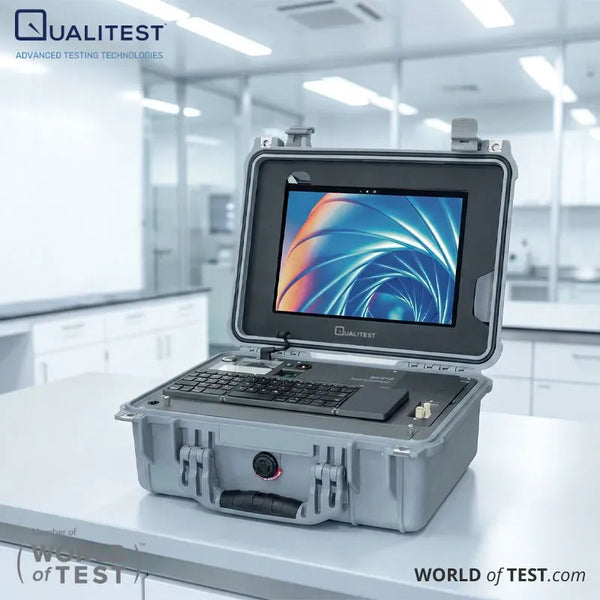
- Real-Time, Instant Answers: If you are checking a remote well or measuring factory effluent, these machines give you numbers in minutes. That means you can make critical decisions on the spot instead of waiting days for lab results. For instance, during major United States emergency responses (like assessing local rivers after a Midwest freight train derailment or checking groundwater safety following Gulf Coast hurricanes), response teams depend heavily on these mobile units. Getting immediate analysis at the sampling location is especially crucial in these high-stakes, time-sensitive situations. To keep the work going, systems like our Portable Ion Chromatograph – Quali-IC™ 80 feature a dual power supply (AC 220V and an integrated lithium battery) along with a hot-swappable UPS, meaning your machine will not suddenly lose power during a critical site check.
- No Spoiled Samples and Greener Operation: Certain chemical species change or break down while sitting in a cooler on the drive back to the facility. Testing on-site keeps your data pure, no matter how complex the raw sample matrix is. Despite the smaller size, you still get serious hardware. The Quali-IC™ 80 includes a 42 MPa dual-piston serial pump providing a flow rate range of 0.001 to 12 mL/min. Additionally, portable platforms can be noticeably greener because they use fewer reagents and reduce chemical waste.
- Compact Footprint: If you operate a mobile testing van or have a crowded workbench, these units save a ton of space while still getting the job done. The Quali-IC™ 80, for example, is ultra-lightweight at less than 9 kilograms, making it incredibly easy to carry across a muddy field.
The Trade-offs:
But as you evaluate a benchtop versus portable ion chromatograph, keep in mind that portable units act as field-deployable screening tools rather than full laboratory replacements. The field-portable literature clearly describes higher detection limits, lower sensitivity, and more difficulty achieving dependable quantitative results under unpredictable field conditions.
Furthermore, shrinking down chromatography hardware remains technically challenging. Current portable applications are mostly restricted to small inorganic and small organic ions rather than the broader flexibility you expect from conventional lab systems.
Key Industry Applications & Methods
Environmental & Water Quality
For strict regulatory compliance reporting (like municipal water treatment plants executing EPA Method 300.0 to monitor heavy agricultural fertilizer runoff across the American Midwest), the fast-paced, automated benchtop setup is the usual standard.
However, if a field consultant needs to track a sudden chemical leak to satisfy strict State Department of Environmental Quality rules, they will definitely want a portable unit riding in the back of their vehicle.
Batteries & Mining
The massive domestic push for American-made energy storage means manufacturing companies are constantly checking lithium and transition metal levels. Benchtop setups fit perfectly inside huge manufacturing gigafactories located in Nevada or Texas.
Meanwhile, extraction operators working in dry regions like California's 'Lithium Valley' depend on portable setups to test their brine fluids right at the active digging site. For checking tricky industrial materials, specialized units like the Combustion Ion Chromatograph – Quali-IC™ 3200 (Online) are perfect for continuously monitoring total halogens and sulfur.
Food & Beverage
Spotting organic acids, inorganic anions, and artificial preservatives in juice, soda, or beer usually requires the multi-detector flexibility of a benchtop machine.
Quality teams must consistently verify ingredients like chloride, sulfate, phosphate, and malic acid to guarantee taste consistency and shelf stability across every single batch. A highly stable laboratory setup ensures you get those critical numbers quickly without background sugars interfering with your results.
Total Cost of Ownership (TCO) & Upkeep
Purchasing laboratory equipment is not just about the initial price tag. We always suggest looking at the upkeep costs over a five-year period.
From what we observe, the hidden cost of mixing chemicals by hand and making simple human errors can slowly eat away the cash you saved on a cheaper machine. A benchtop machine costs more to buy, but it ends up being highly cost-effective per test if you run a high volume of samples.
Features like automated eluent generation save on chemical costs and prevent manual mistakes. Plus, automated rinsing habits help your expensive chromatographic columns last much longer.
On the other hand, portable machines are much easier on your startup budget. But you have to factor in mixing your own eluents by hand, doing regular calibrations in the field, and swapping out the batteries down the road to keep everything running smoothly.
Related article: HPLC vs Ion Chromatography: Select the Ideal Setup
Work with a Testing Partner You Can Trust
At Qualitest, we know that choosing the right testing setup is a major decision for your budget. We believe in providing a reliable partnership that supports you at every step.
Our Quali-IC™ line uses tough, chemical-resistant parts, straightforward software, and durable designs to handle your daily workflows. From our highly stable benchtop systems to our highly adaptable portable solutions, we offer cost-effective products that meet tough global testing rules without draining your capital.
Support That Keeps Your Lab Running
We back our equipment with full post-purchase support, including helpful setup assistance, hands-on training, solid warranties, and friendly tech support from our North American crew.
Want to find the setup that actually fits your daily workload? Come check out our full selection of budget-friendly systems at our Ion Chromatograph collection today, and let us get your lab running smoother.
References (Click to expand)
- Gałuszka, A., Migaszewski, Z., & Namieśnik, J. (2015). Moving your laboratories to the field--Advantages and limitations of the use of field portable instruments in environmental sample analysis. Environmental research, 140, 593-603.
- Sharma, S., Tolley, L. T., Tolley, H., Plistil, A., Stearns, S., & Lee, M. L. (2015). Hand-portable liquid chromatographic instrumentation. Journal of chromatography. A, 1421, 38-47.