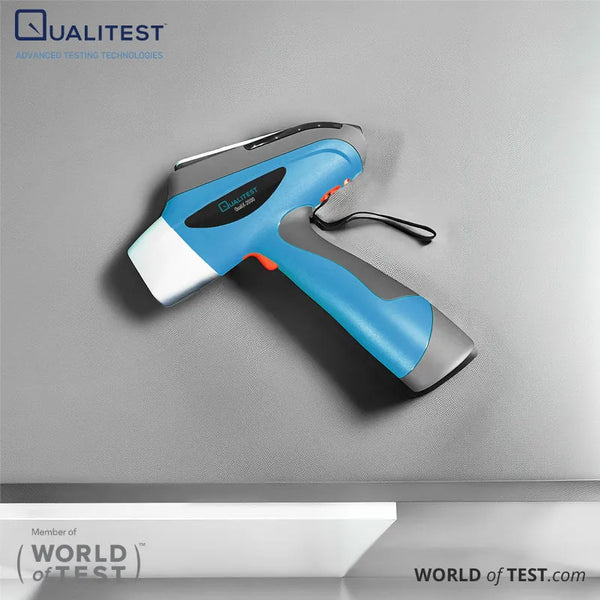
Why risk production shutdowns waiting days for third-party metal test results? Recent studies confirm that no single device fits every inspection task, making sensor sensitivity and elemental range crucial criteria.
Quality teams need instant, non-destructive verification to prevent expensive material mix-ups and protect operating margins. In this guide, we break down the primary advantage of XRF analyzer technology and show you how to choose the right XRF analyzer for your facility.
Key Takeaways
- Instant, Non-Destructive Results: Handheld EDXRF delivers positive alloy grade verification in 1 to 3 seconds without damaging finished parts or requiring chemical acid digestion.
- Fast-SDD Sensor Priority: Silicon Drift Detectors with <= 125 to 128 eV resolution provide the spectral sensitivity needed to separate overlapping elemental peaks and detect light elements like Magnesium and Aluminum.
- Standards and Site Calibration: Combining Fundamental Parameters modeling with site-specific CRM recalibration ensures field data satisfies ASTM E1476, API RP 578, EPA Method 6200, and RoHS testing requirements.
- Built-in Workplace Safety: Smart infrared proximity interlocks and 360-degree visual LED indicator rings ensure continuous radiation safety for operators and meet US workplace compliance standards.
- Cost-Effective Field Performance: The Qualitest QualiX™ 2000 Series provides laboratory-grade analytical precision across solids, liquids, and powders without locking your budget into recurring annual software fees.
The Core Advantage of XRF Analyzer Technology
Before looking at specific sensor options, it helps to review why energy-dispersive X-ray fluorescence (EDXRF) is the preferred analytical method across North American manufacturing plants, scrap yards, and field testing teams.
When an analyzer directs an X-ray beam onto a test sample, it temporarily displaces inner-shell electrons.
As outer electrons drop down to fill those vacancies, they release secondary fluorescent X-rays. Because every element on the periodic table emits X-rays at unique, identifiable energy levels, the instrument immediately identifies the specific elements present and quantifies their exact concentrations.
- Zero Damage to Finished Parts: Unlike destructive mechanical sampling, XRF preserves high-value machined components, in-service piping, and delicate historical artifacts in their original state without cutting coupons or leaving marks. In our view, maintaining the full structural integrity of finished inventory is one of the strongest reasons to adopt EDXRF.
- Throughput in Seconds Rather Than Days: Instruments like our QualiX™ 2000 Series provide positive alloy grade verification in 1 to 3 seconds flat, with comprehensive multi-element chemistry quantified in under a minute. The technique measures elements across the periodic table, from Magnesium (Z = 12) through Uranium (Z = 92), during a single analysis run on solids, liquids, or powders without requiring tedious acid digestion.
- Eliminating Hazardous Waste and Reagent Costs: Because XRF requires no consumable chemical reagents, high-purity gases, or routine acid handling, it aligns directly with green analytical chemistry principles while keeping daily running expenses far below ICP-OES or ICP-MS operations.
Technology Comparison: XRF vs. OES and LIBS
When evaluating how to choose the right XRF analyzer, quality managers frequently compare XRF against Laser-Induced Breakdown Spectroscopy (LIBS) and Spark Optical Emission Spectroscopy (OES).
EDXRF leaves zero surface burn marks, requires no heavy compressed Argon gas cylinders, and delivers dependable baseline stability across high-temperature nickel superalloys, copper alloys, and raw soil samples. For general PMI, scrap sorting, and regulatory compliance screening, XRF remains the most versatile, user-friendly tool available.
Spark OES and LIBS are primarily selected when direct measurement of trace carbon, boron, or nitrogen is strictly necessary in low-alloy or L-grade stainless steels. However, those methods leave noticeable black burn scars on your parts and require clean, bare-metal grinding for every single test.
Evaluating whether your operation requires the clean, non-destructive efficiency of XRF or the carbon-measuring capability of Spark OES? Take a look at our side-by-side technical guide.
How to Choose the Right XRF Analyzer: 7 Selection Criteria
To help your team identify the best instrument for your workflow, we organized the core decision factors into a logical sequence, moving from analytical capability to daily usability, workplace safety, and long-term ownership costs:
1. Elemental Range and Sample Matrix
The baseline step in evaluating how to choose the right XRF analyzer is matching the internal hardware to the specific elements you test every day. Standard excitation tubes easily identify heavy elements and transition metals in common stainless steels (such as 304 and 316), brasses, bronzes, and heavy metals (Ti, Cr, Fe, Ni, Cu, Zn, Mo, Pt, Au).
For example, during major turnaround maintenance at Texas Gulf Coast petrochemical facilities, inspection teams verify Chrome-Moly and stainless alloy piping on site to satisfy API RP 578 and prevent sulfidation corrosion failures.
However, light elements (Al, Mg, Si, P, S) exhibit lower fluorescence yields and suffer from air-path absorption. Inspecting aluminum grades, magnesium aerospace brackets, or silicon in cast iron requires an excitation source paired with a thin-window detector.
For this reason, we build the QualiX™ 2000A and QualiX™ 2000M with a 50 kV / 200 uA Rhodium (Rh) target tube, while equipping the RoHS-focused QualiX™ 2000R with a specialized Silver (Ag) target tube. This hardware configuration achieves detection limits between 1 and 500 ppm across solid, liquid, and powder samples.
We always advise buyers to recognize the physical blind spots early: handheld XRF cannot detect the eleven lightest elements on the periodic table (Hydrogen, Helium, Lithium, Beryllium, Boron, Carbon, Nitrogen, Oxygen, Fluorine, Neon, and Sodium).
Their fluorescent X-rays are simply too weak to escape the material and travel across ambient air to reach the sensor. If your material specifications hinge on lithium in aerospace aluminum, beryllium in copper alloys, or carbon in L-grade stainless, your facility will need Spark OES or LIBS alongside XRF rather than relying on XRF alone.
2. Detector Hardware: Fast-SDD vs. Si-PIN
The detector converts incoming fluorescent X-ray photons into measurable electrical pulses, serving as the primary engine for analytical speed and spectral resolution.
Core Sensor Comparison: Legacy Si-PIN detectors typically offer 160 to 200 eV resolution for basic alloy sorting, whereas modern Fast-SDD sensors achieve <= 125 to 128 eV resolution with high count rates for crisp peak separation.
Silicon drift detectors (SDD) have become the established standard in modern instruments, offering superior count rates and resolution over legacy Si-PIN detectors. In our view, purchasing older Si-PIN technology today is rarely justified given how accessible Fast-SDD instruments have become.
In the QualiX™ 2000 Series, the 2000A comes standard with a Fast-SDD delivering energy resolution down to <= 125 eV, while the 2000M and 2000R come equipped with an SDD providing <= 128 eV resolution, with a Fast-SDD available as an upgrade option for applications requiring higher count rates.
This resolution is essential for cleanly separating closely spaced spectral peaks, such as Manganese from Iron, or Lead from Arsenic. Built-in solid-state Peltier cooling maintains baseline accuracy across hot shop floors and cold field environments without requiring external liquid coolants.
3. Form Factor, Ergonomics, and Collimation
The literature highlights a clear distinction between form factors: benchtop units offer higher sensitivity for stationary laboratory testing, while portable handheld (pXRF) units provide the in-field flexibility necessary for rapid screening.
In high-volume scrap processing yards across the Midwest and Great Lakes industrial corridor, sorting crews verify incoming railcars of mixed stainless turnings, Inconel superalloys, and aluminum structural scrap throughout an 8-hour shift. Under these conditions, physical comfort directly affects daily testing output.
We engineered the QualiX™ 2000 Series to weigh under 2.0 kg (with the QualiX™ 2000M and 2000R weighing just 1.7 kg including battery) within a compact 244 x 90 x 330 mm body.
To keep field teams running without frequent stops, standard 9,000 mAh lithium-ion batteries provide 8 to 12 hours of continuous field operation on a single charge, with an optional 27,000 mAh high-capacity pack available for extended off-grid projects.
Furthermore, selectable beam apertures (2.0 mm and 4.0 mm on the 2000A/2000M, plus a wider 6.0 mm collimator on the 2000R) allow operators to isolate narrow weld seams, small fasteners, or polymer leads without picking up background interference from surrounding base metal.
4. Calibration, Matrix Effects, and Tube Tuning
A major source of disparity between field screening and laboratory numbers stems from matrix effects, including sample heterogeneity, moisture, grain size, and surface roughness. Adjusting tube voltage ensures the primary beam energy sufficiently exceeds the absorption edges of target analytes, exciting medium-Z elements like Copper and Iron efficiently while reducing background noise.
Because factory default calibrations can overestimate elemental concentrations, the QualiX™ 2000 Series pairs Fundamental Parameters (FP) theoretical modeling with user-accessible empirical recalibration against site-specific Certified Reference Materials (CRMs).
For environmental consulting teams screening for RCRA 8 heavy metals (Lead, Arsenic, Cadmium) across Rust Belt brownfield redevelopment zones and Superfund sites per U.S. EPA Method 6200, this dual-engine calibration setup corrects for soil matrix bias and significantly improves quantitative accuracy.
For loose powders and soils, using a 4.0-um Prolene thin film provides superior transmission for light elements like Mg, Al, and Si compared to Mylar films of identical thickness.
5. Radiation Safety and EHS Compliance
Safety is essential whenever working with X-ray generating equipment. For Environmental Health & Safety (EHS) managers, verifying built-in safety protection is a non-negotiable step. We believe that multi-layered safety mechanisms should come standard rather than as costly optional upgrades.
Every QualiX™ 2000 Series analyzer features smart infrared proximity sensors that automatically shut down the X-ray beam within milliseconds if the nose of the analyzer is lifted away from the test piece. Bright 360-degree visual LED indicator rings make it clear to operators and nearby personnel whether the instrument is in standby or actively generating a beam.
Every unit ships with a radiation report, a radiation exemption certificate, and a calibration certificate, and carries CE marking plus IP64 ingress protection, so it aligns with state radiation control registration guidelines (such as Texas DSHS, California CDPH, and CRCPD model rules), while built-in standardization caps allow operators to perform daily quality checks safely without unnecessary beam exposure.
6. Data Management and LIMS Integration
A testing device that makes data extraction difficult creates an unnecessary bottleneck in your quality workflow. Another major advantage of XRF analyzer systems with modern software architecture is straightforward documentation.
The QualiX™ 2000 Series allows operators to generate professional, audit-ready Certificates of Analysis (CoA) directly from the device in PDF and Excel formats with a single click. Integrated Bluetooth allows pairing with handheld wireless barcode scanners to capture heat numbers, purchase order tags, or lot numbers directly into the test record.
For connectivity, the QualiX™ 2000A includes an integrated 4G cellular module along with Wi-Fi and Bluetooth, while the QualiX™ 2000M includes built-in GPS to automatically tag field geochemical test points for direct mapping into GIS software.
7. Standards, Service Support, and Total Cost of Ownership
When calculating your overall investment, look past the initial price tag to evaluate ongoing operational expenses and standards compliance.
Ensure the analyzer includes testing modes configured for major standards, including ASTM E1476 and API RP 578 for alloy PMI, U.S. EPA Method 6200 for soil screening, and IEC 62321-3-1 for RoHS compliance.
We hold the view that essential alloy libraries and software features should belong to the purchaser upon delivery, without recurring annual subscription paywalls. Having access to regional service and calibration centers in North America prevents weeks of production downtime during routine maintenance, while fairly priced consumables and spare parts keep long-term operating costs predictable.
Product Solutions: QualiX™ 2000 Series
At Qualitest, our development focus is centered on delivering top-tier analytical precision in an accessible package, without legacy brand markups. Built to perform in temperatures ranging from -20 °C to +50 °C, our QualiX™ 2000 Series Handheld Portable XRF Analyzers provide dependable configurations built for specific industrial requirements.
QualiX™ 2000A for Metals QA, Plant PMI & Scrap Recycling
Built for incoming raw material verification, warehouse inspections, and high-volume scrap sorting in fabrication shops and recycling yards, this model delivers positive alloy grade matches in 1 to 3 seconds.
Equipped with a 50 kV Rh-target tube and a <= 125 eV Fast-SDD detector, it measures elements from Magnesium (Z = 12) to Uranium (Z = 92), simplifying aluminum and titanium sorting while fully supporting ASTM E1476 and API RP 578 verification procedures.
QualiX™ 2000M for Geology, Mining & Environmental Assessment
Configured for exploration camps, open-pit grade control, and environmental consulting sites, this lightweight 1.7 kg unit provides real-time geochemical assays on drill cores, pathfinder elements, and quarry faces. It aligns with U.S.
EPA Method 6200 to screen for hazardous lead, cadmium, arsenic, and mercury in soil down to low-ppm detection limits during urban brownfield assessments, automatically recording GPS coordinates with every test shot for GIS mapping.
QualiX™ 2000R for Electronics, Consumer Goods & Plastics
Optimized for fast screening of restricted hazardous substances in consumer goods and polymers, this configuration rapidly quantifies Lead (Pb), Cadmium (Cd), Mercury (Hg), Total Chromium (Cr), and Total Bromine (Br) per IEC 62321-3-1.
It helps quality teams at US freight hubs and ports of entry verify imported electronics, toys, and plastic components against RoHS and California Proposition 65 thresholds using a dedicated Silver (Ag) target tube and selectable 2.0 mm, 4.0 mm, and 6.0 mm collimator apertures.
Technical Specifications Comparison
The table below outlines how the QualiX™ 2000 Series models compare across core technical specifications:
| Feature / Specification | QualiX™ 2000A (Alloy) | QualiX™ 2000M (Mining & Soil) | QualiX™ 2000R (RoHS) |
|---|---|---|---|
| Primary Focus | Metals QC, PMI, Scrap Sorting | Exploration, Grade Control, Soil | RoHS Screening, Electronics QC |
| Elemental Range | Mg (12) to U (92) | Mg (12) to U (92) | Mg (12) to U (92) |
| Detector Technology | Fast-SDD (Resolution <= 125 eV) | SDD / Fast-SDD (<= 128 eV) | SDD; Fast-SDD optional (<= 128 eV) |
| X-ray Source | 50 kV / 200 uA (Rh Target) | 50 kV / 200 uA (Rh Target) | 50 kV / 200 uA (Ag Target) |
| Collimator Sizes | 2.0 mm, 4.0 mm | 2.0 mm, 4.0 mm | 2.0 mm, 4.0 mm, 6.0 mm |
| Measurement Speed | 1 to 60 s (Grade ID in 1–3s) | 1 to 60 s (Low-ppm quantification) | 1 to 60 s (Pass/Fail screening) |
| Detection Limits | Down to 1 to 500 ppm | Down to 1 to 500 ppm | Down to 1 to 500 ppm |
| Safety Interlocks | Infrared proximity sensor + 360° LED | Infrared proximity sensor + 360° LED | Infrared proximity sensor + 360° LED |
| Total Weight | < 2.0 kg with battery | 1.7 kg with battery | ~ 1.7 kg with battery |
| Dimensions | 244 x 90 x 330 mm | 244 x 90 x 330 mm | 244 x 90 x 330 mm |
| Battery & Runtime | 9,000 mAh (8 to 12 h runtime) | 9,000 mAh (8 to 12 h runtime) | 9,000 mAh (8 to 12 h runtime) |
| Data Connectivity | 4G Module, Wi-Fi, Bluetooth, USB | Built-in GPS, Wi-Fi, Bluetooth | USB, Wi-Fi, Bluetooth (GPS opt) |
Select the Best XRF Solution with Qualitest
Understanding the full advantage of XRF analyzer technology is the first step toward improving inspection speed, preventing alloy mix-ups, and maintaining strict regulatory compliance.
However, acquiring high-performance analytical tools should never require overextending your capital budget or committing to expensive recurring maintenance agreements.
At Qualitest, we believe manufacturing plants, testing labs, and field inspection teams across North America deserve cost-effective testing equipment that complies with strict ASTM, API, EPA, and ISO standards, without compromising on analytical accuracy or build quality.
Ready to Find the Right XRF Analyzer for Your Facility?
Our application specialists are available to review your testing requirements and help you configure the ideal instrument for your workflow:
- Explore the QualiX™ 2000 Series Handheld Portable XRF Analyzers
- Contact our team today to consult with an application specialist, request a detailed quotation, or schedule a live product demonstration. We are ready to help you select a dependable, cost-effective testing solution for your business.
References (Click to expand)
- Adesina, K., Burgos, C. J., Grier, T. R., Mohammed, A. S., & Specht, A. (2025). Ways to Measure Metals: From ICP-MS to XRF. Current Environmental Health Reports, 12, 7.
- Chiti, M., Chiti, D., Chiarelli, F., Donghia, R., Esposito, A., Ferretti, M., & Gorghinian, A. (2024). Design and Use of Portable X-ray Fluorescence Devices for the Analysis of Heritage Materials. Condensed Matter, 9(1), 1.
- Declercq, Y., Delbecque, N., Grave, J., Smedt, P., Finke, P., Mouazen, A., Nawar, S., Vandenberghe, D., Meirvenne, M., & Verdoodt, A. (2019). A Comprehensive Study of Three Different Portable XRF Scanners to Assess the Soil Geochemistry of An Extensive Sample Dataset. Remote Sensing, 11(21), 2490.
- Fedeli, R., Di Lella, L. A., & Loppi, S. (2024). Suitability of XRF for Routine Analysis of Multi-Elemental Composition: A Multi-Standard Verification. Methods and Protocols, 7(4), 53.
- Hall, G., Bonham-Carter, G., & Buchar, A. (2014). Evaluation of portable X-ray fluorescence (pXRF) in exploration and mining: Phase 1, control reference materials. Geochemistry: Exploration, Environment, Analysis, 14(2), 99-123.
- Jenkins, E. M., Galbraith, J., & Paltseva, A. A. (2025). Portable X-ray fluorescence as a tool for urban soil contamination analysis: Accuracy, precision, and practicality. SOIL, 11, 565-2025.
- McComb, J., Rogers, C. S., Han, F., & Tchounwou, P. (2014). Rapid screening of heavy metals and trace elements in environmental samples using portable X-ray fluorescence spectrometer: A comparative study. Water, Air, & Soil Pollution, 225, 2169.