Accepting a single clever gold counterfeit can completely derail your monthly profit margins. In highly active North American jewelry and scrap operations, knowing exactly what you are buying is a constant pressure, which is why business owners want a reliable, budget-friendly testing setup that secures their stock without leaving a single scratch on valuable inventory.
This guide breaks down the core difference between density meter gold tester and XRF gold tester options so you can make a highly profitable business decision. Compare the fundamentals of XRF vs density testing in our quick cheat sheet below to see which system suits your facilities.
At a Glance: XRF vs Density Technology Comparison
| Feature | Specific Gravity (Water-Dunking) Tester | XRF Spectrometer (X-Ray Gun) |
|---|---|---|
| Qualitest Models | GK-300 Basic Model, GKS-300, GKS-3000 | QualiEDX™ 600 / 800, QualiX™ 2000 Series |
| Primary Function | Measures the overall, total mass-to-volume ratio | Analyzes the exact, highly detailed elemental composition |
| Testing Depth | Analyzes the entire, solid item from top to bottom | Scans the surface layer, typically reaching up to 1 to 2 mm |
| Testing Speed | Usually takes a brief 10 to 30 seconds | Delivers lightning-fast results in under 15 seconds |
| Initial Cost | Serves as a highly economical, wallet-friendly option | Requires a much larger, noticeably heavier upfront capital expenditure |
| Best Applications | Standard commercial jewelry, solid coins, and heavy bullion | Weirdly mixed alloys, scrap metal sorting, and strict legal compliance |
Technical Principles: How Density and XRF Systems Operate
While the comparison table above highlights the main daily differences, choosing the correct setup requires getting a remarkably solid grasp of the actual science behind these two wildly different machines.
1. Specific Gravity (Density) Analysis
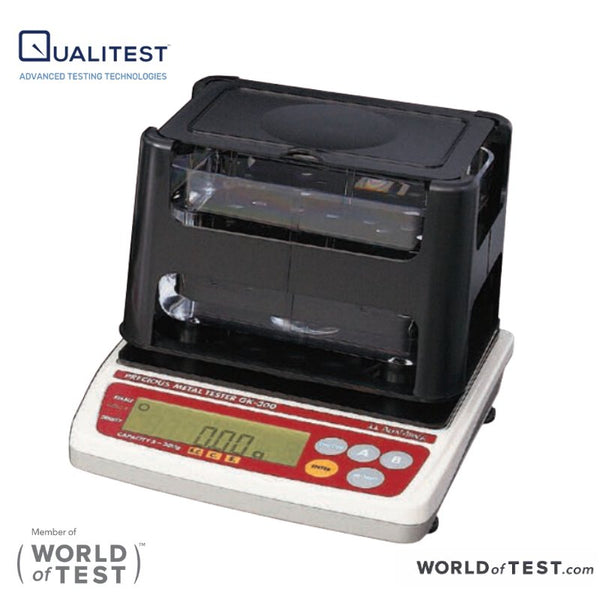
This highly reliable, wonderfully sturdy instrument, such as our proven GK-300 Basic Model that people widely trust for straightforward daily use, weighs your gold sample dry in the open air.
Then, the machine weighs the item while it is fully submerged in liquid to calculate exactly how much water is physically pushed aside. Because pure gold holds a highly specific, satisfyingly exact mass-to-space ratio (19.32 grams per cubic centimeter), the device immediately translates this measurement into a super reliable, beautifully accurate karat value.
In our view, these water-based systems remain incredibly practical, completely dependable tools for evaluating solid metal pieces quickly and without causing a single bit of physical damage.
However, some independent research suggests that hydrostatic weighing can be the least suitable method of jewelry evaluation if not carefully paired with other tools, mainly because standard shop densimeters have relatively large uncertainties, typically 0.1 to 0.2 g/ml. This variance makes it incredibly difficult to separate genuine gold from fake tungsten convincingly.
2. X-Ray Fluorescence (XRF) Spectroscopy
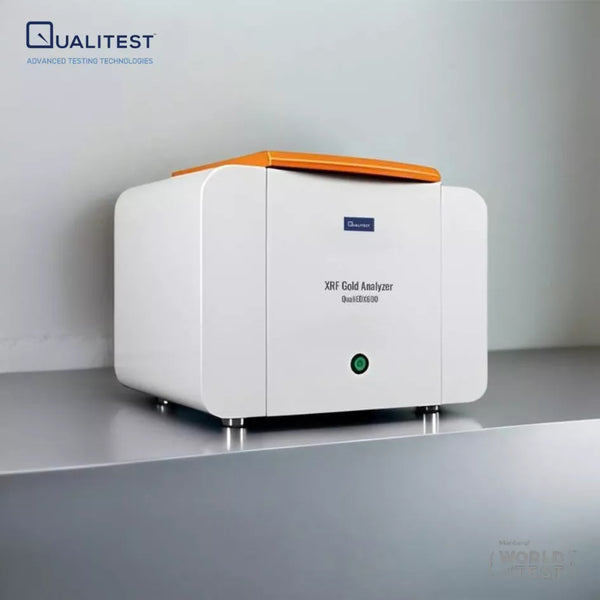
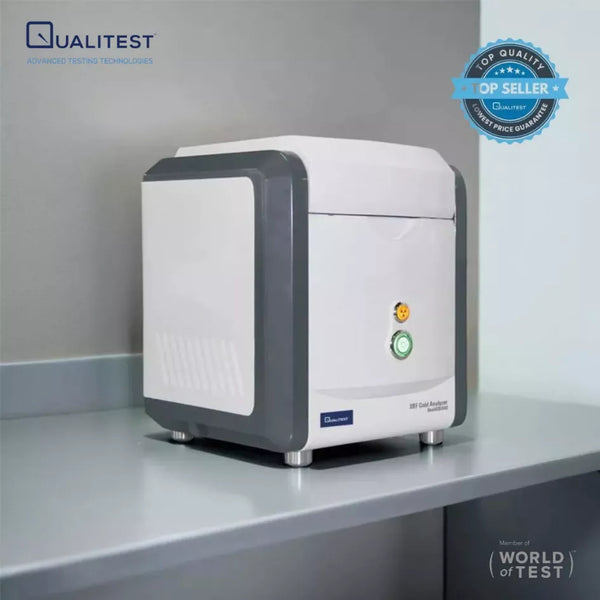
This highly sophisticated methodology operates on a mind-blowing, totally invisible molecular scale. Specialized equipment, such as our advanced Gold & Precious Metal Analyzer and EDX Spectrometer – QualiEDX™ 800, directs a completely safe but highly focused X-ray beam straight at the metal sample.
This intensely energetic beam excites the atoms within the gold, prompting them to emit secondary fluorescent X-rays. Because each unique element reacts in a highly distinct, easily recognizable manner, the spectrometer identifies these specific signals to provide an incredibly precise, deeply thorough breakdown of the item's composition, detailing the exact percentages of gold, silver, copper, and other mixed-in metals.
Comparing Density vs XRF in Daily Operations
When evaluating density vs xrf systems for your commercial facility, your choice should strongly align with your specific, highly unique daily operational workflow.
Depth vs Detail
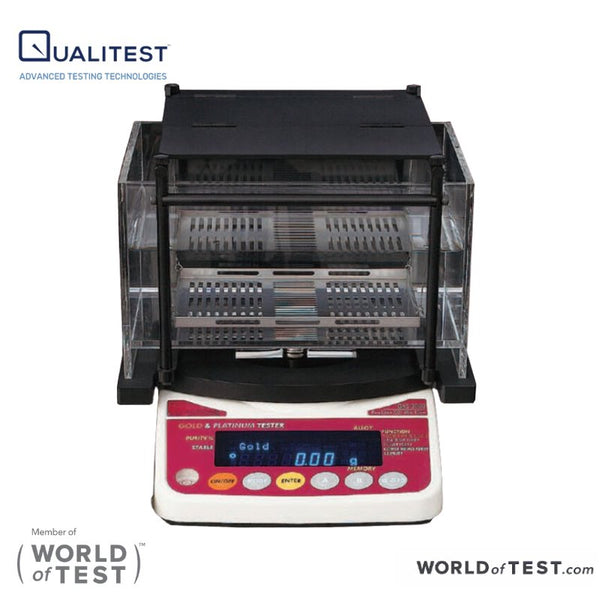
The water-dunking density tester is an absolutely brilliant, totally logical choice for verifying that the heavy core of a thick bar or solid coin has not been secretly filled with a cheaper, heavy metal. For these exact situations, a high-capacity solution specially designed for verifying massive, heavy pieces, such as our remarkably tough GKS-3000, evaluates the entire solid mass of the item from top to bottom.
However, it cannot identify the specific, exact non-gold elements present, and it struggles massively with complex, unusually shaped items or highly complex alloys, demanding simple, solid shapes for completely accurate measurement.
Conversely, the XRF analyzer provides a wonderfully complete, incredibly specific breakdown of all alloying elements. For organizations operating across various North American regions, meeting strictly enforced legal standards is an absolute, unavoidable necessity.
Complying with the United States Federal Trade Commission (FTC) rules for precise karat stamping, or ensuring your highly valuable stock falls completely below strict North American limits for restricted, highly toxic materials like lead and cadmium, makes the highly sensitive XRF an absolutely invaluable asset.
Furthermore, academic research clearly shows that with proper calibration and exact corrections for matrix effects, XRF can achieve a level of accuracy that beautifully matches the incredibly tedious classic fire assay method for karat jewelry alloys, achieving an impressively low relative error of less than 0.1%.
Operational Speed and Usability
Both highly capable methods are completely non-destructive, meaning they leave absolutely no marks, ugly scratches, or chemical damage on your inventory, perfectly preserving the gorgeous, highly polished appearance of your jewelry. The density tester is highly straightforward, almost effortlessly simple to operate, making it a perfectly practical solution for incredibly fast, on-the-spot verification by absolutely any staff member.
Related article: How to Test Gold Purity: Non-Destructive Systems Guide
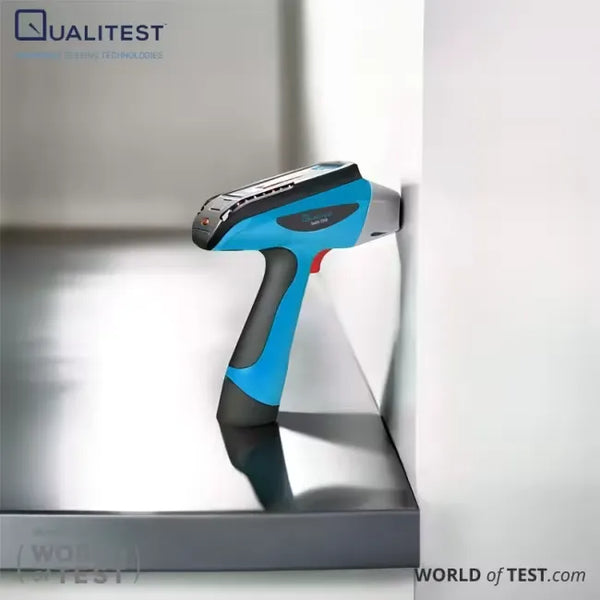
The XRF system is equally fast. In fact, highly portable options like our Handheld Portable XRF Analyzer QualiX™ 2000 Series offer a fantastic, highly appealing combination of blazing speed, undeniable precision, and strict affordability for checking materials right out in the busy field. However, their highly detailed, beautifully complex digital interfaces may require some brief, basic training for your team to interpret the deep data correctly.
In our view, some organizations accidentally over-invest in high-end XRF technology when a straightforward, incredibly dependable density system would comfortably handle their daily testing volume at a fraction of the total cost.
Operational Limits: Technology Vulnerabilities and Counterfeiting
We strongly believe that identifying the physical boundaries of each technology is an absolutely critical, totally mandatory part of daily risk management. If you want to truly grasp the real-world difference between density meter gold tester and XRF gold tester equipment, you must carefully evaluate how each impressive system handles highly deceptive, totally frustrating counterfeiting methods.
Specific Gravity Limits: Material and Shape Constraints
Because specific gravity relies entirely on total physical displacement, it cannot accurately evaluate items with hollow centers, trapped air cavities, or pieces featuring sparkly, beautifully embedded gemstones, as those extra factors completely distort the overall average weight calculation.
Additionally, these systems are highly sensitive to fluctuating water temperature, annoying little bubbles, and varying liquid quality. Crucially, a major, undeniable weakness is that density testers simply cannot distinguish pure gold from heavy tungsten due to their nearly identical densities, unless you are using an incredibly high-precision hydrostatic system with a very low, almost unbelievable uncertainty of 0.006 g/ml.
Related article: How to Choose Non Destructive Gold Density Tester
XRF Limits: Surface Penetration and Calibration Needs
Because XRF is a purely surface-level, strictly exterior analysis, it only scans the outermost skin of the metal, typically reaching up to 1 to 2 mm. If a highly deceptive counterfeit piece consists of a thick, beautifully gold-plated layer covering a surprisingly dense core of tungsten or brass, the XRF may read only the gold plating and wrongly report the totally fake item as perfectly genuine.
Industry watchdogs frequently highlight highly alarming, totally terrifying instances where these exact types of thick, beautifully gold-plated tungsten bars manage to circulate heavily through major North American bullion hubs and prominent trading districts like New York, completely fooling surface-level scans.
Results can also be slightly skewed by weird matrix effects and overlapping spectral interferences, requiring careful, exact daily calibration to avoid frustrating, entirely false positives.
Total Cost of Ownership: Maintenance and Calibration
When comparing density vs xrf solutions side by side, carefully calculating the total, entirely complete cost of ownership is incredibly essential for strictly accurate long-term financial planning.
Density testers require satisfyingly minimal, almost completely negligible maintenance, needing only clean distilled water, a perfectly flat operating surface, and a nicely consistent room temperature to operate reliably year after year. XRF spectrometers, as high-precision analytical devices, demand much more structured, highly attentive scheduled upkeep. To maintain accurate calibration and legally comply with safety regulations, they require periodic software checks and occasional professional servicing.
We often see commercial companies completely overlook these vital, ongoing maintenance requirements during the early, highly exciting buying phase. In our view, carefully analyzing these long-term operational needs beforehand absolutely guarantees a much stronger, more satisfying return on investment.
The Hybrid Solution: Combining Specific Gravity and XRF
For extremely busy high-volume recycling centers, major, highly active bullion dealers, and massive-scale commercial operations, choosing between density vs XRF does not have to be a highly stressful, totally exclusive decision.
We genuinely believe that implementing a beautifully combined dual-system approach is often the most incredibly secure, deeply comforting strategy for highly demanding commercial environments. Research completely supports this idea, showing that a cleverly combined system using both density and EDXRF successfully corrects wonky XRF results and totally overcomes the individual, frustrating weaknesses of each method, enabling rapid, high-volume testing of gold jewelry alloys.
In our daily experience, utilizing both wonderfully capable methods in perfect, seamless tandem provides an exceptionally high, incredibly comforting level of security against highly advanced, incredibly sneaky fakes. In fact, it is widely reported that major United States bullion depositories and highly prominent North American metal refining facilities treat this specific, strictly enforced dual-system protocol as their absolute, non-negotiable standard operating procedure.
By pairing these highly impressive systems together, you beautifully cover the frustrating vulnerabilities of both: the density tester perfectly confirms that the totally heavy core mass of the item is totally uniform and genuine, while the advanced XRF spectrometer beautifully verifies the exact, highly detailed alloy composition of the surface skin.
Choose Precision: Qualitest Gold Purity Solutions
At Qualitest, we totally recognize that intensely protecting your daily operations from fake, counterfeit materials is a vital, completely unavoidable business priority. That is exactly why we proudly provide a range of dependable, highly accurate testing equipment configured to fit your exact operational budget.
If you are considering a highly secure dual-system setup or simply require a dependable, cost-effective product for your daily checking routines, we are absolutely here to help you select a suitable configuration:
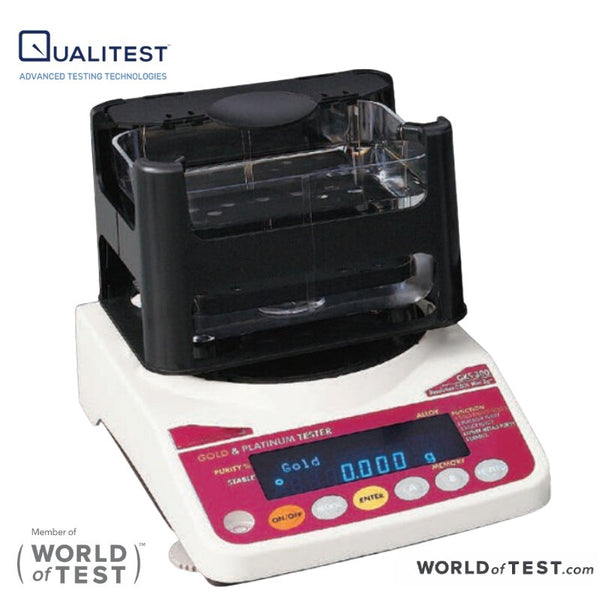
- For Specific Gravity Testing: View the cost-effective products in our Gold Purity Testers collection. This includes the basic GK-300 for standard daily checks, the high-precision GKS-300 for tiny valuables, and the heavy-duty GKS-3000 designed specifically for large, heavy ingots.
- For Elemental Analysis: Browse our range of XRF Spectrometers and Metal Analyzers. This lineup includes the highly portable Handheld QualiX™ 2000 Series for outdoor field operations, the precise QualiEDX™ 600, and the versatile all-in-one benchtop QualiX™ M1 system.
Contact our highly knowledgeable technical team today to request a quick, pressure-free quote, schedule a personalized consultation, or simply discuss which system best suits your facilities. Let us help you protect your profit margins and build your business confidence.
References (Click to expand)
- Jotanović, J. (2012). Comparison of x-ray fluorescent analysis and cupellation method for determination of gold in gold jewellery alloy.
- Hazan, R., Paulus, W., & Sapiee, N. (2020). GOLD JEWELRY ANALYSIS: XRF APPLICATIONS, 65-69.
- Li, H., Wang, X., Zhu, Y., & Wang, Y. (2015). Rapid synthesis determination of gold in gold jewelry alloys.
- Mazuki, A., Mahat, M. M., Abdullah, S., Ramli, R., & Nor, F. M. (2023). Improving the accuracy of EDXRF results in gold alloy analysis by matrix effect correction. Spectrochimica Acta Part B: Atomic Spectroscopy.
- Mercer, M. E. (1992). Methods for Determining the Gold Content of Jewelry Metals. Gems & Gemology, 28, 222-233.
- Monot, T., Simonnot, M., & Laubie, B. (2024). Relevance of using portable X-ray fluorescence to identify gold hyperaccumulator plants. Environmental Advances.
- Nor, F. M., Tamuri, A. R., Ismail, A., & Mazuki, A. (2020). Verification of the hydrostatic weighing system with existing gold purity instruments. IOP Conference Series: Materials Science and Engineering, 824.
- Patel, S. H., & Shrivastav, P. (2018). Energy-dispersive X-ray Fluorescence method for Determination of Gold and Silver in Jewellery.
- Testing, N. (2012). Nondestructive Testing.