Is your current lab hardware actually helping you nail those high-performance targets, or is it just gathering dust on the workbench?
Getting the right fit between a single column vs dual column tester is the defining choice for your team's winning streak. There’s zero guesswork needed when you have a setup that’s sheer perfection, ensuring your results are satisfyingly spot on every single time.
We’ve broken down the nitty-gritty of this choice so you can grab the hardware that’s a total win for your specific workload.
Performance Snapshot
If you're in a hurry to see which one is the most efficient fit for your workspace, here is the essential breakdown:
| Feature | Single Column UTM | Dual Column UTM |
|---|---|---|
| Max Capacity | Up to 5kN (usually) | 10kN to a massive 3000kN+ |
| Lab Real Estate | Tiny and desk-friendly | A serious floor-standing unit |
| Best For... | Pliant plastics and thin films | High-strength metal and concrete |
| Stretching Room | The basics | Loads of extra height |
| Investment | Easy on the budget | A serious long-term investment |
Core Design Differences
The main split between these two comes down to how they are built and how much weight they can throw around. We think getting the hang of these differences is the secret to making sure your gear lasts longer than a cheap lunch.
Research highlights that monospace (single space) setups are often simpler for routine tasks, while double space configurations are recommended for facilities requiring more functions in one frame.
1. Load Capacity
The biggest thing to look at in the single column vs dual column tester fight is the raw strength.
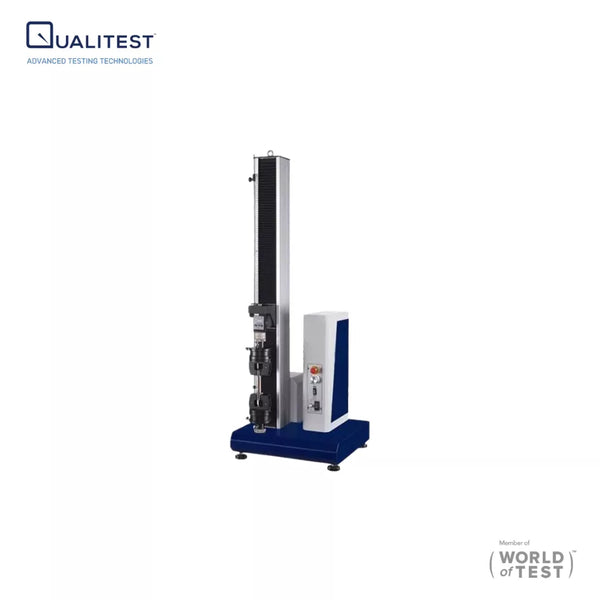
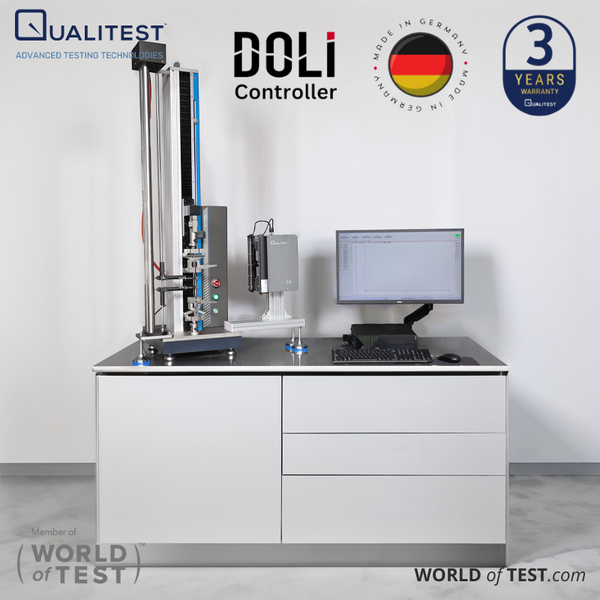
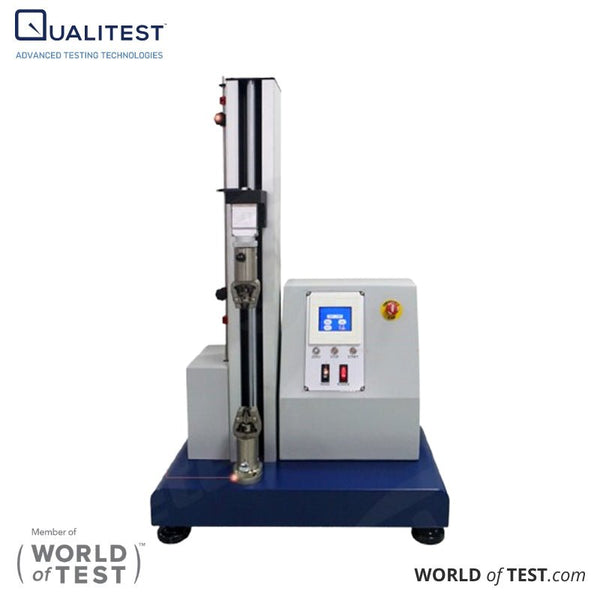
- Single Column Testers: These are for the lighter jobs, usually topping out at 5kN. We think compact units like our QM-5 Series or the QE-Series Single-Column are just right for tasks where you need a light touch but want the data to be satisfyingly accurate. Even mini UTMs with two columns can be found in small rigs to provide stiffness at low loads, such as 500 N.
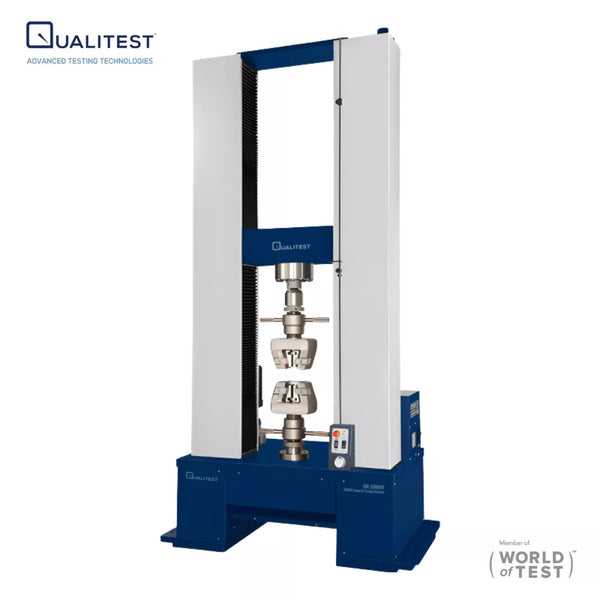
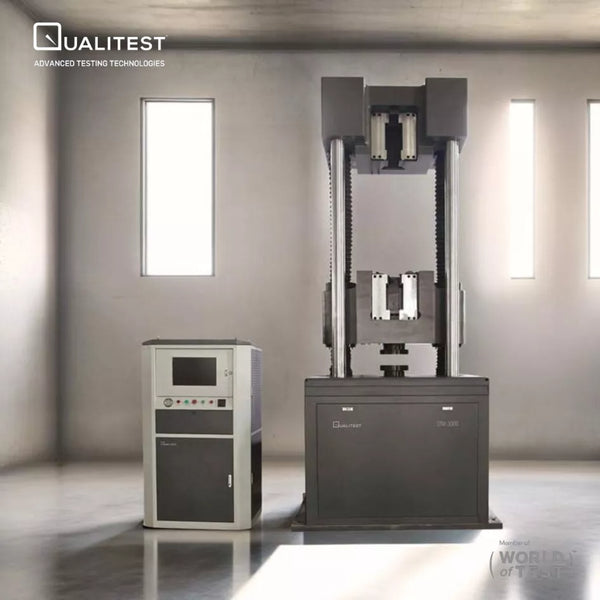
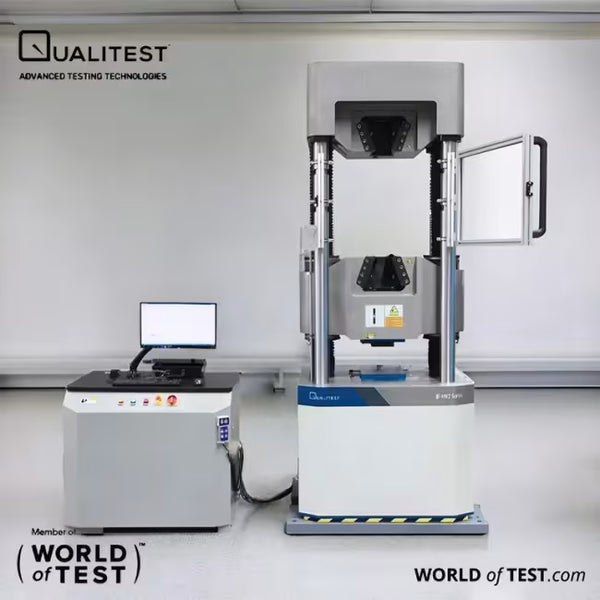
- Dual Column Testers: Built with two chunky pillars, these handle the middle-weight to heavyweight jobs. Hardware like our QM 100-600kN Universal Mechanical Testing Machines or the massive QTM-3000 easily handle everything from 10kN all the way to 3000kN+.
Our Two Cents: We often see folks grab a single column frame to keep the budget-holders happy, only to realize they need more muscle a year later. Research confirms that for very large loads, adding multiple structural elements, like those in a dual column setup, can reduce maximum stress by up to 24% and displacement by 75% compared to a sole-column frame.
We suggest looking at the toughest thing you might have to break three years from now, not just what's on your desk today.
2. Material Applications
The materials you need to pull apart will point you exactly in the right direction for choosing the perfect frame.
- Single Column: Perfect for rubber, thin films, paper, and those stretchy bits of fabric.
- Dual Column: This is the only way to go for metals, heavy-weight car parts, or slabs of concrete.
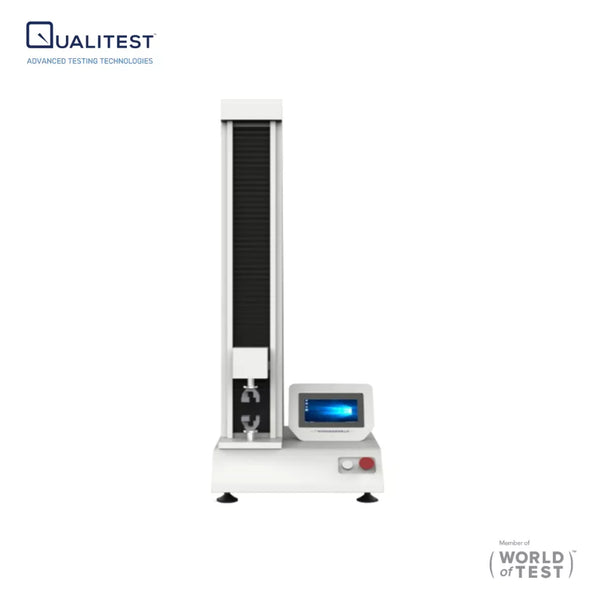
For instance, checking the pull-apart strength of sterile medical blister packs fits perfectly on a single-pillar setup, like the Universal Testing Machine QM-200N.
On the flip side, if the daily schedule involves crushing a massive concrete cylinder or snapping a heavy-duty truck suspension bolt right in half, a high-capacity frame, such as the QT-HW2 Servo Hydraulic Universal Testing Machine, is the only logical choice.
Studies show that hydraulic systems are exceptionally cost-effective for high forces.
Related article: Electromechanical vs Hydraulic UTM: Choosing Your System
Our Two Cents: While the skinny machines are great for pliant materials, we believe the rock-solid stiffness of a dual pillar frame gives you repeatable results that are sheer perfection, especially when you’re pushing a material to its absolute physical limits.
3. Elongation and Travel
It is way too easy to forget about the "stroke length" when you're looking at a single column vs dual column tester.
- Single Column: Usually gives you just enough room for the standard stuff.
- Dual Column: Gives you a massive amount of vertical space.
Our Two Cents: We’re calling it: elongation is the "silent dealbreaker." Picture a testing facility pulling on high-grade industrial bungee cords. That highly stretchy material will easily hit the ceiling of a compact frame long before the cord actually snaps.
In situations like that, we suggest the dual-pillar setup simply because you need that expanded vertical room to finish the pull without hitting the physical limits of the machine.
4. Physical Footprint
- Between the Pillars: A dual setup gives you a wide-open workspace, which is the only way to handle bulky parts. For example, trying to fit a wide, oddly shaped car dashboard panel or a bulky, pre-glued wooden furniture joint into a narrow gap is a fast track to sheer frustration. You absolutely need the wide-open gap between two pillars for that.
- Lab Space: Single pillars are friendly to small rooms, while the big units need a lot of breathing room.
Our Two Cents: We think floor space is the most precious thing in your facility. If your samples are tiny, forcing a massive machine into a cramped corner is just going to get on everyone's nerves. Grab the tool that fits your room.
If you are extremely tight on desk real estate, custom benchtop setups like the QTens-I or QTens-II are absolute lifesavers.
5. Tooling and Accessories
- Single Column: Works best with light, easy-to-use grips for everyday pulls.
- Dual Column: You’ll need this for the heavy-duty wedge grips and big temperature boxes.
Related article: Tensile Test Grips Guide: Selection & Practices
Our Two Cents: As your testing gets more specialized, you're going to want to add high-spec cameras or heaters. We see the dual pillar frame as the better "blank canvas" for when you want to get serious with the accessories later on.
Electronic machines like our QM series offer incredible flexibility, reaching speeds up to 1000 mm/min over long strokes.
Industry Case Studies
Let’s look at how this plays out for two totally different facilities.
Scenario A: The Boutique Polymer Lab.
They are putting the squeeze on thin plastic films and soft elastomers.
A desk-friendly, single-pillar tester like the QM-5 Series handles the load perfectly, saving precious floor space while delivering data that is satisfyingly spot on. It’s a total win for their specific workload.
Scenario B: The Heavy-Duty Steel Plant.
Their daily operations involve pulling apart thick metal alloys and structural rebars. A single-pillar machine would buckle under that kind of pressure.
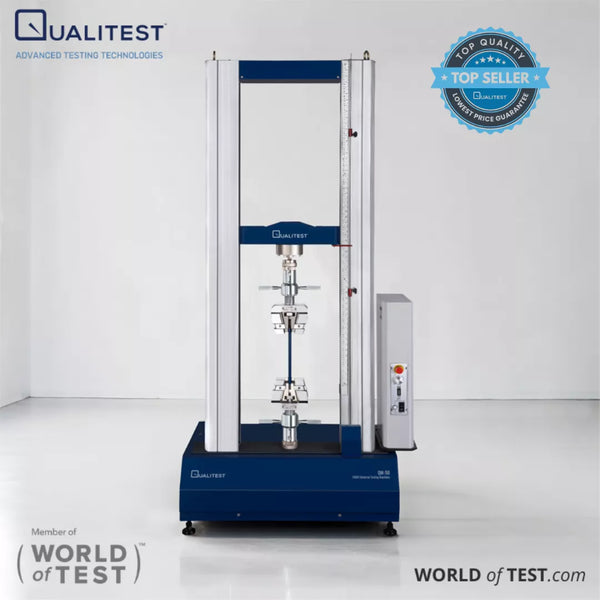
They need the rock-solid, sheer perfection of a massive floor-standing dual-pillar unit, such as the QM-50 Series, to handle those brutal forces without breaking a single sweat.
Final Selection Checklist
To wrap up this single column vs dual column tester toss-up, ask yourself these questions based on core research points:
-
What is the maximum force required?
If your daily routine involves pulling apart anything tougher than basic plastics (over 5kN), a desk-sized unit will just max out and give up. Buy for the heaviest pull you anticipate making next year. -
Will this stuff stretch forever?
Rubbers and elastomers will keep stretching long after you think they should snap. If you run out of vertical stroke length before the break, the test is ruined. Make sure the machine has the vertical clearance to actually finish the job. -
Is the part wide or weirdly shaped?
You cannot test what you cannot fit into the grips. Bulky, pre-assembled components absolutely need that wide-open gap between a set of twin pillars so you aren't fighting the hardware just to mount the sample. -
What control modes are needed?
Different materials require different testing rules. Make sure the setup can handle the specific load, strain, or displacement control modes your industry demands, especially if you need highly specific travel speeds. -
Am I growing?
Buying a machine strictly for what you need today is a fast track to buyer's remorse. If there is a chance you will need to add an environmental chamber or bulky wedge grips down the line, starting with a twin-pillar frame saves you from buying a completely new setup later.
Trust Qualitest for Your Next UTM
Choosing between a single column vs dual column tester comes down to your daily workload. We’re calling it: you shouldn't have to empty the bank for data that’s spot on.
Our testers are satisfyingly reliable. We focus on efficient hardware so you only pay for what you use.
Find your perfect fit on our Universal Testing Machines page. Questions? Give us a shout: we’ll make sure your materials are absolute perfection.
References ▼
- Homon, S., Dovbenko, T., Matviiuk, O., Vereshko, O., Kulakovskyi, L., & Chornomaz, N. (2021). ANALYSIS OF TEST EQUIPMENT FOR INVESTIGATION OF MATERIALS UNDER A STRONG LOAD APPLICATION. Urban development and spatial planning.
- Liang, G. (2011). Analysis of metal material universal testing machine and its main configurations.
- Mi, S., Chen, M., Li, T., & Shao, J. (2025). Ultimate Bearing Simulation of an 80 MN Compression–Shear–Torsion Multifunctional Bridge Bearing Testing Machine with a Plate-Column Composite Frame. Processes.
- Sutisna, N. (2021). Rancang Bangun Mesin Uji Universal Untuk Pengujian Tarik dan Tekuk Bertenaga Hidrolik. Journal of Mechanical Engineering and Mechatronics.
- T., E., M., P., O, A., & B, G. (2019). Development of Mini Universal Testing Machine. International Journal of Innovative Research and Development.