Choosing how to make your test samples can be an absolute headache. If you manage a North American lab, you’ve probably stared down a CNC machine vs 3D printer face-off, knowing a wrong choice slows your daily operations.
You need a straightforward breakdown showing where your budget is actually best spent. Let’s look at how they stack up so you can confidently make the right business choice.
Quick Comparison Matrix
Before we look at the highly specific details, here is a straightforward table showing how CNC machining vs 3D printing compares.
| Feature | Subtractive Machining (CNC) | Additive Manufacturing (3D Printing) |
|---|---|---|
| Accuracy & Tolerance | Exceptional dimensional accuracy (down to 0.01 mm) | Moderate precision ((typically ±0.1 mm to ±0.5 mm, susceptible to slight thermal shrinkage) |
| Surface Finish | Highly smooth, production-ready surface | Visible layer lines (commonly 0.1 mm to 0.3 mm thick) requiring manual post-processing |
| Material Versatility | Extensive list of options (metals, production plastics, wood) | Limited to specific polymer filaments, photopolymer resins, or high-cost metal powders |
| Geometric Complexity | Good, but limited by cutting tool access | Highly flexible (effortlessly handles intricate internal channels and lattices) |
| Production Scalability | Wonderfully fast for large batches once configured | Noticeably slow output rates (impractical for multi-unit batch production) |
| Primary Application | Heavy-duty mechanical components and standard specimen preparation | Swift prototyping and early-stage design verification |
Subtractive vs. Additive Manufacturing: The Core Concepts
For evaluating a 3D printing vs CNC machine setup, the big split is how they actually form a physical item.
- The Carving Method (CNC): This is a subtractive procedure, which is just a highly descriptive way of saying you start with a solid chunk of metal or plastic and shave away pieces with high-speed spinning cutters until your final piece appears.
- The Layer-by-Layer Method (3D Printing): This is an additive process. The equipment squeezes out melted plastic, gooey resin, or super-fine powder, stacking it up from absolutely nothing until the item is fully built.
Comparing Key Performance Factors
While analyzing 3D printing vs CNC machining for your facility, several everyday practical factors will determine which option is the smarter buy. For a business choice, the main tradeoffs are economics and scale, overall part quality and design freedom, and whether a combined hybrid workflow captures both advantages.
1. Dimensional Accuracy, Finish, and Material Strength
If your work requires parts with incredibly closely measured sizing and zero wiggle room, the carving method is the safer business pick. While printers have come a long way, carving setups are still unmatched for surface finish, dimensional accuracy, and overall physical strength.
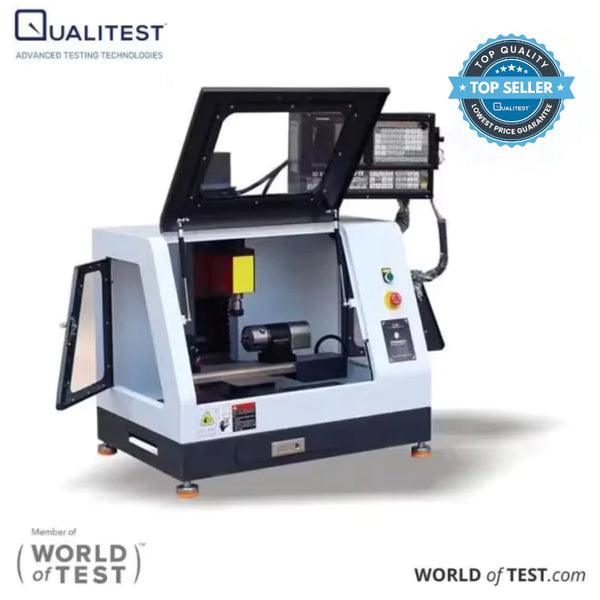
The layer-by-layer stacking of printing leaves tiny, annoying ridges on the surface (dedicated 3D printing enthusiasts, you know exactly what we mean!), while parts created on carving machines usually have a much better finish and high repeatability. As an example, our very own QualiMill™ M4 Micro CNC Milling Machine hits a satisfyingly spot-on 0.01 mm repeatability target, making it incredibly easy to hit exact dimensions.
In direct comparisons, machined samples also showed significantly higher strength than standard layered plastic samples. Every inch of a carved part is satisfyingly smooth. The dimensional accuracy is delightfully exact (strong but not outrageously overpowering for your wallet), the solid metal material is tough and durable all the way through, and the deep, shiny finish of a freshly carved component is sheer perfection.
2. Part Intricacy and Prototyping Speed
On the flip side, if we look at design freedom, layering wins by a massive margin. Printers are much better when geometry complexity or reducing overall weight matters more. They handle highly complex shapes and can cut material use substantially, including reported waste reductions around 40% and total material reductions up to 75% in some applications.
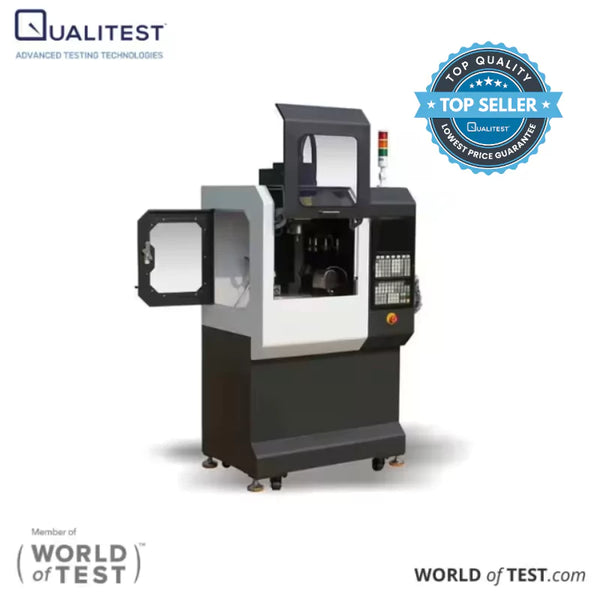
However, subtractive equipment isn't exactly lacking here anymore. Multi-angle carving centers, like our QualiCNC™ 300 5 Axis CNC Machine, bring an advanced 5-axis controller and an automatic 10-tool changing carousel to the table. This allows you to carve wonderfully twisty geometries out of solid materials without needing to rely on weak plastic layers.
3. Material Versatility: Plastics vs. Industrial Metals
Both paths let you work with different materials, but the real test happens when you need to make things out of serious metals. The debate around metal 3D printing vs CNC machining is a huge talking point.
One life-cycle cost study found that making metal parts with additive equipment cost 91% more than using traditional carving methods overall. However, that massive price tag became much more justifiable if the final items featured highly complicated, twisty shapes.
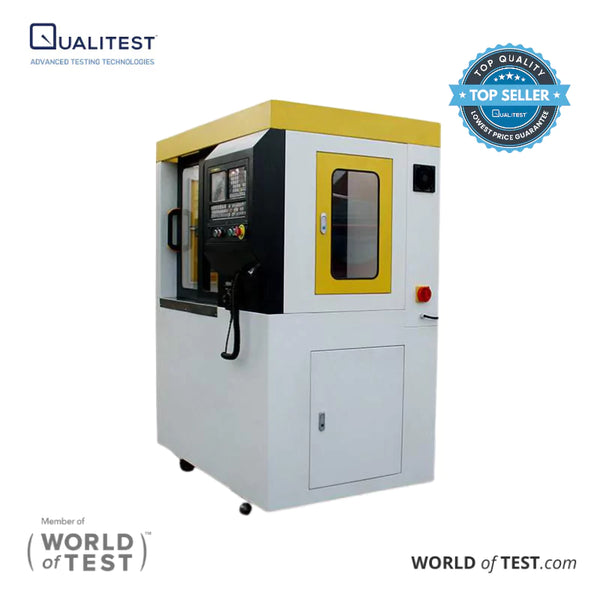
For most practical businesses, carving metals out of solid blocks is still the most sensible approach. You need serious motor strength for that, which is why a unit like our QualiMill™ 220 Mini CNC Milling Machine features a surprisingly strong 2.2 kW spindle motor and a dizzying 24,000 rpm spinning speed. It gives you stronger parts, a massive catalog of standard metals, and won't drain your bank account.
4. Software Integration and Operator Learning Curve
Printers are incredibly fast to prepare for one-off projects. Getting a standard plastic printer ready to go can take under 10 minutes and then requires very little human operator attention afterward.
Carving machines require more hands-on coding knowledge. Even though it takes more effort upfront, we think learning this coding language is a fantastic skill for any workshop.
This is precisely why US vocational schools and community colleges frequently utilize compact carving setups to satisfy NIMS (National Institute for Metalworking Skills) training criteria, ensuring students are ready for real-world manufacturing positions.
5. Operational Economics and Batch Scalability
Business buyers always need to watch the bottom line. Carving setups are generally the better business choice for large production runs and simple geometries.
Once the initial preparation is finished, carving machines churn out identical pieces at an astonishing pace. One laboratory comparison found that creating 1,000 carved parts took about 400 machine hours, whereas printing that exact same batch took an agonizing 8,000 hours.
If you are staring down the financial spreadsheets, the ultimate deciding factor is the cost-crossover point. Think of this as the exact moment where your manufacturing math completely flips. Because layering methods require almost zero initial tooling, they are remarkably cheap for printing one or two custom pieces.
But once your order size creeps up past fifty or a hundred identical items, the slow operating speed and highly expensive printing materials completely ruin your profit margins.
That is precisely where the carving method swoops in. While a subtractive machine takes slightly more time to configure up front, the cost-per-piece plummets dramatically once you hit those higher batch numbers, making it the undisputed financial winner for any serious, mid-to-high volume production run.
6. The Best of Both Worlds: The Hybrid Route
Sometimes, you need the insane flexibility of layering and the satisfyingly spot-on finish of carving. Hybrid manufacturing is often the most attractive business strategy when a part needs additive flexibility plus subtractive finishing quality.
Hybrid systems use printing to create a rough, near-net-shape production model, and then use carving tools to achieve the final exacting accuracy and beautiful surface finish. This combined workflow can be wonderfully beneficial for the environment.
One study looking at steel parts found that a combined approach resulted in roughly 70% lower steel usage and 49% lower environmental impacts compared to carving alone. The catch? The upfront equipment investment is extremely steep, pushing the unit cost about 3.5 times higher.
7. Standardized Specimen Preparation for Testing Labs
If you run a quality control or materials testing facility, this point is huge. When you need to check the toughness of a batch of steel or plastic, you must pull or smash a standardized test specimen.
In our view, this is where the subtractive method is absolutely essential. A printer cannot produce a test specimen from an existing batch of raw material you need to analyze. You need a carving machine to shave down those exact dog-bone shapes from your raw sheets so you can run your physical tests under strict industrial rules.
For instance, testing facilities across the United States regularly prepare specimens to satisfy highly specific domestic guidelines like ASTM E8 for pulling metals apart or ASTM D638 for stretching plastic materials. Trying to use a 3D printer for these certified testing bars is simply out of the question (and certainly won't pass a strict third-party audit).
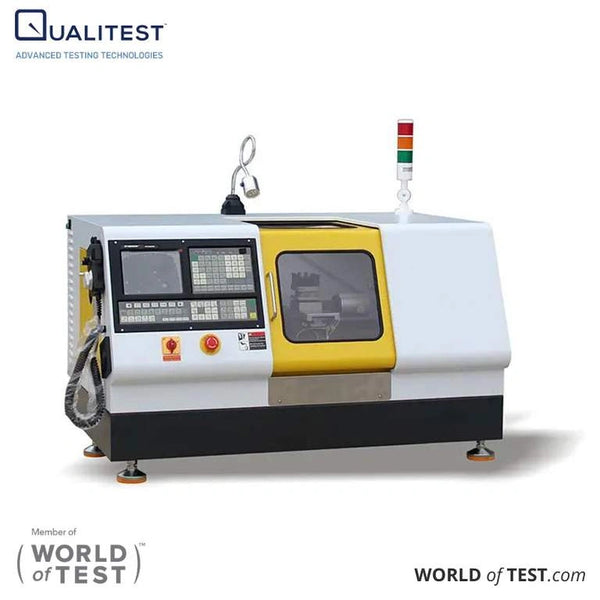
If you need standard round pull-test samples, specialized equipment is mandatory. For instance, our QualiLathe™ 210 Mini CNC Lathe is specifically designed for round tensile specimen prep, featuring a roomy 210 mm swing over the bed and up to 300 mm of length travel. Seriously, what kind of quality engineer could resist a perfectly pristine pile of freshly machined testing bars? (We will politely excuse the casual plastic prototyping hobbyists).
Investment Decision: Aligning Technology with Production Goals
Ultimately, deciding on the correct equipment setup depends entirely on the physical items your team manufactures on a daily basis. While there is no perfect universal answer, we recommend keeping a few highly practical guidelines in mind to make an intelligent financial decision:
- Prioritize the carving method if your daily revenue depends on highly repeatable production runs, highly accurate surface finishes, and fast batch throughput. Every inch of a carved part is satisfyingly smooth. If you need to produce standardized physical testing specimens out of solid, heavy-duty metals or dense plastics, a subtractive machine is the clear-cut winner.
- Stick to the layering method if your team relies heavily on custom, highly intricate, low-volume prototypes. When you need to build hollow, intricate shapes just to see if an early-stage design fits together under physical inspection, a printer is an incredibly handy tool to keep on a laboratory workbench.
- Look into a combined hybrid model if the final item requires both highly intricate internal geometries and satisfyingly exact outer dimensions. The scientific evidence increasingly favors using both methods together to achieve exceptional manufacturing outcomes.
We often see the most wonderfully productive testing facilities running both setups side-by-side. By keeping a printer for quickly evaluating early-stage designs and a carving machine for serious, certified material analysis, your team gets the absolute best of both workflows without compromising a single inch of physical quality.
Achieve Lab Testing Accuracy with Qualitest CNC
At Qualitest, we know that keeping your operating costs low and your measurements spot-on is what keeps your business running smoothly. If you've decided that carving is the right path for your test samples, we have exactly what you need.
We offer a dependable, money-saving line of computer-controlled milling and turning machinery. Our budget-friendly systems deliver superb accuracy without taking up your entire workshop floor.
You can use our systems to shave down closely measured specimens, or to set up engineering training classrooms. Drop us a line or ask for a quote today, and we’ll help you find the perfect setup to get your testing standards exactly where they need to be.
References (Click to expand)
- Alghauli, M., Almutairi, S., Aljohani, R., Aljohani, W., & Alqutaibi, A. (2025). Advanced subtractive manufacturing, micromilling, and laser micromachinery in dentistry: Current applications, limitations, and future perspectives. Biomaterials Connect.
- Çelebi, A., Tosun, H., & Önçağ, A. Ç. (2021). COMPARISON OF OPTIMIZATION METHODS FOR ADDITIVE MANUFACTURING AND MACHINING METHODS. International Journal of 3D Printing Technologies and Digital Industry.
- He, T., Yip, W. S., Yan, E. H., Tang, J., Rehan, M., Teng, L., Wong, C.-H., Sun, L., Zhang, B., Guo, F., Zhang, S., & To, S. (2024). 3D printing for ultra-precision machining: current status, opportunities, and future perspectives. Frontiers of Mechanical Engineering, 19.
- Ikonomov, P. (2025). Hybrid 3D Metal Printing Process Optimization using ML and AI. Athens Journal of Τechnology & Engineering.
- Lu, S. (2021). Research on integrated manufacturing technology of CNC machine tool and 3D printing. E3S Web of Conferences.
- Mecheter, A., Tarlochan, F., & Kucukvar, M. (2023). A Review of Conventional versus Additive Manufacturing for Metals: Life-Cycle Environmental and Economic Analysis. Sustainability.
- Radharamanan, R. (2024). Development of Laboratory Learning Modules on CAD/CAM and Rapid Prototyping. 2019 ASEE Zone I Conference & Workshop Proceedings.
- Sebbe, N., Fernandes, F., Sousa, V., & Silva, F. J. G. (2022). Hybrid Manufacturing Processes Used in the Production of Complex Parts: A Comprehensive Review. Metals.
- Segovia-Guerrero, L., Baladés, N., Gallardo-Galán, J. J., Gil-Mena, A. J., & Sales, D. L. (2025). Additive vs. Subtractive Manufacturing: A Comparative Life Cycle and Cost Analyses of Steel Mill Spare Parts. Journal of Manufacturing and Materials Processing.
- Tarlochan, F., & Alsendibad, S. (2024). Towards Smart Additive Manufacturing: Cost and Component Complexity. Key Engineering Materials, 975, 133 - 138.