Relying on a single pass/fail impact number puts your product's structural safety at risk. Choosing between instrumented vs non instrumented impact testing is a high-stakes decision.
Do you need fast testing throughput, or the split-second fracture data that prevents field failures? Read on as we break down the latest research, real-world industrial scenarios, and how to choose.
Key Takeaways
- Standard mechanical tests offer raw speed and absolute simplicity. Non instrumented testing equipment provides a single total energy number, making these machines exceptionally practical for routine factory floor compliance.
- Highly sensitive testing components reveal the full fracture story. Instrumented systems capture beautifully detailed force displacement curves, isolating the exact split second your plastic bends, cracks, and completely shatters.
- Your specific operational goals dictate your equipment choices. High volume plumbing operations succeed with straightforward checks, while demanding automotive designers absolutely require the precise diagnostic data that only instrumented machines provide.
The True Value of Non-Instrumented Impact Testing
This is the classic, foundational way of swinging a heavy weight at a material sample.
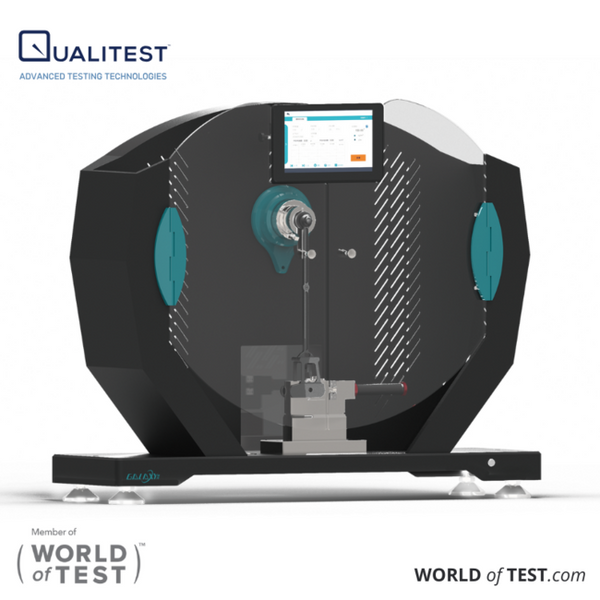
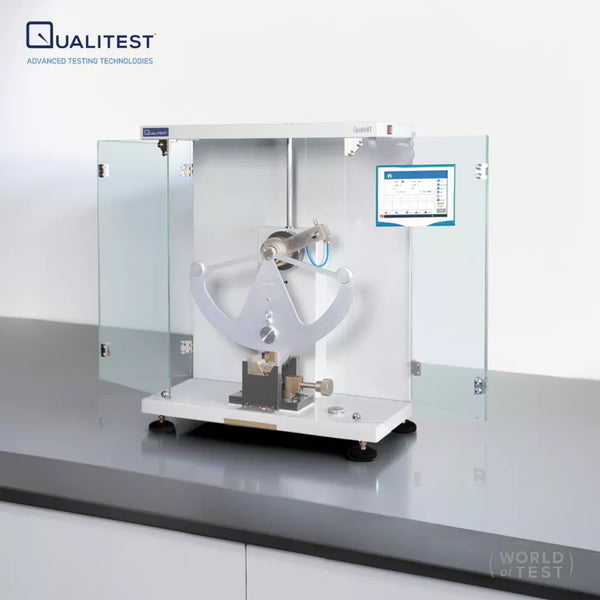
In a typical setup, often using straightforward, highly dependable equipment like our Izod & Charpy Impact Testers for Plastics - QPI-D, a heavy pendulum swings down and strikes a plastic bar (notched or unnotched, depending on your test criteria). The machine works out the total energy that the plastic absorbed during the break, analyzing how high the pendulum was before it fell compared to how high it swung up after the split-second fracture.
In our book, even though some software-focused purists call this method basic, it remains the absolute workhorse of the busy factory floor (and honestly, it is satisfyingly simple!).
Key Operational Benefits of Non-Instrumented Testing:
- High Throughput & Low Training Requirements: The whole routine is incredibly straightforward. It's a perfect fit when you need to churn through hundreds of tests on a highly demanding factory floor.
- Regulatory Compliance: It is a super easy way to double-check that your plastic complies with international standards, specifically ASTM D256, ASTM D6110, ISO 179, and ISO 180. To ensure total accuracy, quality control labs usually pair their testers with our Notch & Depth Measuring Device - QualiNDM™.
- Straightforward Pass/Fail Metrics: You get an instant, super clear number telling you the total energy it took to break the piece. Recent research actually confirms that these basic setups are the absolute best choice when your business just needs simple pass/fail answers and standard compliance without high-tech operational overhead.
Why Choose Instrumented Impact Testing?
This style of testing takes the classic swinging hammer and equips the setup with highly sensitive sensors, usually a piezo load cell or strain gauges, mounted right onto the metal tooth that strikes the sample. While the pendulum fractures the plastic, high-speed computer software (like the advanced setups available on our Universal Impact Tester for Charpy & Izod - QualiHIT) captures a highly detailed stream of force measurements during the tiny split-second of the shatter.
Instead of giving you just one single total energy number, you get a full, beautifully detailed force-displacement curve. Academic studies back this up, showing that instrumented setups pull out full force-time, displacement, and energy-partition information, which paints a much richer picture than a single visual failure mark.
Crucial Advantages of Instrumented Systems:
- Comprehensive Fracture Analysis: It separates the structural failure into distinct phases. Your engineers can watch the exact moment the plastic stretches, starts to split, and then how that split runs wild, which the experts call crack propagation.
- Better Metrological Traceability: Scientists also point out that tracking the instrumented absorbed energy instead of trusting a basic mechanical dial actually improves your alignment with official SI units and shrinks the chances of your lab getting a different result than another facility.
- The Full Story on Material Toughness: Gives you a complete, step-by-step map of how tough your material is when subjected to rapid load, perfect for making next-generation products.
Direct Comparison: Instrumented vs Non Instrumented Impact Testing
When we look at instrumented vs non instrumented impact testing, we notice that the choice almost always comes down to how much granular data your lab actually needs versus your specific budget allocations.
The basic tests hand you one solitary number, while the advanced option dissects that energy piece by piece. Because of those high-tech sensors and custom software, instrumented testers require a more substantial capital commitment upfront.
But the research also hands out a strong warning. Because of those highly sensitive components, instrumented testers require careful calibration, signal filtering, and strict control of dynamic vibrations to avoid distorting your critical results.
On the flip side, studies show that linking your instrumented gear to computer software can completely automate testing and analysis, heavily reducing the chances of operator error when you are churning through massive production runs.
| Evaluation Criteria | Non-Instrumented Tester | Instrumented Analyzer |
|---|---|---|
| The Final Output | One single number for the whole break | A gorgeous, highly detailed force-time and force-displacement curve |
| Primary Application | Quick factory floor checks & compliance testing | Advanced R&D & figuring out why materials failed |
| The Details Captured | Just the final, broken sample | The exact moment it bent, cracked, and tore apart |
| System Complexity | Super simple (bare-bones screen or manual dial) | High-tech (needs sensors, strict calibration, and a computer setup) |
| Financial Commitment | Extremely friendly on the budget | A more substantial capital investment upfront |
| Throughput Capacity | Lightning fast (great for knocking out huge batches) | Takes a minute (requires reviewing data graphs) |
| Our Top Machine Picks | Izod & Charpy Impact Testers for Plastics - QPI-D, Charpy Impact Tester for Plastic - Quali5J & 50J | Pendulum Impact Tester for Plastics - QualiGIT™ Galaxy, Universal Impact Tester for Charpy & Izod - QualiHIT |
Industrial Scenarios in North American Manufacturing
When looking at different commercial businesses, it becomes pretty clear that both styles have their own distinct, highly specific corners in the industrial manufacturing scene:
The High-Throughput Quality Check (Non-Instrumented)
Picture a pipe operation pushing out standard plumbing supplies meant for brutal North Dakota winters or freezing Canadian trucking routes.
They rely on the basic impact check, often using a dedicated unit like the Izod Impact Testing Machine - Quali5.5J & 22J, to guarantee those pipes won't shatter like thin ice in the back of a freezing transport truck. It's fast, it works, and it doesn't slow down the conveyor belts.
The Safety-Critical Analysis (Instrumented)
Now think about the huge automotive designers up in Detroit engineering a brand-new composite bumper for highway crash simulations. They absolutely must know the exact millisecond the plastic starts to crumple during a crash to verify occupant safety.
They use instrumented gear to study the whole energy curve before and after the plastic begins to split. Researchers looking into safety-critical parts and composite laminates agree that capturing this full force history is entirely necessary to map out the stages of damage.
Related article: Charpy vs Izod Impact Test: Choose the Right Method
When Is It Time to Transition to Instrumented Systems?
A lot of manufacturing shops start with basic gear but eventually hit a technical ceiling. In our opinion, the biggest spark that makes operations upgrade isn't some boring change in regulations, but the sheer, hair-pulling frustration of having products fail in the field when your basic laboratory tests said they were perfectly fine.
Here are the glaring signs we watch out for:
- Mystery Breaks: If your plastic passes the standard swing-test with flying colors but keeps snapping in your customers' hands, we reckon you absolutely need the deep, microscopic look of an instrumented setup to find the sneaky weak spots.
- Developing Novel Material Blends: If your facility is moving away from just checking old recipes and starting to formulate new, ultra-lightweight plastic blends, we find that a basic pass/fail number just won't cut it anymore. Your team will require the precise diagnostic capabilities of a machine like the Pendulum Impact Tester for Plastics - QualiGIT™ Galaxy.
- Super Picky Clients: If your shop plans to grab contracts with the massive aerospace hubs out in Seattle, or you want to supply parts to demanding Tier 1 auto manufacturers spread across Mexico and the US, those corporate buyers will absolutely demand to look at the exact force-time graphs before they sign off on a contract.
Upgrade Your Impact Testing with Qualitest Gear
Balancing advanced data collection with a tight budget is a total tightrope walk. Fortunately, we have your back. As a top-tier North American supplier, we are fully committed to helping you find highly reliable, cost-effective products, no matter where you land in the instrumented vs non instrumented impact testing debate.
Ready to stop guessing and gain absolute clarity on your material performance? Explore our comprehensive lineup of Charpy & Izod Pendulum Impact Testers for Plastics right now, and let our team help you configure the perfect setup for your shop.
References (Click to expand)
- Banhart, D., Monir, S., Durieux, O., Day, R. J., Jones, M., Luhyna, N., & Vagapov, Y. (2024). A review of experimental and numerical methodologies for impact testing of composite materials. Sensing Technology.
- Bezerédi, Á., Voros, G., & Pukánszky, B. (1997). Mechanical damping in instrumented impact testing. Journal of Materials Science, 32, 6601-6608.
- El-Ariss, B. (2011). Instrumented drop weight impact test set-up design and assessment. International Journal of Structural Engineering.
- Greybe, D., Jones, C. M., Brown, M. R., & Williams, E. (2020). Comparison of head impact measurements via an instrumented mouthguard and an anthropometric testing device. Sports Engineering, 23, 1-11.
- Hecht, M., Blümle, A., Binder, H., Schumacher, M., & Binder, N. (2025). Investigator-initiated versus industry-sponsored trials – visibility and relevance of randomized controlled trials in clinical practice guidelines (IMPACT). BMC Medical Research Methodology, 25.
- Jin, J., Moreno, M. G., Rivière, J., & Shokouhi, P. (2017). Impact-Based Nonlinear Acoustic Testing for Characterizing Distributed Damage in Concrete. Journal of Nondestructive Evaluation, 36, 1-16.
- Kakarala, S., & Roche, J. (1986). Experimental Comparison of Several Impact Test Methods.
- Li, G., Liu, D., & Schleh, D. (2016). An Innovative Instrumented Projectile for Measuring Impact-Induced Force History. Experimental Techniques, 40, 1335-1339.
- Liu, Y., Domel, A. G., Yousefsani, S. A., Kondic, J., Grant, G., Zeineh, M., & Camarillo, D. B. (2020). Validation and Comparison of Instrumented Mouthguards for Measuring Head Kinematics and Assessing Brain Deformation in Football Impacts. Annals of biomedical engineering, 48, 2580-2598.
- Ng, B., Quinete, N., & Gardinali, P. (2020). Assessing accuracy, precision and selectivity using quality controls for non-targeted analysis. The Science of the total environment, 713, 136568.
- Richardson, S., Tyler, J., Spears, R., & Richardson, M. (2020). Using Impact Testing for Production Quality Control.
- Sjoblom, P. O., Hartness, T. J., & Cordell, T. M. (1988). On Low-Velocity Impact Testing of Composite Materials. Journal of Composite Materials, 22, 30-52.
- Tharani, A. (2019). Measuring What Matters: Standardized Versus Customizable impact Measurement Tools. Business and the Sustainable Development Goals.
- Vasiliu, A. V., Tudurache, C., Cristea, G., Constandache, M., Azamfirei, V., Martin, M., Ojoc, G., & Deleanu, L. (2026). An Instrumented Drop-Test Analysis of the Impact Behavior of Commercial Laminated Flooring Brands. Buildings.
- Vlajic, N., Chijioke, A., & Lucon, E. (2020). Design Considerations to Improve Charpy Instrumented Strikers. Journal of Research of the National Institute of Standards and Technology, 125.
- Way, E. (2024). Impact ball testing in a laboratory setting. The Journal of the Acoustical Society of America.