Absolutely nothing destroys a clothing brand's hard-earned credibility faster than a beautiful piece of apparel leaving embarrassing stains on a customer's skin. If your factory is failing standard rubbing evaluations, you are actively losing highly lucrative production contracts.
In this guide, we break down exactly how dry and wet rubbing forces violently tear dye molecules apart. Compare dry crocking against wet crocking with our quick-reference guide below, and discover exactly how to protect your valuable inventory from bleeding out.
Key Takeaways
- Dry crocking strictly measures how much loose color physically grinds off a bone-dry material onto another completely dry surface. Materials almost always produce much higher survival ratings under these waterless conditions.
- Wet crocking is basically a total laboratory nightmare. Adding heavy moisture sneakily dissolves chemical dye bonds and aggressively increases physical scraping friction, leading to deeply embarrassing color bleeding.
- Passing highly strict global rubbing evaluations requires aggressively overhauling your factory floor chemistry and utilizing incredibly accurate laboratory testing machinery to catch terrible dye jobs early.
Quick Reference: Dry vs Wet Crocking
Before we thoroughly examine the testing machinery, here is a fast look at how these two very different friction conditions stack up against each other on the laboratory bench:
| Feature | Dry Crocking | Wet Crocking |
|---|---|---|
| Test Setup | Bone-dry, normal room air | Dampened testing square (soaked to about 65-100% moisture) |
| How It Happens | Pure physical rubbing and heavy surface scratching | Moisture melting the dye bonds combined with aggressive rubbing |
| How Bad It Gets | Not too terrible (usually gives you much higher survival scores) | Total disaster zone (usually results in messy, terribly low scores) |
| Where It Matters Most | Couches, car seats, everyday wear-and-tear clothes | Gym clothes, swimwear, heavy rain coats, outdoor gear |
| The Rulebooks | AATCC 8, ISO 105-X12 | AATCC 8, ISO 105-X12 |
What is Dry Crocking?
When we talk about dry crocking, we are looking precisely at how much dye violently jumps off a bone-dry fabric onto another completely dry surface just from a little bit of regular, highly repetitive physical rubbing. Research consistently shows that fabrics perform better under these dry conditions.
Take a highly realistic scenario: a heavily dyed, budget-friendly red velvet armchair completely destroying a party guest's expensive, light-colored khaki trousers simply because they shifted around during a long conversation. This is a massive issue for everyday cotton shirts, plush living room armchairs, and expensive car interiors where fabrics are constantly grinding against warm skin or light seating pads.
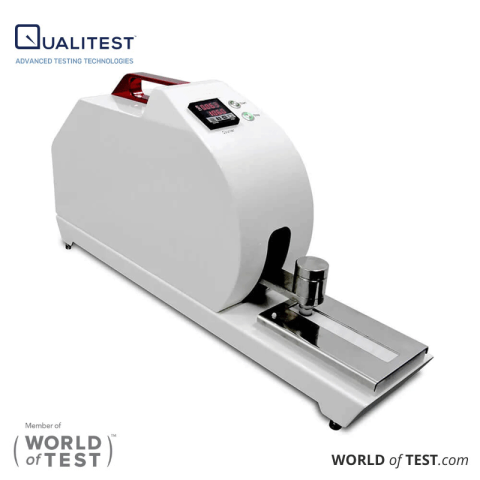
During a highly controlled evaluation run, a completely dry, purely white cotton patch gets securely clamped onto a rubbing peg inside a testing machine. If you are operating our highly portable Manual Crock Meter Color Fastness Tester, you physically crank a wonderfully smooth-turning handle while the machine applies a highly specific, strict 900g (9N) downward abrasion load.
A standardized Ø16mm rubbing head drags back and forth over a strictly measured 10cm stroke distance. Once the built-in LCD display counter confirms the cycles are completely done, we evaluate how much color stained that white cotton patch using a standardized Grayscale visual chart or digital color readings like ΔE. A top-tier rating means the color didn't budge at all, while a bottom-barrel score means a giant, deeply colorful mess.
The Wet Crocking Performance Explained
Water changes everything, and usually not in a good way. Wet crocking is all about seeing how much color goes running for the hills when heavy moisture gets dragged straight into the friction mix.
Think about a dedicated runner pushing hard through a sudden, mid-summer downpour in a heavy-duty, dark navy marathon shirt, only to cross the finish line with their skin completely stained an embarrassing, deeply saturated shade of blue. This is the ultimate survival test for athletic workout clothes, nylon swimsuits, and heavy rain jackets.
The actual physical test is basically identical to the dry version, but with one major, highly destructive twist: that little white cotton testing patch is heavily dampened with pure distilled water until it reaches a specific moisture regain, typically between 65% and 100%. Because water acts like a sneaky chemical escape vehicle that dissolves loose surface dyes and severely weakens fiber bonds, fabrics almost always perform worse when things get wet.
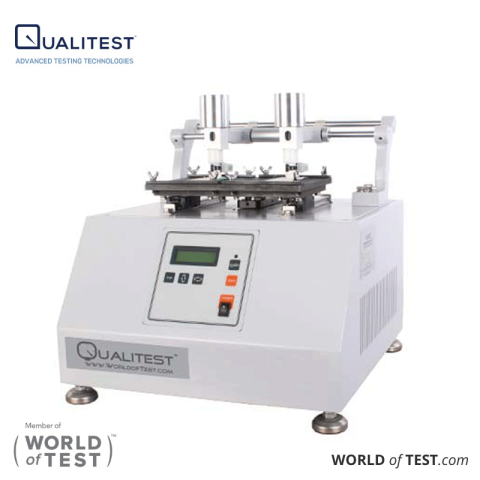
For these kinds of highly sensitive tests, we absolutely prefer automated gear. Using our Motorized Crock Meter, for example, completely wipes out messy manual operator mistakes by automatically knocking out the mandatory 10 rubbing cycles within a lightning-fast 10-second window at a highly steady 60rpm, ensuring that the 9N downward load stays flawlessly consistent while the damp patch does its worst.
Why Wet vs Dry Croking Performance Matters
We are going to state this very clearly: ignoring wet vs dry croking laboratory data is an insanely massive gamble that your company's bottom line simply cannot afford.
Consider a totally realistic, terrifying factory scenario where a massive retail chain faces a highly expensive, deeply embarrassing product recall because a huge batch of improperly finished dark-wash jeans violently ruined the pristine white leather interiors of their wealthy customers' luxury sports cars.
Catching these deeply embarrassing issues early in the production line is a total financial lifesaver. To get the absolutely most accurate reads without the damp fabric annoyingly bunching up under the rubbing head, we strongly recommend putting highly clever setups to work.
The specifically designed pinned acrylic holder on our premium Q-Crock100 firmly stops wet sample wrinkling under heavy pressure. By implementing incredibly strict, highly controlled testing routines, you can spot terrible dye jobs long before they ever reach the loading dock.
Related article: Electronic vs Manual Crock Meters: Testing Compared
Dry vs Wet Crocking: Spotting the Real Differences
When you pit dry vs wet crocking against each other in the testing facility, you are really looking at how a little bit of added water completely messes with long-term dye stability. Here are the core structural differences that keep dyeing experts up late at night:
Dye Meltdown
Plenty of coloring agents, especially the highly common direct and reactive chemical kinds used on woven cotton, are slightly water-soluble. In heavily moistened tests, water aggressively breaks down the invisible chemical lock between the dye molecule and the actual fiber strand. This mobilization of unfixed dye leads to a much heavier color transfer.
The Grip Factor
Damp fabrics possess a totally different, wildly stickier level of surface friction compared to completely dry ones. Moisture makes the microscopic fibers swell up significantly, which heavily increases the physical scraping action during the aggressive rubbing process.
Acceptable Bars
Because drenched conditions are inherently brutal on chemical dyes, the major industry standards feature totally different, slightly more forgiving passing lines. We firmly believe it makes perfect sense that a heavily dyed jacket absolutely needs a perfectly clean score for dry rubbing but gets a little bit of acceptable slack on the wet evaluation, depending entirely on what the final garment is actually built to do.
Dry vs Wet Crocking: Key Structural Differences
For global fabric makers and independent testing laboratories, following the strict institutional rules is strictly mandatory if you want to sell your materials to massive retail brands. The two most popular international standards loudly dictate the exact machinery type, the precise downward weight, and the highly specific ambient room conditions you must strictly follow:
AATCC 8
This is the big boss of testing methodologies in North America, fiercely regulated by the American Association of Textile Chemists and Colorists. It firmly demands a standard testing machine running exactly 10 full back-and-forth friction cycles at a highly controlled speed of one cycle per single second, pushing down with a constant, unwavering force of exactly 9 Newtons.
Related article: AATCC 8 Test Method vs ISO 105-X12 Comparison
ISO 105-X12
The massive global equivalent from the International Organization for Standardization acts very similarly to the American version, but it graciously allows for different physical sizes of rubbing fingers.
For instance, testing heavily fuzzy fabrics requires a perfectly flat rectangular peg, which conveniently happens to be an easily swappable, optional add-on for our highly adaptable Q-Crock100 electronic model.
Why Fabrics Fail Rubbing Tests
Figuring out exactly why a woven fabric totally failed a harsh rubbing test is the absolutely necessary first step to fixing the messy problem. Research shows that natural fibers often struggle more with wet conditions than synthetics, and a handful of highly tricky details in your factory's dyeing setup can completely ruin your final laboratory scores:
- Super Dark Shades: Moody, intensely deep colors require a truly massive amount of chemical dye. A notoriously tricky midnight black sulfur-dyed denim will violently dump loose color all over the testing pad, whereas a simple, lightly colored pastel cotton barely leaves a faint shadow. The more dye molecules floating around loosely on the outer fiber surface, the significantly higher the chance of unfixed dye violently wiping off.
- The Chemistry of the Dye: Different chemical dyes hold onto natural fibers in vastly different ways. Popular indigo and sulfur dyes are famously terrible at rubbing tests because they mostly just sit lazily on top of the fiber strand like loose, colored dust, and fixing finishes offer very little help.
- Fuzzy Textures: The massive friction generated by a thick, heavily ribbed winter corduroy jacket creates wildly more destructive surface drag than a perfectly smooth, flat-woven polyester shell. This intense scraping action acts exactly like physical sandpaper, easily grinding the highly expensive color right off the material. Even the yarn manufacturing technique can shift these rubbing scores.
- Bad Prep Work: If raw, unprocessed fabrics aren't completely chemically cleaned and heavily bleached before they hit the dyeing vats, natural sticky waxes and botanical oils stay firmly stuck to the individual fibers. This dirty, oily layer completely blocks the dye from soaking deep into the inner core.
Actionable Steps to Prevent Color Bleeding
If your daily laboratory tests are returning terribly embarrassing failing scores, we highly recommend trying these highly specific, technical fixes directly in your wet processing department. While finishes like superhydrophobic coatings can boost dry scores to an excellent rating of 5, they often fall short in wet conditions, meaning you have to look deeper into the chemistry:
1. Optimize the Soaping and Rinsing Process
The absolute biggest culprit hiding behind a terrible rubbing score is loose, unattached dye stubbornly clinging to the outer fiber surface. You absolutely need to run a much more aggressive soaping and intense rinsing cycle, actively using top-tier dispersing washing chemicals at extremely high temperatures.
2. Utilize High-Performance Fixing Agents
Think of these chemical liquids like heavy-duty hairspray for your expensive fabric's color. A highly capable factory floor can completely transform their frustrating output by shifting from a basic, lazy cold-water rinse to aggressively applying high-performance cationic fixing chemicals. That single, highly deliberate chemical swap can realistically pull a terrible, completely unacceptable Grade 2 staining score straight up to a highly respectable Grade 4.
3. Update Your Chemical Formulation
If a highly specific dark shade is giving your laboratory team constant daily grief, it is clearly time to aggressively rewrite the chemical recipe. Switch to highly advanced dyes that feature significantly better exhaustion rates and a much stronger natural chemical attraction to your specific fiber material.
Natural dyes offer varying results; for example, banana-dyed cottons show much better wet crocking performance than pomegranate.
4. Control Water Hardness and pH Levels
Hard facility water is completely full of disruptive natural minerals like heavy calcium that force the delicate dye molecules to clump together terribly. Use highly effective industrial water softeners and strictly manage your chemical pH levels.
Ensure Flawless Color Quality with Qualitest
At Qualitest, we absolutely know that getting highly accurate, totally repeatable testing numbers is the structural backbone of keeping your massive retail buyers completely happy. Passing incredibly tough rules like AATCC 8 and ISO 105-X12 shouldn't heavily drain your factory's bank account or painfully slow your production.
We focus entirely on delivering a highly reliable, incredibly cost-effective lineup of laboratory testers built to make your daily operations run flawlessly. Whether you need a simple hand-cranked setup or a fully automated, high-volume electronic system, you can stop deeply embarrassing color bleeding issues before they turn into highly expensive customer complaints.
Review our fully compliant Color Fastness Testers right here to find the absolutely perfect match for your specific laboratory operations.
References (Click to expand)
- Anam, W., Ashraf, M., Qadir, M., Akhtar, K. S., Ahmad, S., Afzal, A., & Ullah, T. (2019). Influence of Yarn Manufacturing Techniques on Dyeing Behavior of Polyester/Cotton Blended Woven Fabrics. Fibers and Polymers, 20, 2550 - 2555.
- Giannoulis, A., Karanikas, E., Eleftheriadis, I., Nikolaidis, N., & Tsatsaroni, E. (2016). Color Fastness to Crocking Improvement of Indigo and Sulphur Dyed Cellulosic Fibres. International Journal of Advanced Research in Chemical Science, 3, 44-52.
- Harmon, J. (2022). Seasonal Dyeing- Color Extraction From the Leaves and Catkins of Cottonwood Trees. Breaking Boundaries.
- Hinsch, E., & Robinson, S. (2016). Mechanical Color Reading of Wood-Staining Fungal Pigment Textile Dyes: An Alternative Method for Determining Colorfastness. THE Coatings, 6, 25.
- Kert, M., Krkoč, V., & Gorjanc, M. (2019). Influence of Optical Brightening Agent Concentration on Properties of Cotton Fabric Coated with Photochromic Microcapsules Using a Pad-Dry-Cure Process. Polymers, 11.
- Lei, Z. (2020). Study on Test of Color Fastness to Rubbing of Textiles. IOP Conference Series: Materials Science and Engineering, 793.
- Li, L. (2004). Measures for color fastness to wet crocking of cotton fabric dyed with reactive dyes.
- Liang, J., Zhou, J., Hu, X., Luo, H., Cao, G., Liu, L., & Xiao, K. (2023). Digital Grading the Color Fastness to Rubbing of Fabrics Based on Spectral Reconstruction and BP Neural Network. Journal of Imaging, 9.
- Marsi, N., Seng, T. K., Rupashinii, A., Singam, P., Rus, A. Z. M., Rashid, A., & Main, N. (2018). NATURAL PIGMENT BASED ON ORANGE FRUIT FOR SUPERHYDROPHOBIC DYEING IN COTTON KNITTED TEXTILE APPLICATION. International Journal of Engineering and Technology.
- Rong, C. (2004). Improvement of color fastness to wet crocking of reactive dyed fabrics in dark shade.
- T. K., & Sathyam, R. (2023). Analyses of Colourfastness by Natural Dye on Three Different Natural Fabrics. International Journal For Multidisciplinary Research.
- Wang, Y., Lee, C.-H., Tang, Y.-L., Yu, X., & Kan, C.-W. (2025). The Assessment of Chromatic Properties via Color-Difference Formulae in Aqueous-Based Dyeing and Non-Aqueous Reverse Micellar Dyeing of Woven Wool Fabrics Using α-Bromoacrylamide Based Lanasol Dyes. Journal of Natural Fibers, 22.
- Yang, Y., Choi, H.-W., & Park, M.-J. (2008). Colorfastness of Black-Colored Fabrics with Various Fibers.