Is your current gear letting material flaws slip through? Picking the right digital vs analog abrasion testers is a massive call for your profits.
We’ve cut the fluff to show how these machines actually behave in real lab settings. Check this breakdown to see which option fits your workload and your wallet.
At a Glance: Key Differences
| Feature | Analog Abrasion Testers | Digital Abrasion Testers |
|---|---|---|
| Capital Expenditure | Lower initial investment | Higher upfront cost |
| Data Documentation | Manual recording and logging | Automated export (LIMS/PC compatible) |
| Control Interface | Physical weights and mechanical gears | Integrated touchscreens and saved profiles |
| Operational Environment | Harsh, high-dust industrial settings | Controlled, clean-room QA laboratories |
| Maintenance Profile | Routine mechanical lubrication | Precision electronic sensor calibration |
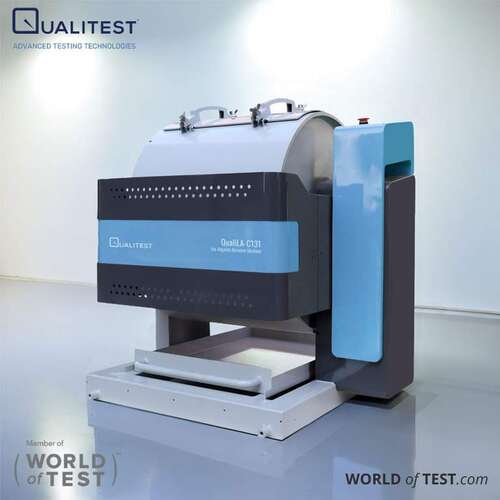
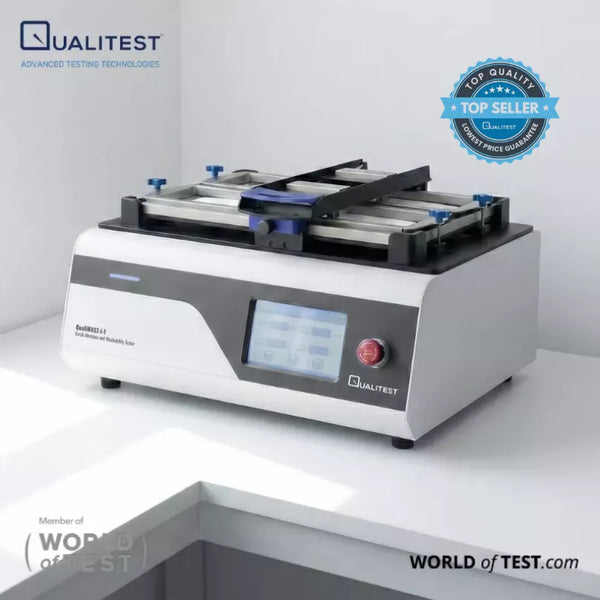
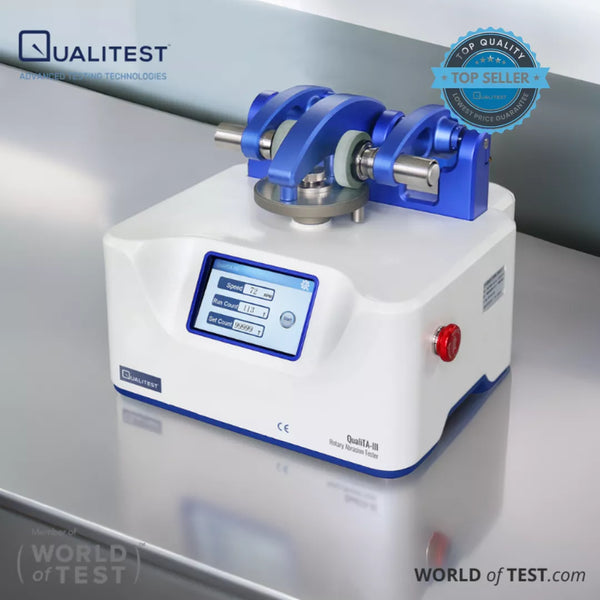
| Top Picks from Our Stack | The incredibly tough QualiLA™ C131 or QualiWAST-I | The super precise QT-TCART-8380 or QualiTA-III |
Evaluating Analog Abrasion Testers
For a really long time, these classic mechanical scuff-trackers have been the rock-solid foundation for testing spaces everywhere. These machines use clicking counters, manual dials, and heavy physical weights to rub your samples until they give up the ghost.
Research shows these mechanical rigs are fantastic for simple material ranking and taking end-point measurements, like overall mass loss, when you don't need continuous digital monitoring.
Key Benefits of Analog Systems:
- Resilient Mechanical Build: With fewer circuit boards to fry, these machines are built like literal tanks. They can hang out in sweaty factories where dust and shaking might make fancy electronics throw a fit.
- Uncomplicated Operational Use: You don’t need a degree to run these. You just spin the dial, drop the weight, and hit the big "go" button.
- Lower Upfront Procurement Cost: Usually, these classic models don't cost an arm and a leg, which is great for smaller shops or anyone watching their pennies.
Operational Considerations:
- Human Transcription Risk: Operators must read the dials themselves and scribble it down. We all know how easy it is for focus to slip and numbers to get mixed up.
- Manual Setup Constraints: If you want to change how the test runs, you’re stuck swapping out heavy gears and metal blocks by hand, which slows down your workflow.
Think about a heavy-duty lumber mill or a loud, dusty concrete plant checking aggregates with a rig like our QualiLA™ C131 Los Angeles Abrasion Machine. For those operations, a heavy mechanical machine hits the spot perfectly because it physically matches heavy industrial contacts and has no fragile screens for flying debris to smash.
Our Take: In our view, there is a certain "sheer perfection" in how bulletproof these old-school units are. We often find that in a messy shop, not having a sensitive screen to crack is a massive operational win.
The Case for Digital Abrasion Systems
As more labs automate their processes, discussions comparing digital vs analog abrasion testers usually lean toward the high-tech, mechatronic side.
These units ditch the clicking dials for bright touchscreens, sensors, and smart brains. Adding simple upgrades like microcontrollers and optical sensors massively boosts how reliably a machine repeats a test.
Key Benefits of Digital Systems:
- High-Level Testing Accuracy: These smart controls let you pick the exact speed and cycle count, so your results are satisfyingly spot on every single time. It makes meeting ISO 7784 feel like a breeze.
- Automated Data Capture: The machine logs everything from how many spins to the exact friction settings. You can just plug in a USB and you’re golden.
- Customizable Testing Parameters: You can save different setups for different materials, so switching from car parts to carpets is lightning fast.
Operational Considerations:
- Higher Initial Investment: All those fancy sensors and screens mean you’re going to be shelling out more cash upfront compared to mechanical alternatives.
- Specialized Technical Care: They are built to be tough, but if you bash a touchscreen or a sensor gets wonky, you might need a specialist to handle the repair or calibration.
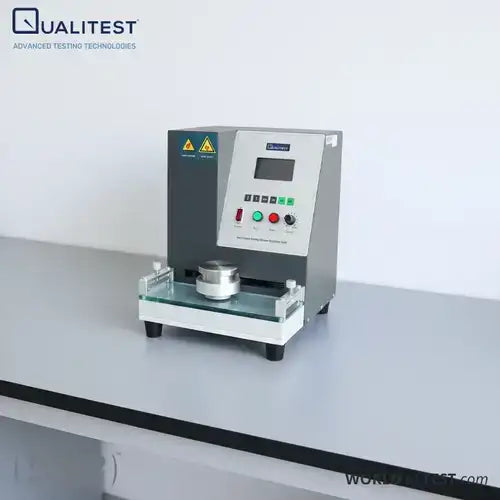
On the flip side, consider a high-tech electronics facility testing protective finishes on consumer screens. For them, having a specialized digital unit like our QT-TCART-8380 Touchscreen Coating Testing Equipment, which automatically tracks exact rubbing cycles and speed metrics via a microcomputer, is an absolute necessity to meet strict ASTM standards.
Furthermore, highly advanced digital rigs in other specialized fields can even track complex wear conditions, combining friction with things like continuous 3D topography or corrosion testing.
Our Take: From what we see in the QA space, we believe the digital path is the best way to go if you want to stay ahead of the pack. While the price is higher, the richer data and lack of paperwork headaches mean the machine essentially pays for itself through efficiency.
Strategic Selection Criteria
When you’re weighing up analog vs digital abrasion testers, it really comes down to the daily demands of your facility:
Testing Volume and Throughput
If your facility handles a massive pile of samples with different sets of rules every single day, we believe the memory inside a digital unit is a massive time-saver.
For instance, an apparel lab testing denim, silk, and polyester all in one afternoon will fly through their workload using the saved profiles on a digital rotary unit like our QualiTA-III.
On the other hand, if a shop only checks one specific floor coating every Friday, sticking with a classic model is a solid choice that won't break the bank.
Data Integrity and Standards
For those working in high-stakes fields, you need records that are absolutely perfect and impossible to mess with. Think about an aerospace contractor supplying parts for commercial jets; they need to prove their coatings survive specific friction thresholds without any gaps in the paperwork.
In those cases, we feel the auto-logging on a digital machine is 100% essential for staying compliant because it prevents an operator from accidentally writing down a "7" instead of a "1".
Procurement and Budget
If you just need a machine that won't give up the ghost and your current spending limit is on the tighter side, the manual models are a fantastic investment.
A local startup formulating new industrial paints might not have the budget for a touchscreen unit right out of the gate, so grabbing a reliable, cost-effective rig like our QualiWAST-I Scrub Abrasion and Washability Tester lets them get their testing running immediately.
They are built to last for decades, giving you a lot of bang for your buck without any unnecessary bells and whistles.
Long-Term Operational Value
We suggest looking past the initial price tag and thinking about the hours your team might waste on manual typing. A massive facility running tests all day long could easily spend hours a week just transcribing numbers.
A digital machine can actually end up being the more cost-effective choice when you factor in wiping out that manual labor and the fact that you'll have far fewer human mistakes to clean up.
Related article: Complete Abrasion Test Guide: Methods & Tester Choice
Selecting Qualitest for Better Quality
At the end of the day, the battle between digital vs analog abrasion testers is won by whatever keeps your lab moving. Analog gives you that raw toughness and a lower price, while digital brings the brainpower, precise data, and automation that modern fast-paced labs crave.
We focus on getting you the right tool without any extra fluff. We have a huge range of cost-effective machines that are ready to work and built to last.
View our full range of Abrasion Testers here. If you're stuck, our crew is always around to help you make the right call.
References (Click to expand)
- Agebo, S., Zieliński, D., & Deja, M. (2025). Comparison of different optical measurement methods in the evaluation of the wear of SLS-fabricated tool used for free abrasive machining. The International Journal of Advanced Manufacturing Technology, 138, 5165 - 5182.
- Chai, J., Zhou, Z., Ye, C., Yao, C., & Li, G. (2021). Design and development of a novel sliding friction and wear tester with complex working conditions. Scientific Reports, 11.
- Condon, J., & Ferracane, J. (1996). Evaluation of composite wear with a new multi-mode oral wear simulator. Dental materials, 12(4), 218-26.
- Hawk, J., Wilson, R., Tylczak, J., & Dogan, O. (1999). Laboratory abrasive wear tests : investigation of test methods and alloy correlation. Wear, 225, 1031-1042.
- Liang, F., Kong, X., & Zhou, Q. (1992). A wear tester capable of monitoring and evaluating the movement pattern of abrasive particles in three-body abrasion. Wear, 159, 115-120.
- Marín-Pareja, N., Rodríguez, C., Llano, E., & Restrepo, G. (2025). Mechatronic redesign of mechanical brushing apparatus to evaluate abrasive wear of road construction materials. MethodsX, 15.
- Pondicherry, K., Vancoillie, J., Pauw, J., Sukumaran, J., Fauconnier, D., & Baets, P. (2019). Design and development of a novel electrochemical abrasion-corrosion tester. Tribology International.
- Pourasiabi, H., & Gates, J. (2022). Ball mill abrasion test (BMAT): Method development and statistical evaluations. MethodsX, 9.
- Resendiz-Calderon, C., Farfán-Cabrera, L., & Cázares-Ramírez, I. (2021). A novel tester to examine micro-abrasion of materials in oscillating sliding contact. Wear.
- Slater, K. (1987). The Progressive Deterioration of Textile Materials. Part II: A Comparison of Abrasion Testers. Journal of The Textile Institute, 78, 13-25.
- Stoll, R. (1949). An Improved Multipurpose Abrasion Tester and Its Application for the Evaluation of the Wear Resistance of Textiles. Textile Research Journal, 19, 394 - 415.
- Tylczak, J., Hawk, J., & Wilson, R. (1999). A comparison of laboratory abrasion and field wear results. Wear, 225, 1059-1069.
- Wiche, S., Keys, S., & Roberts, A. (2004). Abrasion wear tester for bulk solids handling applications. Wear, 258, 251-257.