How do you keep that jaw-dropping, incredibly vivid color on your newly manufactured fabric from rubbing off and ruining a buyer's day?
While head-turning hues get corporate buyers to pull out their wallets, protecting that perfect colorfastness is what actually keeps them coming back. Luckily, keeping your brilliant shades exactly where they belong is completely doable when you have the right testing protocols locked down.
In this guide, we break down the two main global rulebooks for tracking down dye transfer, AATCC 8 and ISO 105-X12, so you can easily safeguard your hard-earned brand reputation.
At-a-Glance Comparison
Need the fast facts? Here is a highly convenient, at-a-glance breakdown if you are completely strapped for time:
| Testing Detail | North American Way (AATCC 8) | International Way (ISO 105-X12) |
|---|---|---|
| Where It Matters | United States and Canada | Global overseas shipments |
| Rubbing Peg Shape | 16mm round cylinder | 16mm round (switches to flat rectangular for fuzzy fabrics) |
| Wet Test Dampness | 65% moisture (distinctly damp) | 100% moisture (completely soaked) |
What is Fabric Dye Rub-Off?
To put it in highly accessible, plain English, crocking is just what happens when poorly bonded dye physically rubs off a vividly printed or richly colored fabric onto another entirely separate surface. This sneaky, highly frustrating transfer can easily happen when the fabric is completely bone dry, but it gets ten times worse when there is any noticeable moisture involved.
Think about a freshly bought pair of deeply dyed, incredibly dark indigo jeans aggressively leaving a massive, highly unappealing bluish smudge all over a pristine, pure white leather car seat or a brand-new pair of highly expensive white canvas sneakers.
Checking to see if a newly dyed fabric can adequately stand up to this kind of heavy friction is a make-or-break step in the entire manufacturing process. It is exactly how you guarantee your finished goods meet the strict standard for being safe, highly reliable, and actually satisfying to buy.
Why Colorfastness Testing Matters
We see it happening all the time. Plenty of high-volume production plants treat quality checks like a highly annoying chore that drastically slows down their daily shipping schedules. But we think that is a massive operational mistake! In our book, strictly enforced quality checks are the ultimate protective shield keeping your corporate bank account safe from disaster.
Skipping out on properly executed testing is basically begging for an operational nightmare. We are talking about:
- Massive waves of highly angry customers loudly demanding refunds.
- Your brand's hard-earned reputation getting heavily damaged by public complaints.
- Entire high-value bulk orders being flat-out rejected by highly demanding corporate retail buyers because of simple colorfastness failures.
Consider a highly expensive scenario where an international commercial upholstery supplier gets an entire shipping container full of incredibly expensive, deep red sofa material instantly thrown back in their face by a major furniture retailer, entirely because it completely bombed a quick, highly basic colorfastness spot-check.
The North American Standard: AATCC 8
If you are successfully selling to anyone located in North America, the aatcc 8 colorfastness to crocking standard is the absolute gold standard for accurate dye testing.
This classic, heavily relied-upon rulebook stands as one of the main international families of colorfastness standards alongside GB/T and ISO. It is applied constantly in extensive dyeing studies, checking dry and wet color transfer on everything from natural and synthetic dyes on cotton and terry cloth to heavy wool and polyester blends.
Now, the actual aatcc 8 test method is surprisingly simple to follow, but you absolutely have to do it just right.
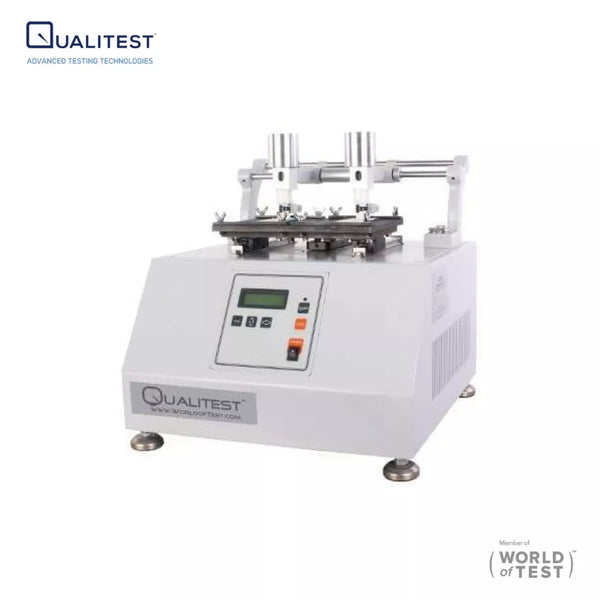
- Step 1: Securely fasten your richly colored fabric sample onto a specialized testing machine. For instance, our highly advanced Crock Meter and Crocking Test Machine - Q-Crock100 uses a specifically engineered pinned acrylic holder just for this step, ensuring the delicate sample absolutely refuses to slip or awkwardly stretch out of place.
- Step 2: Take a little piece of perfectly white, completely un-dyed plain cotton cloth (we call it a testing square) and firmly attach it to the machine’s downward-pressing rubbing "finger."
- Step 3: The machine then aggressively rubs that pure white square back and forth against your highly colored sample repeatedly, while constantly applying an exact, heavily regulated amount of downward force. Delivering a constant 9N precision vertical pressure is an absolute must-have mechanical feature for meeting this specific standard correctly, which is exactly why we built it directly into the Q-Crock100.
Passing this AATCCC 8 colorfastness to crocking test method is the ultimate golden ticket if you desperately want to sell to highly lucrative, big-name clothing brands or heavily regulated automotive giants who expect absolutely flawless fabrics every single time.
Evaluating Color Transfer: Visual vs. Instrumental
Historically, heavily exhausted lab technicians just stared at the violently rubbed cloth under the highly controlled fancy bulbs of a Color Assessment Cabinet (or what normal folks simply call a Light Box) and manually graded the visible staining with a printed paper chart called a standard Grayscale.
Honestly? We firmly think relying solely on easily tired human eyeballs is a bit of a massive operational gamble. Our highly sensitive eyes get tired, the room's ambient lighting subtly changes, and different people see faint colors entirely differently.
That is exactly why we strongly recommend getting a highly accurate, digital color-reading tool like a Spectrophotometer. Extensive academic research totally backs up this specific opinion. New digital approaches using high-tech spectral reconstruction and advanced neural networks are actively being developed to completely replace highly subjective visual grading.
In our professional view, a high-tech digital reading device is the absolute best way to completely eliminate subjective human bias and get spot-on, perfectly consistent numerical data every single time you test.
The International Standard: ISO 105-X12
If your heavily packed shipping containers are headed overseas, the strictly American rules will absolutely not cut it. For heavily regulated global markets, you are legally obligated to follow the iso 105-x12 color fastness to rubbing standard.
This specific standard is universally trusted and is heavily cited across rigorous academic studies testing highly printed cotton, jute-cotton blends, and intense screen-printed transfers.
Now, at first casual glance, the two testing procedures look like identical twins. Both clearly use a highly reliable rubbing machine to heavily simulate intense daily wear and tear. But when you look significantly closer, the actual iso 105 x12 method has its own highly specific little rules.
We are going to call it right now: the highly detailed ISO standard is incredibly thorough because it actually pays extremely close attention to tiny, easily missed structural differences in the woven fabric. It dictates:
- Distinctly different ways of chemically prepping the fabric beforehand.
- Entirely different levels of required dampness for the wet cloth procedure.
- Completely different-shaped rubbing fingers depending heavily on the specific kind of textured fabric you are testing.
If you are regularly shipping finished goods across the globe, we think it is a highly brilliant move to regularly run both specific tests in your lab. Plus, labs frequently pair these exact ISO rubbing results with other massive performance tests, like ISO 105-C06 for heavy washing and ISO 105-B02 for intense light exposure, to build a perfectly complete picture of material durability.
Technical Differences: AATCC 8 vs. ISO 105-X12
Let us put these two heavily used testing rules side-by-side because, trust us, the devil is absolutely hiding in the tiny, easily ignored details! In fact, multiple academic papers clearly note that these highly specific procedural differences mean the two standards can actually give entirely different grades on the exact same piece of fabric, proving that direct equivalence is completely non-existent.
The Exact Shape of the Rubbing Peg
AATCC 8 highly favors a perfectly round, cylindrical peg. ISO uses that round peg too, but if you are currently testing highly fuzzy, deeply high-pile fabrics, they strictly force you to switch to a completely flat, rectangular peg.
This highly specific geometrical change is absolutely necessary for heavily textured, incredibly plush materials like ultra-soft velvet, thick winter fleece jackets, or extremely deep-pile commercial carpeting, where a tiny round peg would just awkwardly dig in instead of smoothly rubbing the top layer.
Exactly How Wet is "Wet"?
For the damp testing procedure, AATCC firmly wants your pure white cloth mildly damp, specifically mandating a 65% total wetness level. But ISO goes totally all out and aggressively demands a whopping 100% total wetness level.
This massively extreme dampness requirement actually makes complete sense for intensely used finished goods like brightly colored athletic workout gear or heavily dyed, highly absorbent beach towels that are absolutely going to get completely drenched in totally normal, everyday situations.
We have seen so many highly stressed lab managers completely pull their hair out over this. Getting that exact, highly specific dampness level totally right is easily the trickiest part when frequently switching between these two highly detailed rules!
Related article: Dry vs Wet Crocking: Fix Your Fabric Quality
Equipment Selection: Manual vs. Motorized Crockmeters
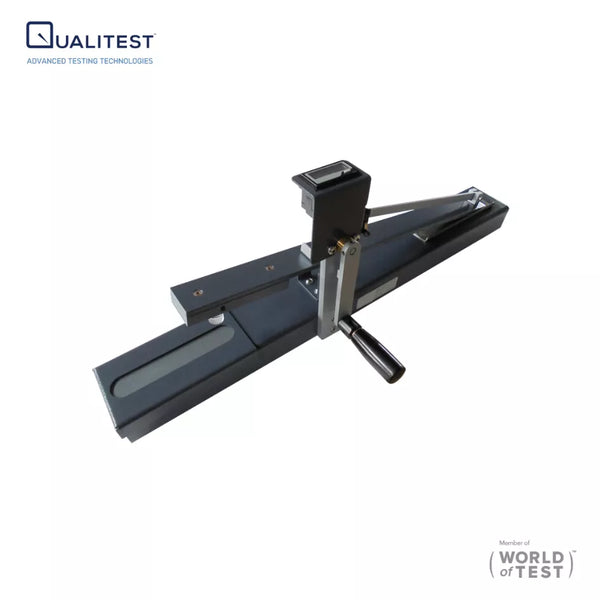
When outfitting your quality control laboratory, deciding between a manual and motorized setup is simply a matter of volume. For smaller facilities running occasional diagnostics, a classic hand-cranked setup like our Manual Crock Meter Color Fastness Tester is a highly cost-effective and virtually indestructible solution.
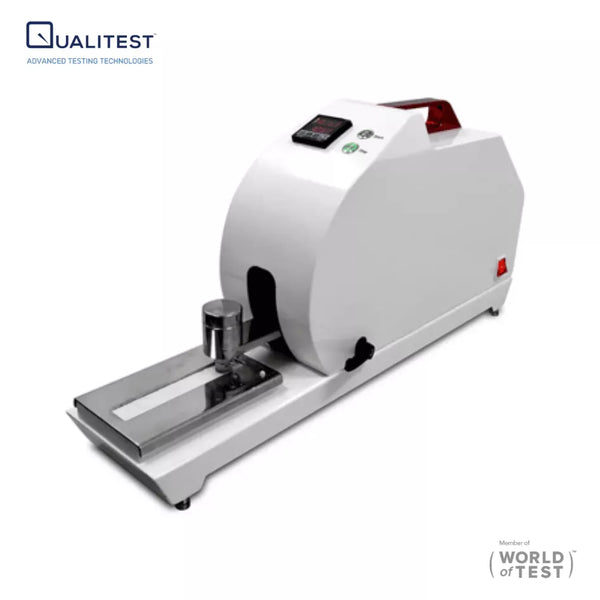
However, busier high-volume testing labs will want to skip the repetitive physical labor entirely and scale up to our automated Motorized Crock Meter: Color Fastness Tester or the Crock Meter and Crocking Test Machine - Q-Crock100 (complete with a 999,999 stroke digital auto-stop counter and quick easy-lift system) to ensure perfectly uniform, repeatable strokes.
Read more: Electronic vs Manual Crock Meters: Testing Compared
Get Accurate Colorfastness Results with Qualitest
Here at Qualitest, we strongly believe that keeping your fabric quality at absolute peak perfection should not require draining your corporate bank account. We are committed to supplying cost-effective, highly reliable testing gear that works flawlessly day in and day out without mechanical headaches.
If you are ready to ensure your lab is fully prepared to handle these rubbing standards, we have a fantastic lineup of budget-friendly manual and automated machines that fit both AATCC and ISO specs to a T.
Check out our entire collection of highly accurate, cost-effective Crock Meter / Rubbing Fastness Testers right now and let’s get your lab completely sorted out!
References (Click to expand)
- Z., Nizam, M. E. H., Mamun, M. A., Yousuf, M., Ali, R., Rahman, L., & Miah, M. R. (2017). Dyeing of S/J Cotton Knit Fabric with Natural Dye Extracts from Green Walnut Shells: Assessment of Mordanting Effect on Fastness Properties. 17-30.
- Anbarwati, S. F., Kusumastuti, A., & Marlangen, R. (2025). The Effect of Fixator Type on the Color Fastness of Cotton Fabric Dyeing with Mango Leaves Extract (Mangifera indica L.). TEKNOBUGA: Jurnal Teknologi Busana dan Boga.
- Ariyakuare, K., Klaichoi, C., Phaisarntantiwong, N., & Senatham, S. (2015). Colour Fastness Property of Printed Cotton Fabric Using Warp Yarn Printing Technique. Applied Mechanics and Materials, 804, 209 - 212.
- Babadoost, M. (2015). Inducing sporulation of Drechslera graminea.
- Badanov, K., Badanova, R. R., Tulendieva, G. O., Badanov, I. K., Kasymova, G., & Makhanbetalieva, K. T. (2023). A new method for instrumental assessment of color stability. The Journal of Almaty Technological University.
- Chen, M., Qiu, T., Sun, X., & Feng, C. (2013). Analysis on the Differences of Color Fastness Standard of Textiles at Home and Abroad. Advanced Materials Research, 796, 343 - 346.
- Harmon, J. (2022). Seasonal Dyeing- Color Extraction From the Leaves and Catkins of Cottonwood Trees. Breaking Boundaries.
- Hernandez, V. A., Galleguillos, F., Sagredo, N., & Machuca, Á. (2020). Color fastness of fabrics after dyeing with fungal dyes. International Journal of Clothing Science and Technology.
- Islam, M. R., Mahmud, R., Jalil, M., & Huda, M. (2024). Captivating coloring and antimicrobial properties of tea leaf and eucalyptus bark on jute–cotton union fabric. Pigment & Resin Technology.
- Khan, A., Hussain, M. T., Jiang, H., & Gul, S. (2018). Development of functional wool fabric by treatment with aqueous and alkaline extracts of Cinnamomum camphora plant leaves. Journal of Natural Fibers, 17, 472 - 481.
- Lei, Z. (2020). Study on Test of Color Fastness to Rubbing of Textiles. IOP Conference Series: Materials Science and Engineering, 793.
- Liang, J., Zhou, J., Hu, X., Luo, H., Cao, G., Liu, L., & Xiao, K. (2023). Digital Grading the Color Fastness to Rubbing of Fabrics Based on Spectral Reconstruction and BP Neural Network. Journal of Imaging, 9.
- Lilić, A., Kašikovič, N., Miketić, N., & Jurič, I. (2018). RUBBING FASTNESS OF GREEN INK PRINTED ON TEXTILE USING SCREEN PRINTING TRANSFER TECHNIQUE. Proceedings of 9th International Symposium on Graphic Engineering and Design.
- Lowe, B., Voss, B. D., Zitkus, M., Porter, S., Fields, T., & Yu, U.-J. (2020). A Case Study of Colorfastness of Waterless Dyed Fabrics Sustainable for the Environment. Pivoting for the Pandemic.
- Pan, K., Guan, J., & Wu, S. (2011). Comparison of GB/T and AATCC Color Fastness Standards. Advanced Materials Research, 175-176, 554 - 558.
- Singh, J., & Ram, S. (2020). Designing woven velour printed terry fabric for improved colour fastness. International Journal of Clothing Science and Technology, 32, 551-569.
- Suganuma, K. (2015). Improvement of the standard method for assessing colour fastness to wet rubbing. Coloration Technology, 131, 403-411.