Nailing your numbers when stretching materials is a total win. From airplane parts to stretchy plastics, grabbing perfect data makes your lab run like a dream.
Picking between a contact vs non contact extensometer is a smart move to sharpen your results, and we’re here to help you settle the non contact vs contact extensometer debate so you can grab the perfect fit for your work.
Key Takeaways
- Accuracy is basically a tie: Modern camera setups and old-school physical grabbers both hand over highly reliable, rules-following data.
- Physical tools are the tough workhorses: Classic contact extensometers are wallet-friendly and satisfyingly simple to use on hard metals. Just keep an eye out, because their metal teeth can easily crush wimpy materials.
- No-touch systems protect fragile stuff: By watching the stretch without ever laying a finger on the sample, video and laser tools are sheer perfection for soft rubbers, skinny wires, or testing inside a boiling-hot box.
- Your daily pile makes the decision: The smartest way to pick is by looking at what your crew pulls apart every single day and figuring out your long-term tolerance for sneaky repair bills.
Contact Extensometer Fundamentals
A contact extensometer is the old-school way to see how things stretch. Like the name says, it actually grabs onto the piece you're testing. The one you’ll see most often is the "clip-on" style. It uses sharp little metal teeth to get a firm grip right on the material.
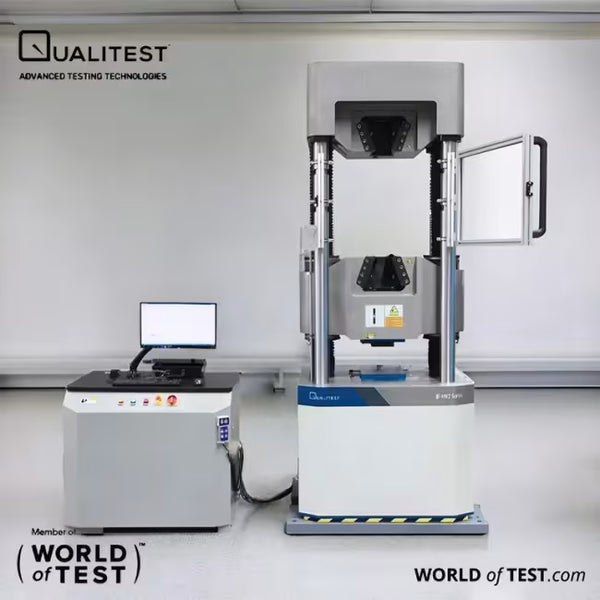
Think about testing a standard steel rod on a heavy lifter like our Servo Hydraulic Universal Testing Machine (QT-HW2 Series): you just clamp those metal jaws straight onto the metal, and you are ready to roll.
Related article: Electromechanical vs Hydraulic UTM: Choosing Your System
As the Big Testing Rig starts pulling and your material begins to grow or squish, the mechanical arms of the gadget move right along with it. That physical wiggle gets turned into a bunch of electrical blips, giving you solid, right-now info.
Key Advantages
- Solid Accuracy & Rules-Follower: These things have no trouble hitting those strict ASTM and ISO benchmarks for measuring a stretch.
- Easy on the Wallet: Usually, these physical grabbers don't cost nearly as much to buy as the fancy camera systems.
- No-Brainer Setup: They’re pretty easy to clip on, get centered, and start using without needing to spend a week learning new software.
- Our Take: We like to think of these as the "reliable workhorses" of the lab. From where we’re sitting, if you’re doing a pile of tests on hard stuff all day long, that physical link is satisfyingly spot on.
Operational Limitations
- Messing with the Sample: The physical weight and the squeeze of those metal teeth can leave a mark on wimpy samples like thin wrappers, foils, or soft bits. It can even make them snap right where you’re holding them.
- The Risk of Damage: If you don't unclip the thing before your material snaps, that sudden "pop" can send enough energy back to turn your extensometer into a pile of junk.
Non-Contact Extensometer Features
A non-contact extensometer uses high-tech eyeballs: usually sharp cameras or laser beams.
It watches the stretch without ever laying a finger on the sample. Modern video setups are so precise they can reach errors below tens of microstrain.
For a video version, you just put some high-contrast speckles or lines on your piece. The camera watches those spots move pixel-by-pixel as the material changes shape.
Picture testing a super-flimsy piece of plastic wrap: instead of squishing it with heavy metal clips, the camera just peacefully watches the dots drift apart.
Benefits of Optical Measurement
- Zero Poking or Prodding: Since nothing is touching, these are sheer perfection for really flimsy, skinny, or mushy stuff that would get crushed by a clip-on tool.
- Watch it Pop: You never have to sweat about taking the gadget off before the material breaks. You get to see the full stress-strain curve, including the necking and the final fracture.
- Extreme Weather Ready: When you’re testing stuff inside a freezing or boiling-hot box, these optical tools can watch the action safely from behind the glass window.
- Our Take: We’re going to call it: the no-touch method is a fantastic choice for the smart R&D crowd. Getting to see the stretch without touching it gives you a level of clean data that is just insanely good for modern materials.
Technical Considerations
- Pricey Upfront: All those fancy lenses, cameras, and brainy software bits mean you’re going to shell out more cash at the start.
- Needs the Right Lighting: These systems can be a bit picky: they need the lights to stay just right and can get a bit cranky if the floor is vibrating.
Comparing Non Contact vs Contact Extensometer Systems
When you’re weighing a non contact vs contact extensometer, your choice really comes down to three big things: what you’re pulling, where you’re pulling it, and how much cash you want to drop.
| Feature | Contact Extensometer | Non-Contact (Optical) Extensometer |
|---|---|---|
| Initial Cost | Lower / Decent | Higher |
| Fix-it Costs | Middle of the road | Low (Mostly software and lens care) |
| Sample Disturbance | Adds contact force/mass | Zero physical contact |
| Ideal Materials | Metal, hard plastic, wood | Thin films, foils, medical, rubber |
| Data Range | Often limited travel | Full curve to fracture |
| Compliance | Fully compliant | Fully compliant |
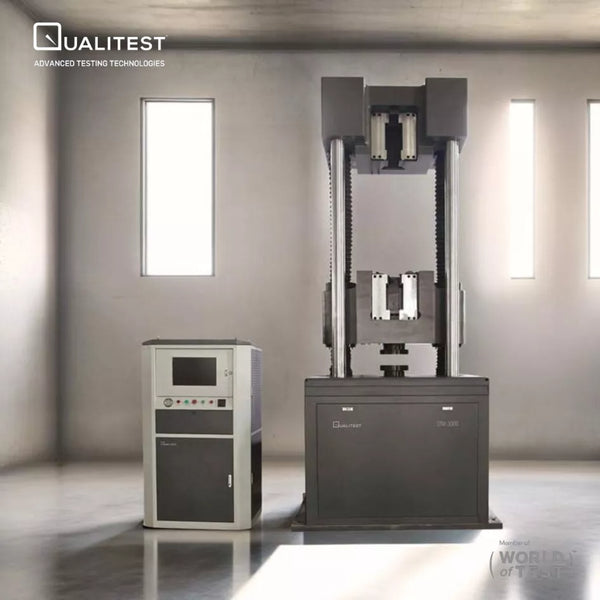
- The Material: If you’re pulling on tough metal like a massive iron beam loaded into a 3000 kN Universal Testing Machine (QTM-3000), a classic contact version is super dependable. If you’re testing soft rubber, thin sheets, or tiny wires, a no-touch system is the winner.
- The Environment: For instance, if you are checking how airplane engine parts hold up in deep-freeze conditions, a no-touch optical tool lets you keep your gear safely outside the frosty box.
- The Long-Term Bill: While the starting price of a contact tool is lower, we think it’s smart to think about the "sneaky" repair bills from strong stuff that snaps like a gunshot.
Applications Across Key Industries
The choice between these two often depends on what your business actually does.
Planes & Cars
People here usually go for no-touch systems when testing fancy carbon-fiber and lightweight alloys. When pulling aerospace-grade materials until they violently shatter, watching the snap without breaking your tools is a massive win for safety and data.
Steel & Building
Heavy-duty contact tools are the go-to for testing rebar, thick plates, and concrete. Think about snapping bridge rebar: the chunky mechanical toughness of a contact tool is a perfect fit for these demanding jobs.
Medical Gear
You basically have to go non-contact here. Testing how far a synthetic heart valve or a shape-memory polymer can stretch requires zero poking if you want the numbers to mean anything.
Rubbers & Polymers
Stretchy things like rubber pull way further than a mechanical arm can go. Picture testing a brand-new car tire tread: it will just keep stretching right past the limits of a physical tool.
Operational Scenarios in Practice
- Scenario A: Heavy-Duty Foundries. A plant testing concrete pillars and steel beams needs quick data and a tool that can take a beating. A classic contact extensometer paired with the massive pulling capacity of a 3000 kN Universal Testing Machine (QTM-3000) is the perfect fit.
- Scenario B: High-Precision Tech Labs. An electronics facility testing ultra-thin smartphone films or tiny filaments needs a non-contact video setup synced with a highly sensitive Universal Testing Machine QM-200N to get clear data without tearing the sample.
Compliance, Calibration, and Maintenance
In the quality checking space, following the rules is the whole point. We suggest checking how each one fits with the big rulebooks like ASTM E83 and ISO 9513.
- The Check-Up: Contact tools are usually checked using physical measuring sticks. Non-contact video tools need an optical check using a certified glass plate with a grid. Steady schedules are the secret to a long-lasting investment.
- The Upkeep: Physical tools need mechanical care for sharp teeth and springs. No-touch systems need almost zero mechanical work, though you have to keep lenses sparkling clean and the room bright.
Selecting the Best System for Your Laboratory
Deciding between a contact vs non contact extensometer doesn't have to be a headache. We think the trick to nailing this choice is taking a hard look at what’s actually hitting your testing floor every single day.
Audit Your Daily Schedule
Look at your average Tuesday. If your team spends 90% of the day pulling thick steel bars and only rarely tests a flimsy piece of plastic, a classic clip-on tool is totally the way to go.
On the flip side, if your schedule is a wild mix of rubber, medical silicone, and textiles, forcing a physical grabber to do the job is asking for wrecked samples.
Think About Your Team
Physical tools are satisfyingly simple to teach: just clip it on and start pulling. Video systems need a bit more computer know-how and a good eye for getting the lighting just right.
Look at the Long Game
It is super tempting to grab the cheaper physical tool right now.
But if your materials snap violently and send shockwaves through the gear, you will end up buying replacement parts constantly. Over a few years, that fancy video camera system often starts looking like a massive bargain.
Advanced Extensometry Solutions from Qualitest
At Qualitest, we’re here to help you snag perfect numbers without draining your bank account. Whether you need the toughness of a clip-on tool or the high-tech vibe of a video extensometer, our wallet-friendly options fit your industry rules perfectly.
Check out our Universal Testing Machines today, or give our experts a shout for a friendly chat about the best fit for your work.
References ▼
- Dessie, J., Lukács, Z., Kovács, P., & Shukurea, R. (2024). A non-contact optical uniaxial tension-unloading strain measurement. Multidiszciplináris Tudományok.
- Du, Y., & Gou, Z. (2019). Application of the Non-Contact Video Gauge on the Mechanical Properties Test for Steel Cable at Elevated Temperature. Applied Sciences.
- Kyarimov, R. et al. (2025). Critical comparative assessment of Digital Image Correlation vs contact extensometry: ensuring the fidelity and depth of mechanical properties determination. Results in Engineering.
- McClung, A., Tandon, G., Goecke, K., & Baur, J. (2011). Non-contact technique for characterizing full-field surface deformation of shape memory polymers at elevated and room temperatures. Polymer Testing.
- Tian, Q., Yan, L., Yang, T., & Chen, B. (2011). Recent Developments of Material Deformation Measurement. Applied Mechanics and Materials.